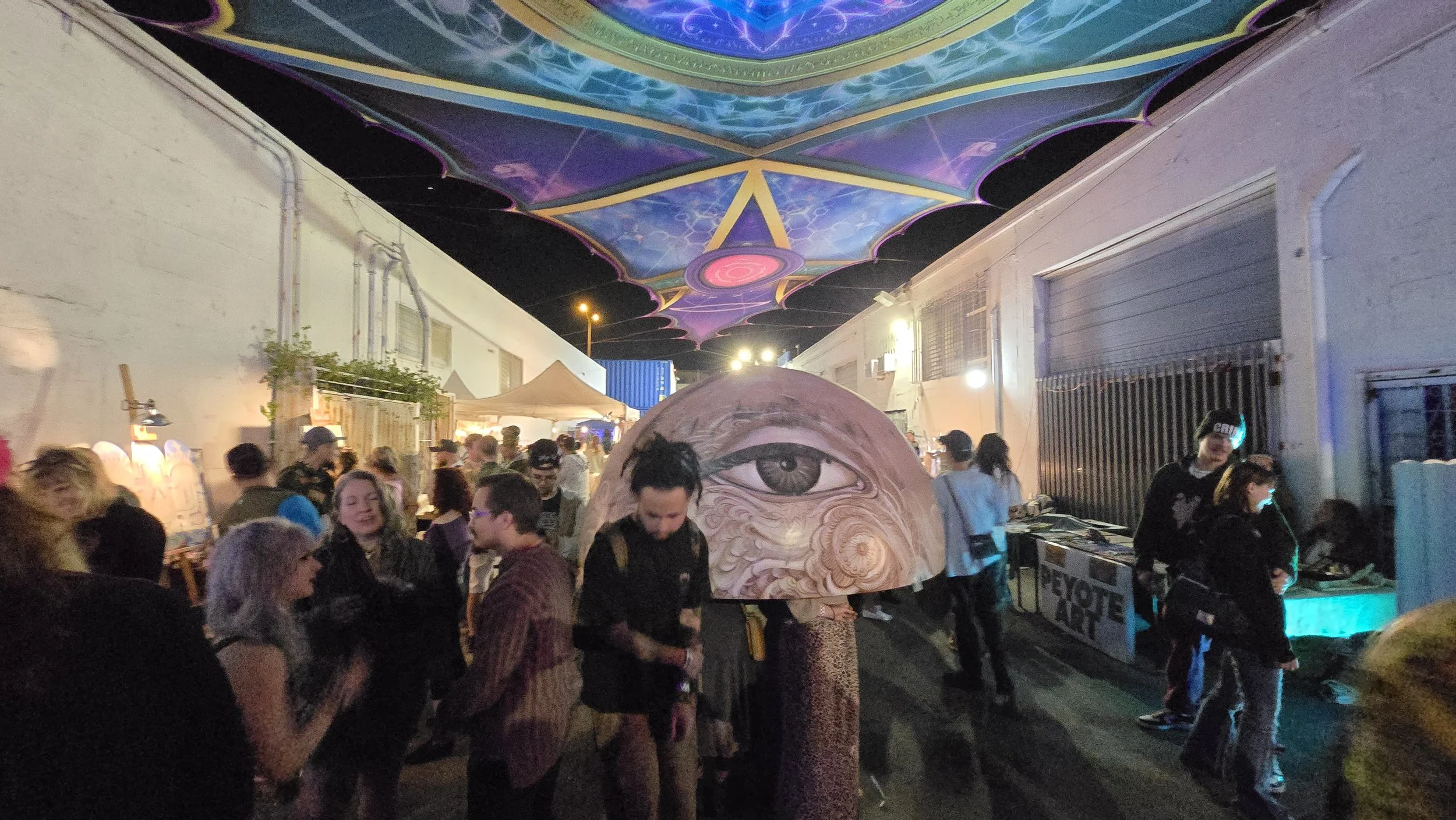
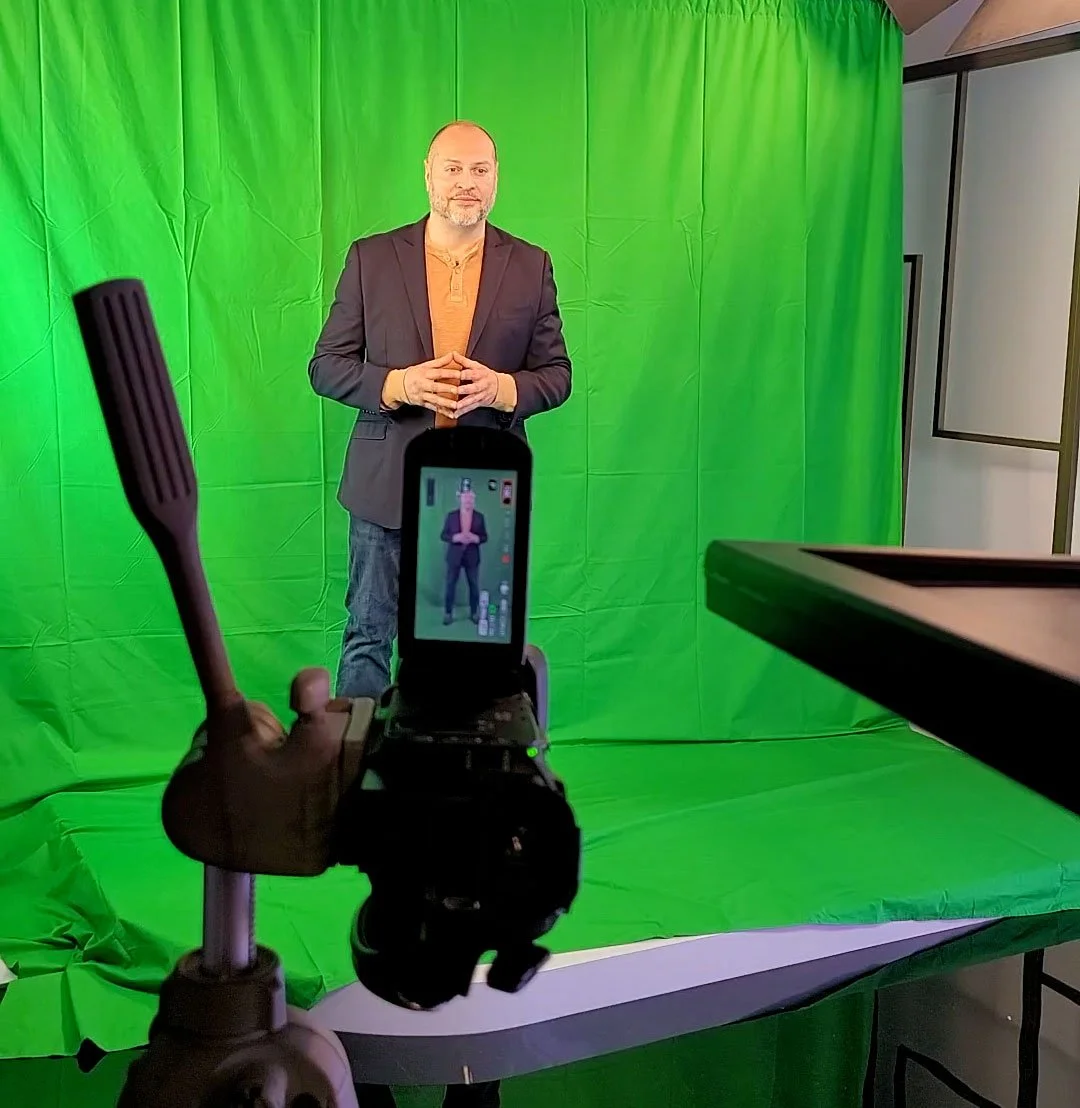
I’m Juan Carlos Gallo, a Creative Technologist and XR Developer.
I build interactive layers for physical spaces.
Design, motion, video, and interactive storytelling are the foundation of my work. I use those visual and narrative tools as a bridge into higher-end immersive systems, AR, VR, Unity, real-time 3D, AI-assisted workflows, and spatial computing, to create experiences that live in cities, venues, museums, galleries, events, and public spaces.
Recent projects include city-scale AR platforms like AR Miami, venue-based experiences for AR Asheville and Third Room, cultural activations, holographic media, gamified rewards, and immersive public-space storytelling.
I’m interested in what happens when digital experiences become part of everyday places, woven into cities, businesses, museums, galleries, and public spaces.
Building interactive digital layers for physical spaces.
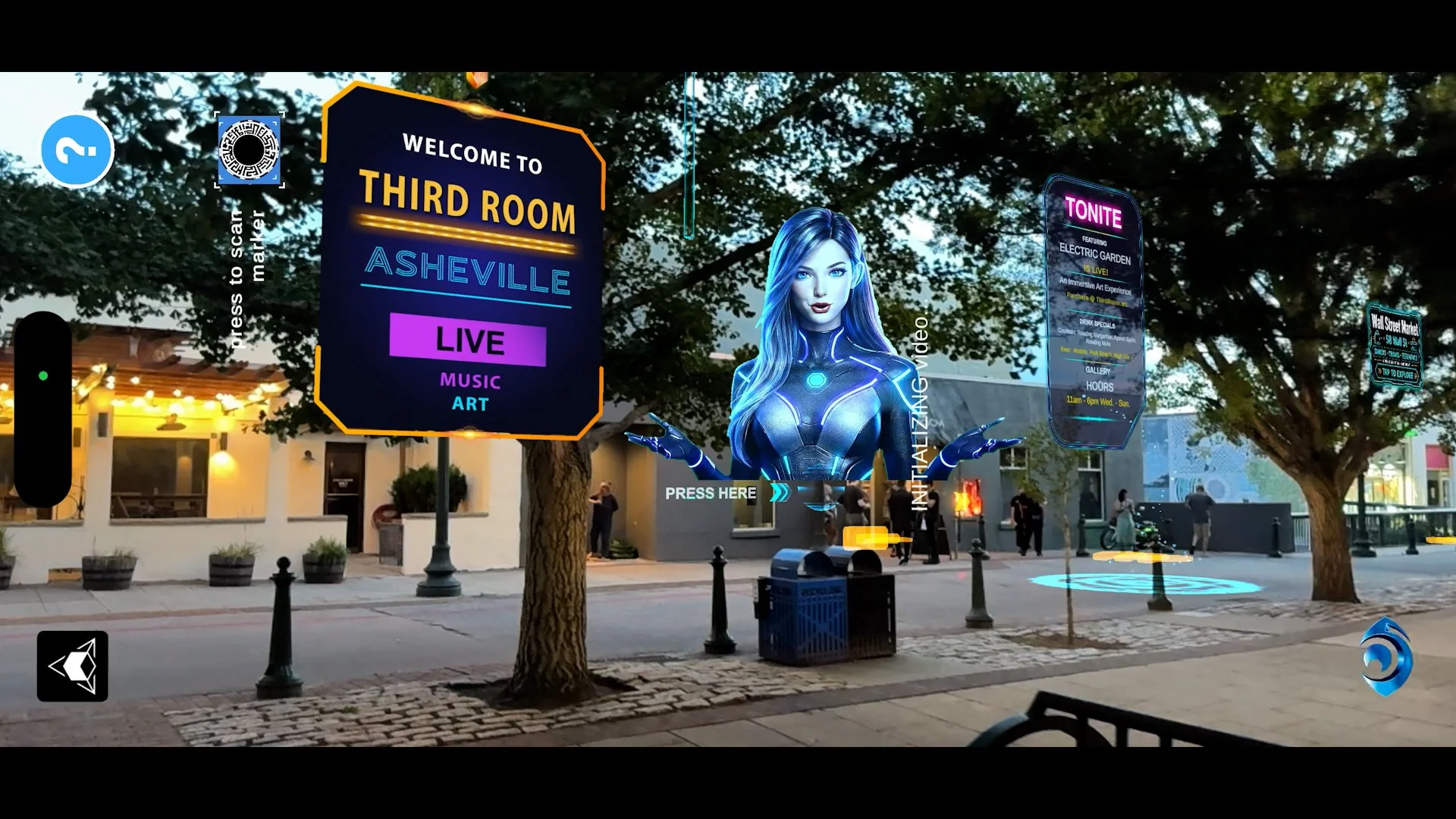
This is a recent spatial computing experience I developed for Third Room ( thirdroom.art ) in Asheville, NC as part of the AR Asheville platform.
The project combines two different layers of spatial computing:
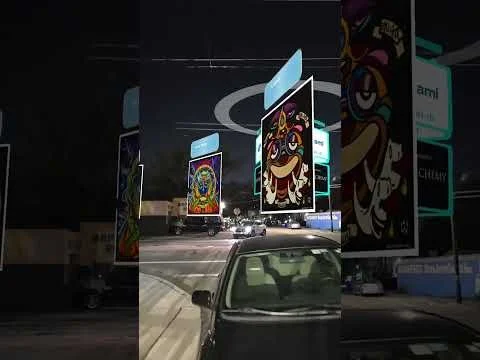
Outside the venue, visitors interact with geolocated AR content connected to the city itself. Through AR Asheville, digital experiences are anchored to physical locations, creating a persistent citywide augmented reality layer that can host art, storytelling, navigation, events, and interactive experiences across Asheville.
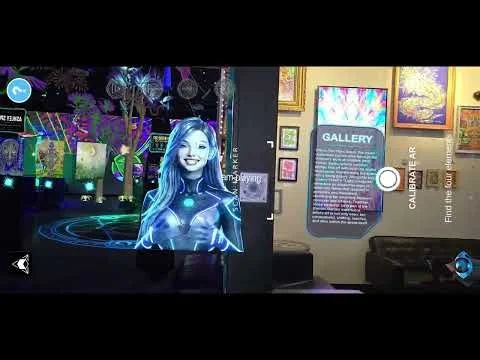
Inside the venue, the experience transitions into a marker-based AR environment where physical objects become portals into immersive digital spaces. Visitors can unlock quests, interact with AI-powered guides, collect virtual items, trigger animations, and explore a persistent interactive world layered directly onto the exhibition space.
The platform combines:
• Geospatial AR
• Marker-based AR
• Interactive digital signage
• AI-powered guides and holograms
• Real-time content delivery
• Gamification and collectibles
• Venue-based immersive experiences
• Spatial storytelling
What interests me most is not the technology itself, but what it enables.
We're moving toward a future where cities, venues, galleries, museums, and public spaces can have living digital layers woven into the physical world—creating environments that are interactive, adaptive, and continuously evolving.
This project is one small step toward that future. #ThirdRoom
#SpatialComputing #XR #AugmentedReality #AR #GeospatialAR #DigitalTwins #SmartCities #Unity3D #AI #Innovation #ARAsheville #ARMiami
https://armiami.io/
Download AR Miami (App Store / Google Play)
Overview
AR Miami transforms entire neighborhoods into living stages for augmented reality. From Coral Gables to Wynwood, Miami Beach to Downtown, the city becomes a canvas for holographic art, cultural storytelling, and interactive commerce. Built in Unity XR with AR Foundation and geospatial APIs, AR Miami overlays dynamic AR directly onto streets, storefronts, and landmarks, turning the everyday into an evolving digital ecosystem.
Core Experiences
Geospatial Anchors : Pin holograms, avatars, and interactive signage at precise real-world locations.
Cultural Storytelling : Walk alongside AR guides, relive Miami’s past, and unlock hidden narratives from murals, monuments, and historical districts.
Retail + Commerce : Scan storefronts to reveal holographic hosts, special offers, and immersive product showcases.
AI-Driven Avatars : Encounter lifelike guides that adapt in real time, blending performance with interactivity.
Real-Time Data Feeds: See live event info, city updates, and contextual content woven seamlessly into the AR landscape.
My Role
I directed both the technical architecture and the creative ecosystem. This included Unity development, geospatial anchor pipelines, and WebAR integrations, while also leading cross-disciplinary collaboration with artists, cultural institutions (Frost Museum, Moksha Arts Collective), and local businesses. My role bridged the engineering and the experience design, ensuring each activation was both technically seamless and emotionally impactful.
Impact
30+ activations deployed across 6 neighborhoods.
50+ artists and businesses onboarded into a unified AR ecosystem.
Featured holograms, interactive murals, and cultural storytelling reached thousands of residents and visitors in live public spaces.
Future Vision
AR Miami’s next chapter launches at Art Basel 2025 with a citywide AR scavenger hunt and immersive installations, proof-of-concepts for enterprise-scale rollouts in cultural, commercial, and educational sectors. The long-term vision is to create a persistent, city-scale AR layer that blends art, history, and commerce into a shared immersive world.
AR Miami – Coral Gables City Activation (2024)
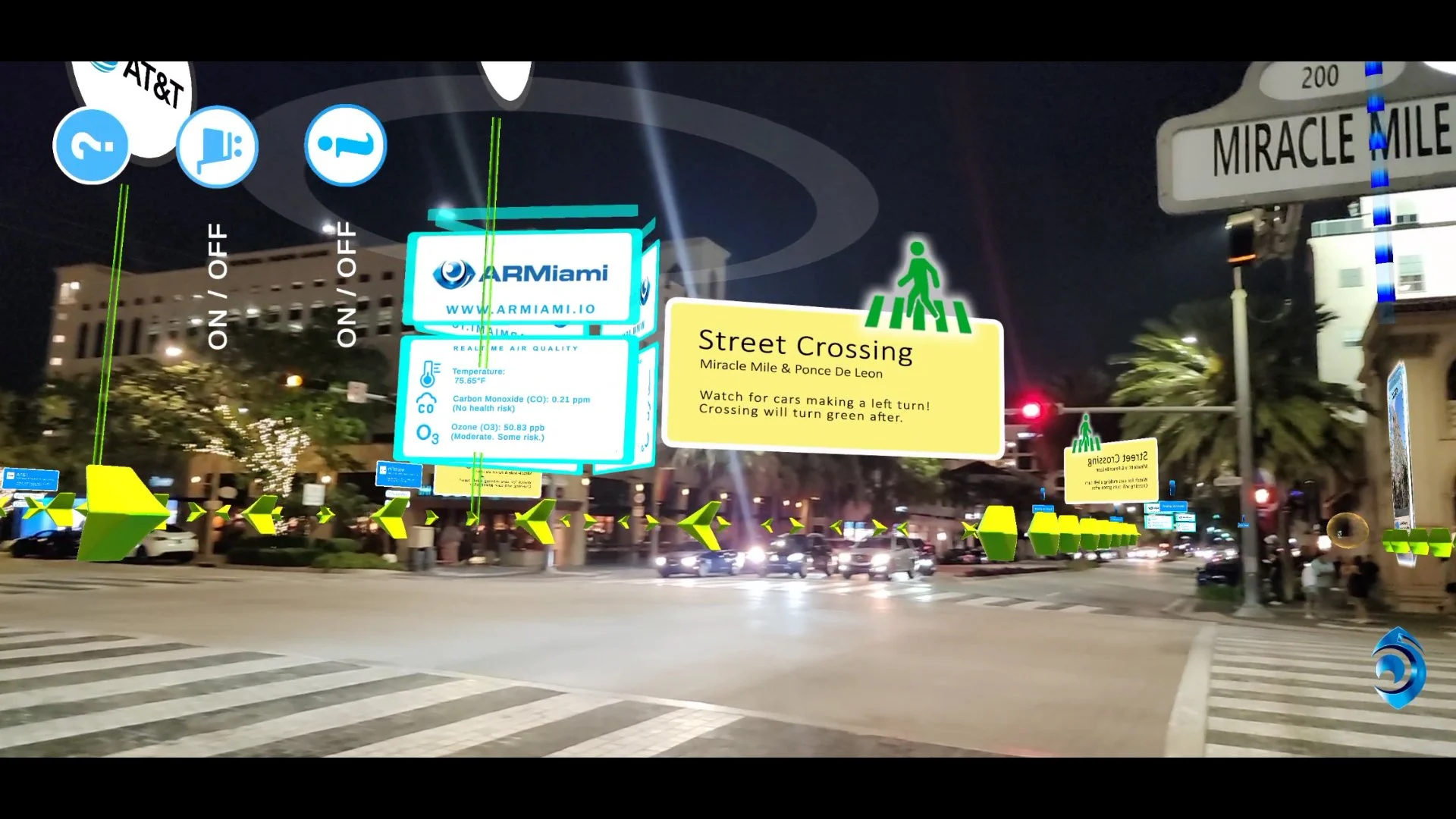
AR Data Sign – Miracle Mile & Ponce de Leon
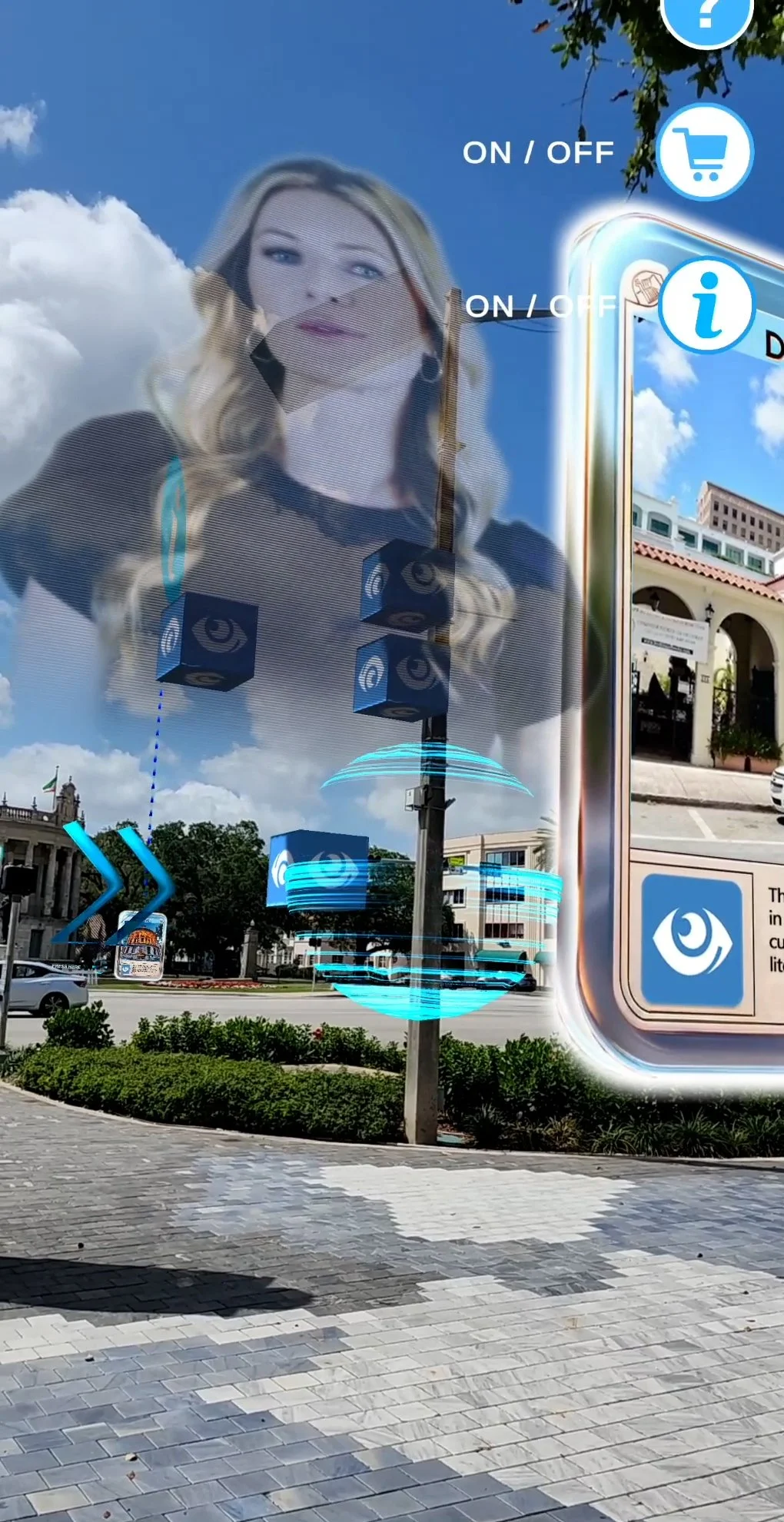
At the corner of Miracle Mile and Ponce de Leon, this augmented reality sign visualizes live environmental data, tracking CO₂ levels, ozone, and temperature in real time. Built with AR Miami, it transforms an ordinary street corner into a dynamic dashboard for urban sustainability, blending scientific visualization with public art. By making invisible data visible, the installation invites the community to reflect on the environment while showcasing how XR can inform, educate, and inspire action in civic spaces.
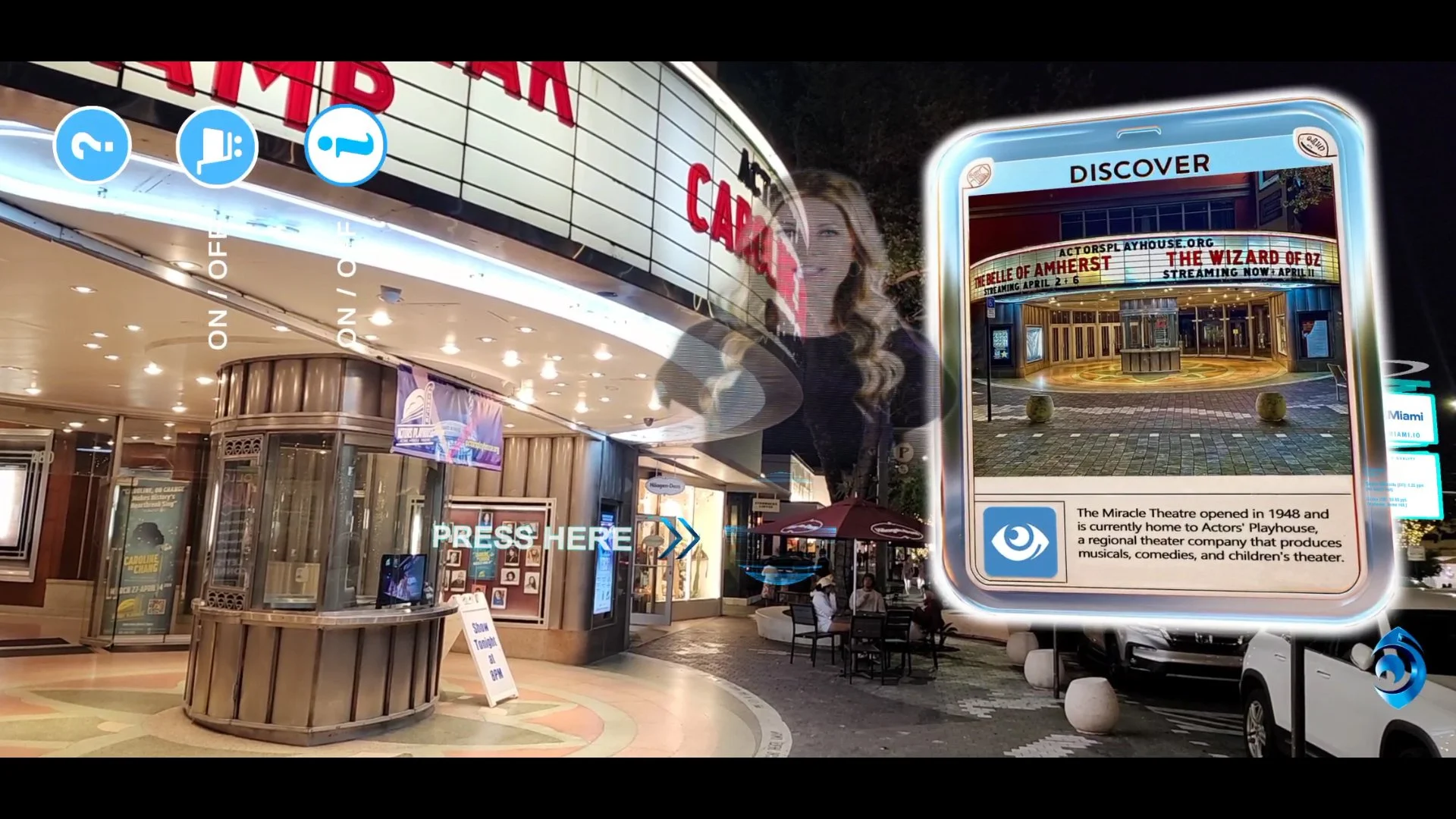
Miracle Theater AR Tour
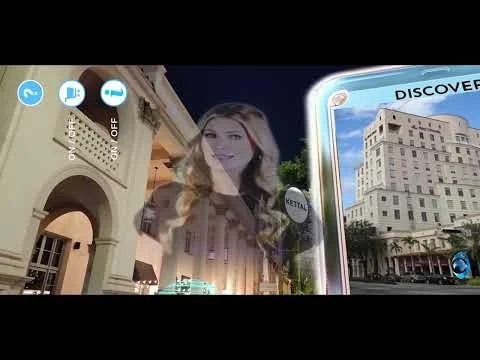
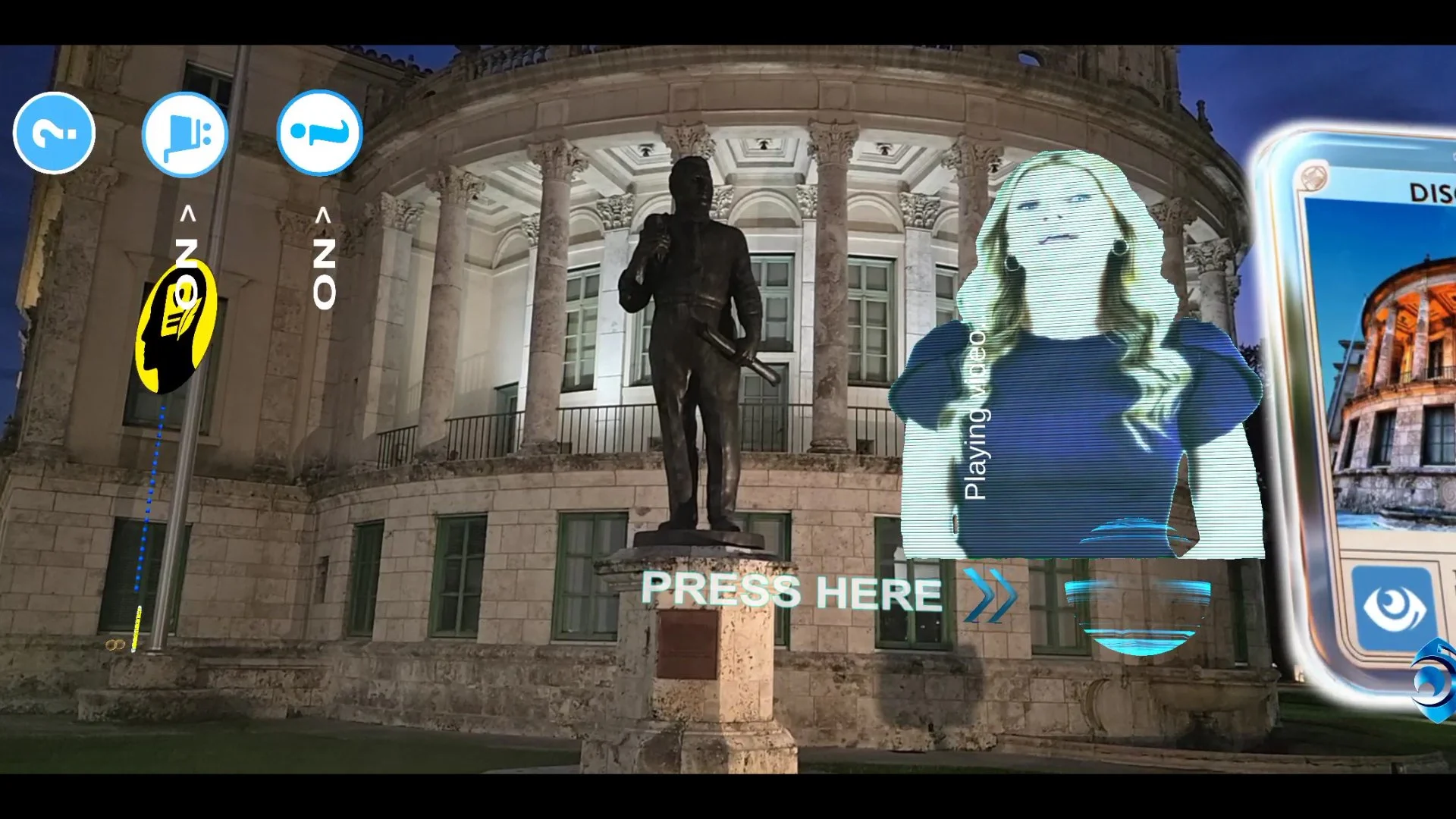
In front of Coral Gables’ iconic Miracle Theater, visitors can encounter a life-sized hologram that shares the rich history of this cultural landmark.
ARt Walk Paradise Park -
Student Visions in Augmented Reality
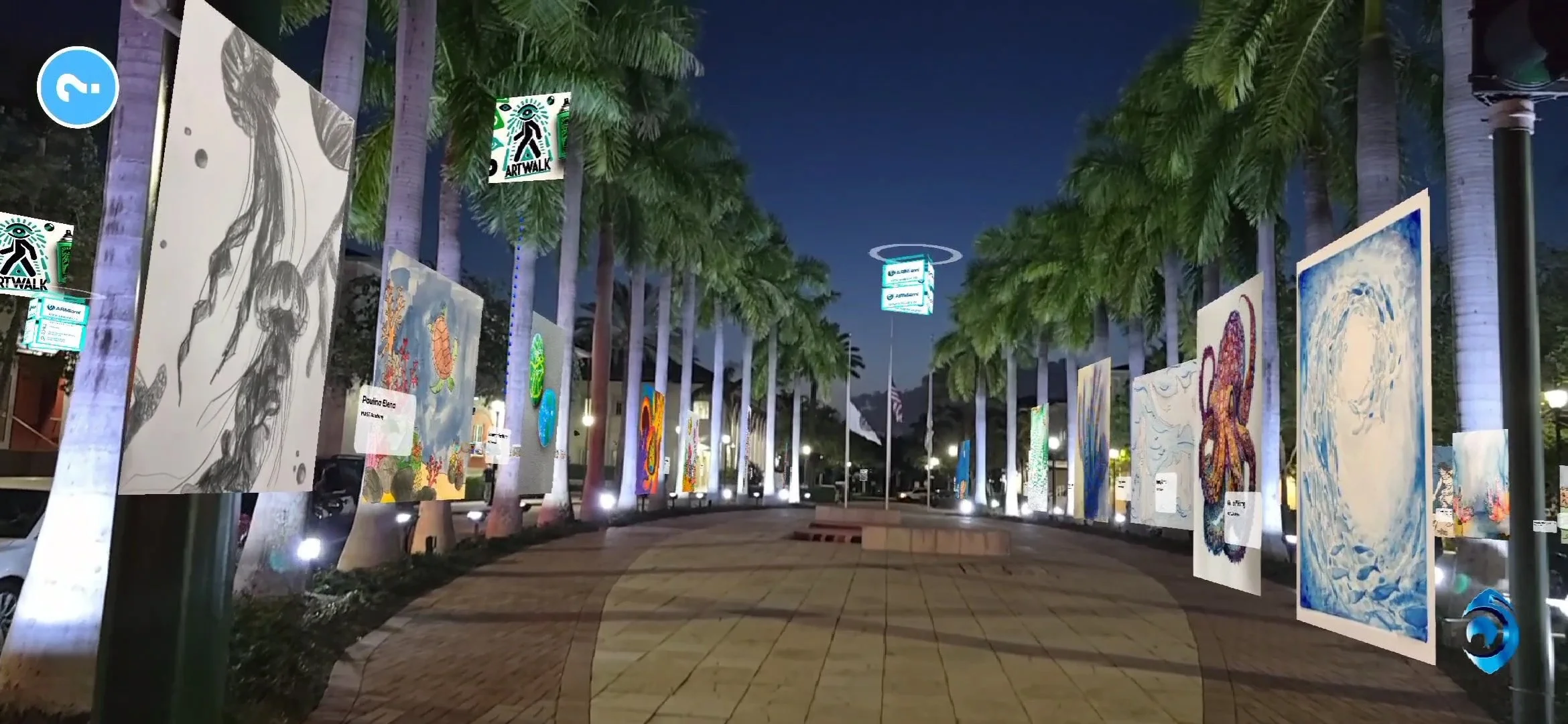
The ARt Walk gallery at Paradise Park in Key Biscayne marks a new chapter for Miami’s creative youth. Built in collaboration with MAST Academy students, this immersive exhibition transforms original student artwork into living augmented reality experiences woven throughout the park.
Launched with a grand opening at Village Hall, the gallery celebrates both environmental leadership and digital creativity, featuring partnerships with Youth Lead Change, Students for Coral Preservation, and AR Miami. The result is a walkable AR gallery that empowers the next generation to merge art, science, and technology in service of a more sustainable Miami.
Whether you’re a local or a visitor, ARt Walk invites you to experience Miami through the eyes of its youth, using augmented reality as a tool for awareness, innovation, and change.
ARt Visions Galleries -
Moksha Arts Collective
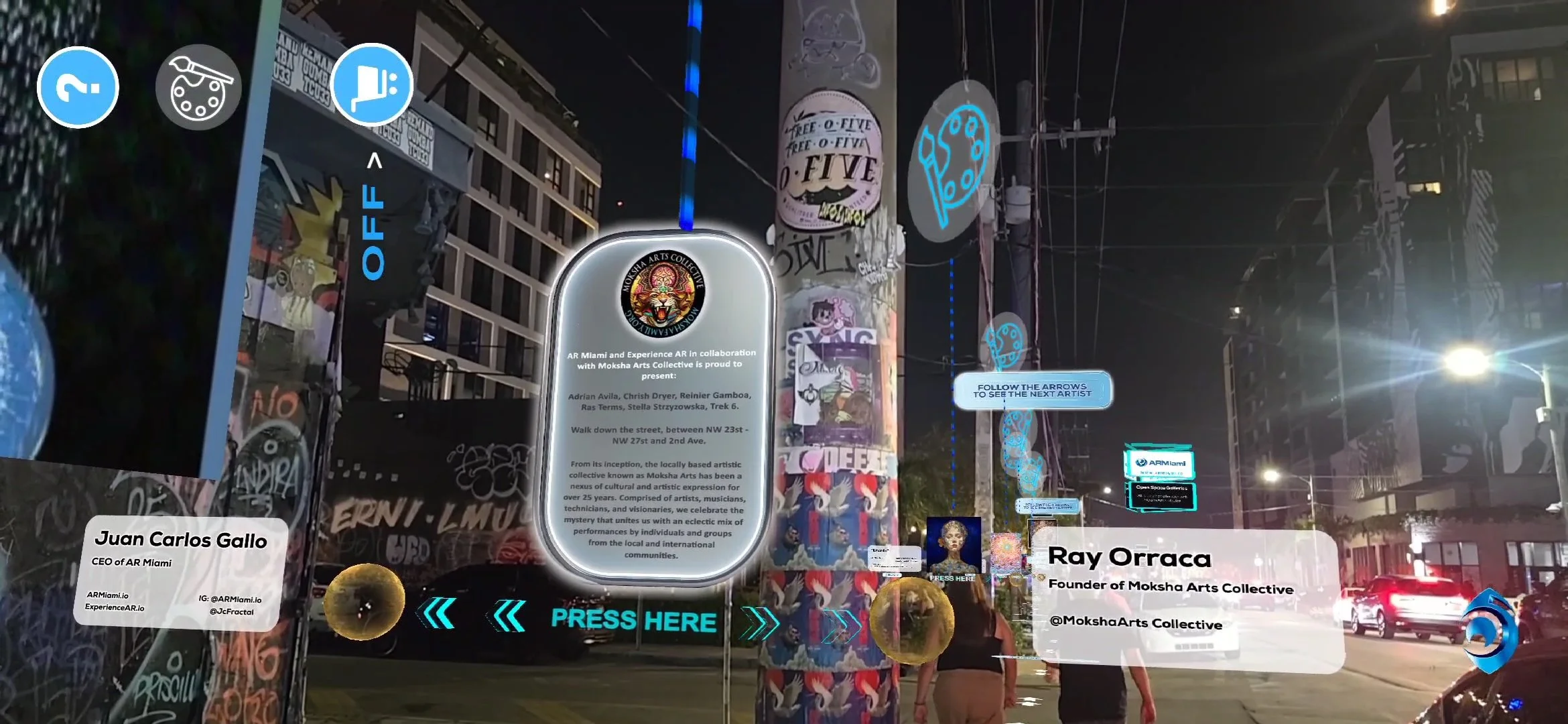
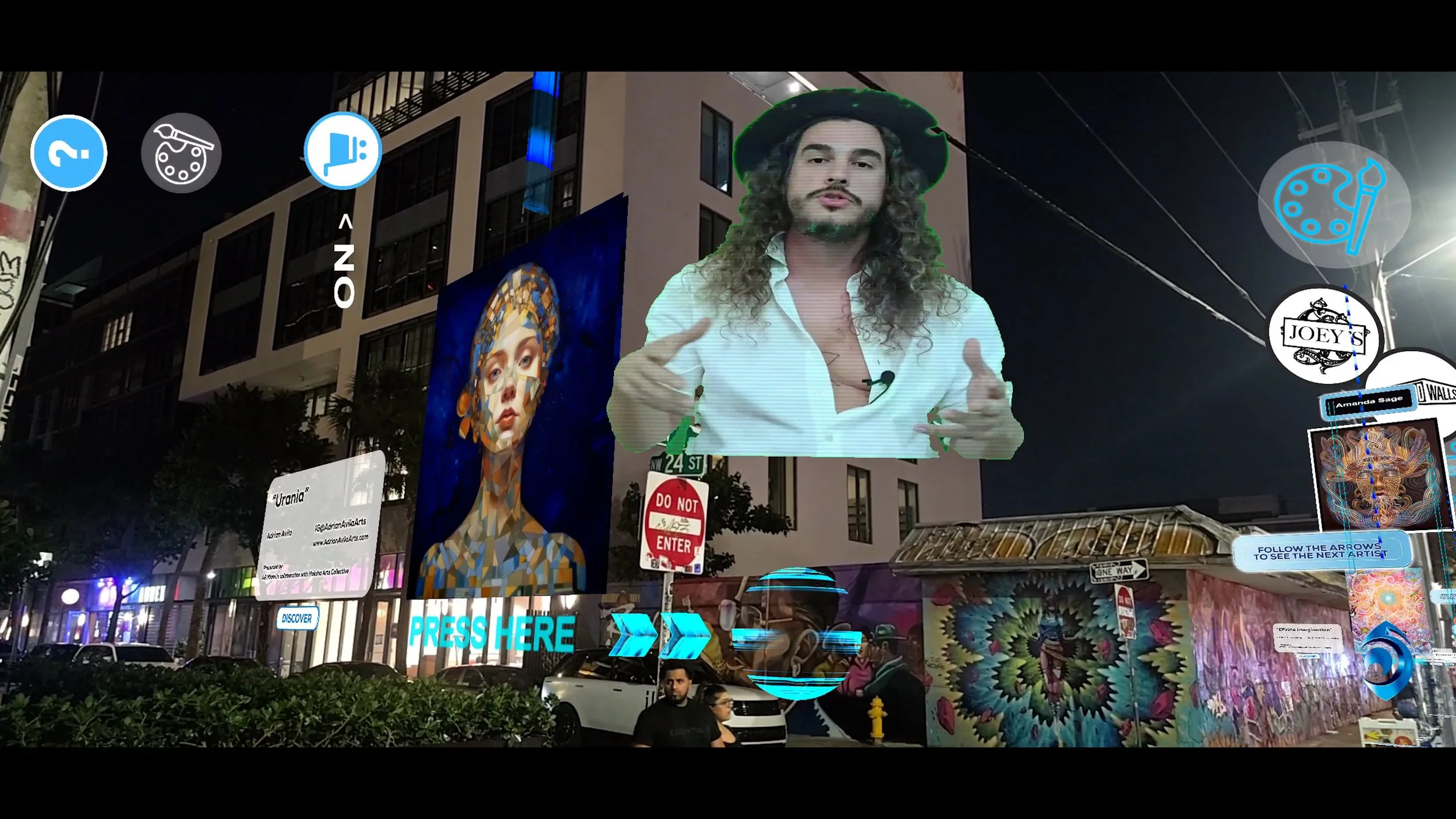
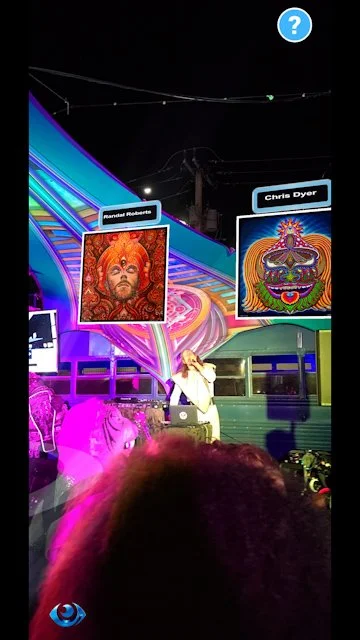
The journey begins here. At the entrance to the Moksha Arts Collective AR gallery in Wynwood, holograms of myself and curator Ray Orraca welcome visitors and introduce the exhibition. From this point, AR arrows painted onto the street guide audiences from corner to corner, unlocking a path to the following artist, where a hologram of the artist himself gives an introduction to his works. This collaboration brings together Miami’s visionary artists, including Adrian Avila, Chris Dyer, Ras Terms, Reinier Gamboa, Stella Strzyzowska, and Trek 6, transforming Wynwood into an open-air, immersive art walk powered by AR Miami.
Adrian Avila (b. 1989, Holguín, Cuba) is a renowned Miami-based muralist and fine artist. A New World School of the Arts alum and graduate of Art Center College of Design, Avila has created over 30 major murals in Wynwood and beyond. His vibrant, large-scale works blend surreal and figurative elements, often capturing powerful female forms and sacred geometry. His mastery of oil on concrete gives life to pieces like “Gaia” (Art Basel 2018) and “Wynwood Place”, making him one of Miami’s most prolific visual storytellers.
AI Hologram on Miracle Mile
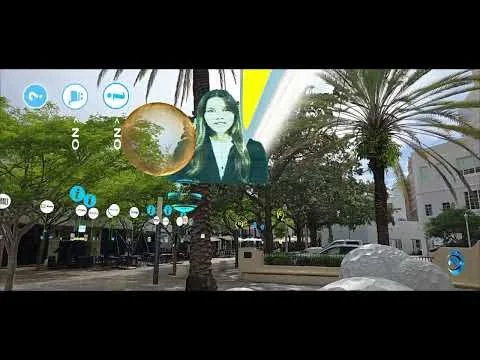
Standing by Coral Gables City Hall at LeJeune & Miracle Mile, this AI-driven holographic guide brings the city’s cultural heartbeat to life. Developed with AR Miami, the avatar blends AI narration, spatial storytelling, and augmented reality to welcome visitors, share local history, and reimagine how public spaces can interact with people in real time.
Coral Gables City Hall
Dear Human – Coral Gables
As part of the Dear Human Project, AR Miami brought poetry and public art to life through holograms and interactive storytelling. We filmed local teacher and poet Mia Leonin, transforming her into a lifelike AR hologram that recites poetry inspired by the city’s art installations. Each stop also features an AI-generated hologram that provides additional context, offering unique interpretations and cultural insights about the artwork. Together, the human and AI holograms create a layered experience—blending literature, history, and artificial intelligence into a participatory cultural journey.
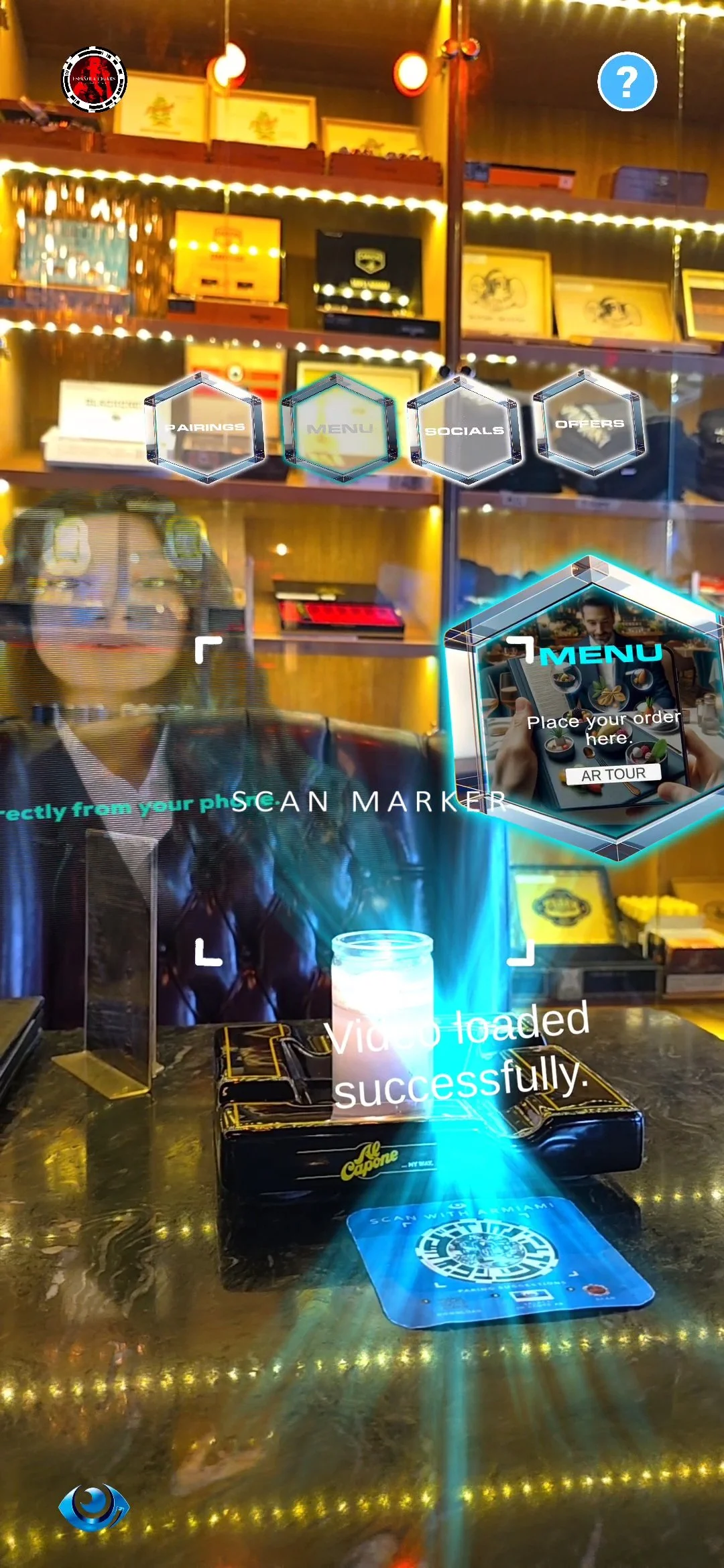
Española Cigar Bar & Lounge Holograms
Blending Tradition with Technology
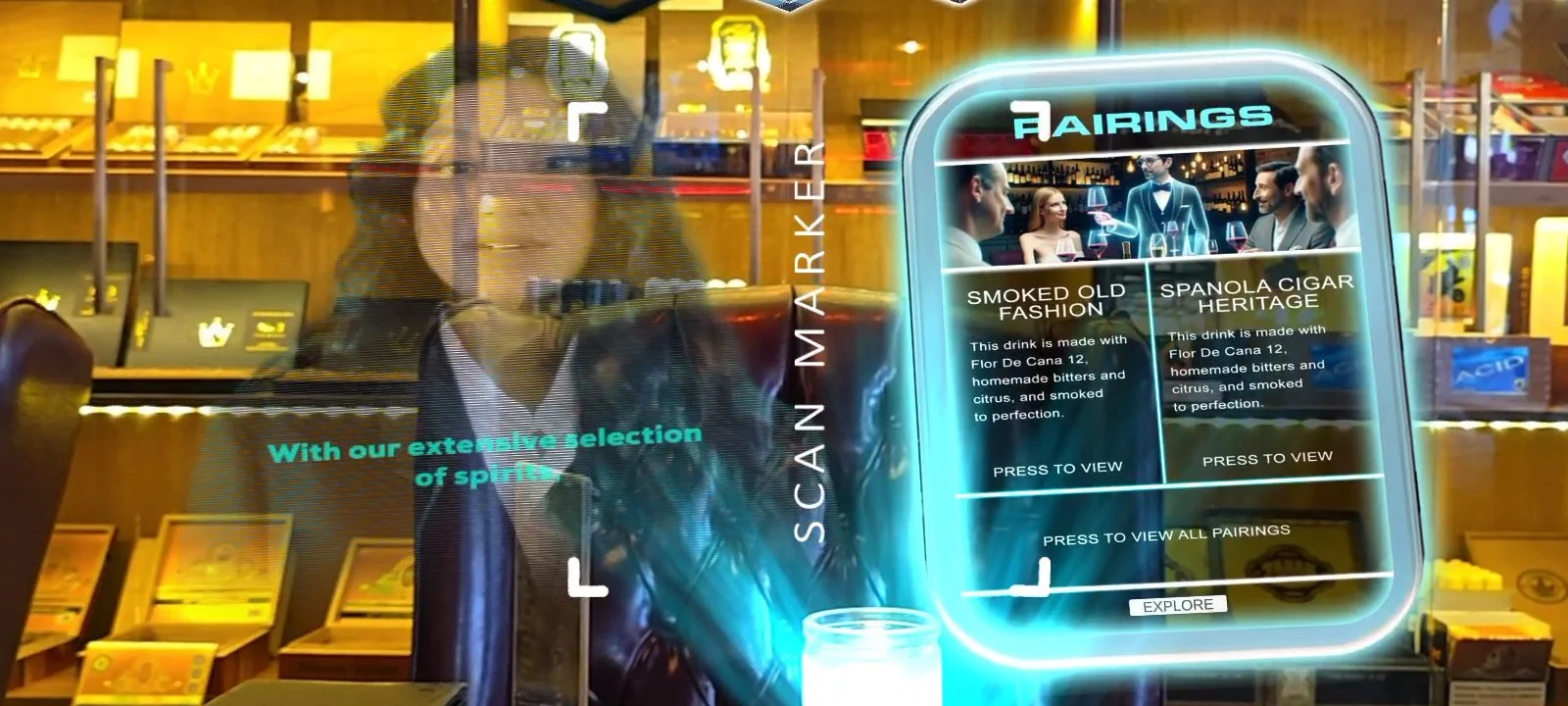
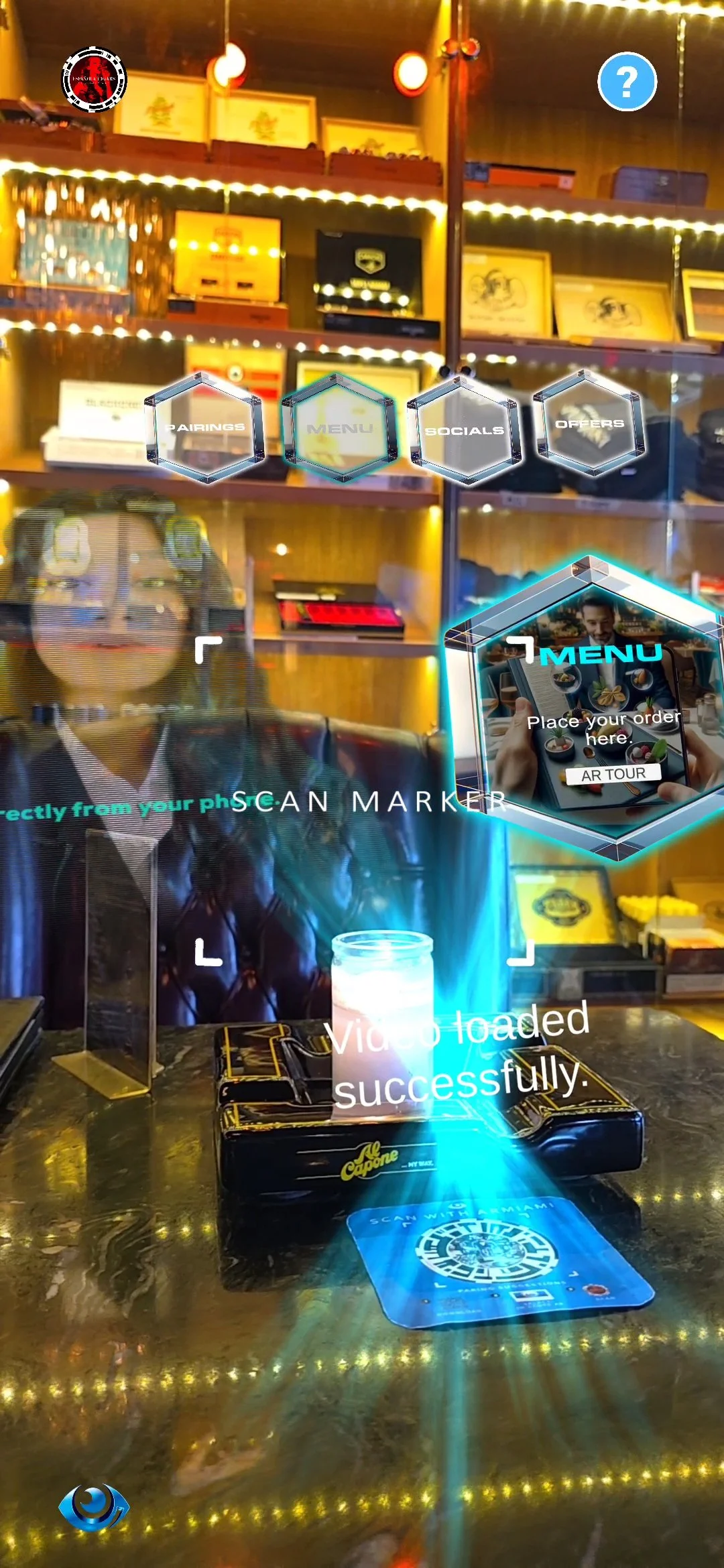
At Española Cigar Bar & Lounge, AR Miami transforms a classic setting into an immersive digital experience. Guests can point their phones at the cigar displays to unlock lifelike holographic hosts who guide them through curated menus, cigar pairings, and drink recommendations. Each hologram is a filmed human hostess, brought to life through AR, creating the sense of a personal concierge at every table. This fusion of heritage, hospitality, and cutting-edge technology redefines the cigar lounge experience, offering storytelling and interactivity unlike anything else in Miami.
Select your pairings.
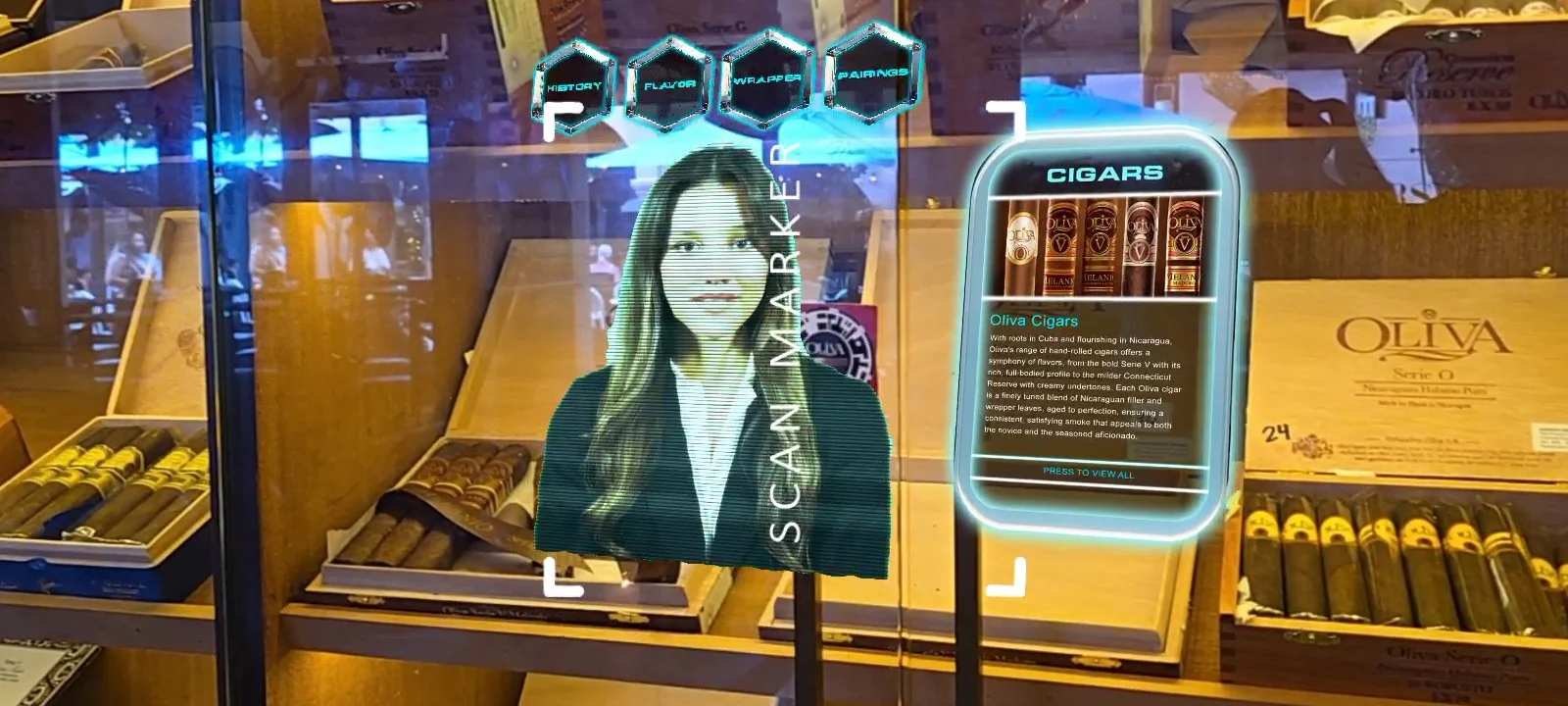
Oliva Cigars
AI-Generated Holographic Storytelling
For Oliva Cigars, AR Miami developed a holographic experience that blends heritage with cutting-edge AI. Using advanced generative tools, we created a recorded AI-driven performance of a holographic character who introduces visitors to the world of Oliva cigars. The hologram walks guests through cigar history, craftsmanship, and tasting notes—bringing the brand’s legacy to life in a visually compelling and interactive way. By combining AI-generated avatars, scripted storytelling, and AR placement inside the lounge, the experience elevates customer engagement, turning a cigar selection into a cultural and educational journey.
Immersive Storytelling for Environmental Awareness
http://www.beforeitstoolate.earth/
Overview
Before It’s Too Late is a nonprofit innovation lab founded out of MIT, dedicated to raising climate awareness through art and immersive technology. As Lead AR/VR Architect, I helped transform static murals into living, interactive canvases that educate and inspire. Using Unity XR, image recognition, ground plane detection, and real-time environmental datasets, these works became windows into ecological change, where science, art, and storytelling merge to highlight the urgency of climate action.
Core Experiences
AR Butterfly Garden : Guests step into a real-world garden where butterflies and bees animate in 3D, pausing mid-flight to be studied, carried, and matched to native host plants. They can pause insects mid-flight, inspect them up close, carry them on their phone, and guide them to their native host plants. Each match unlocks the next stage of the life cycle, eggs, larvae, and metamorphosis, teaching ecological interdependence through embodied play.
Environmental Overlays : Data-driven AR layers that reveal the hidden impact of climate change, from sea-level rise to biodiversity loss. Animated projections show threatened habitats transforming before guests’ eyes.
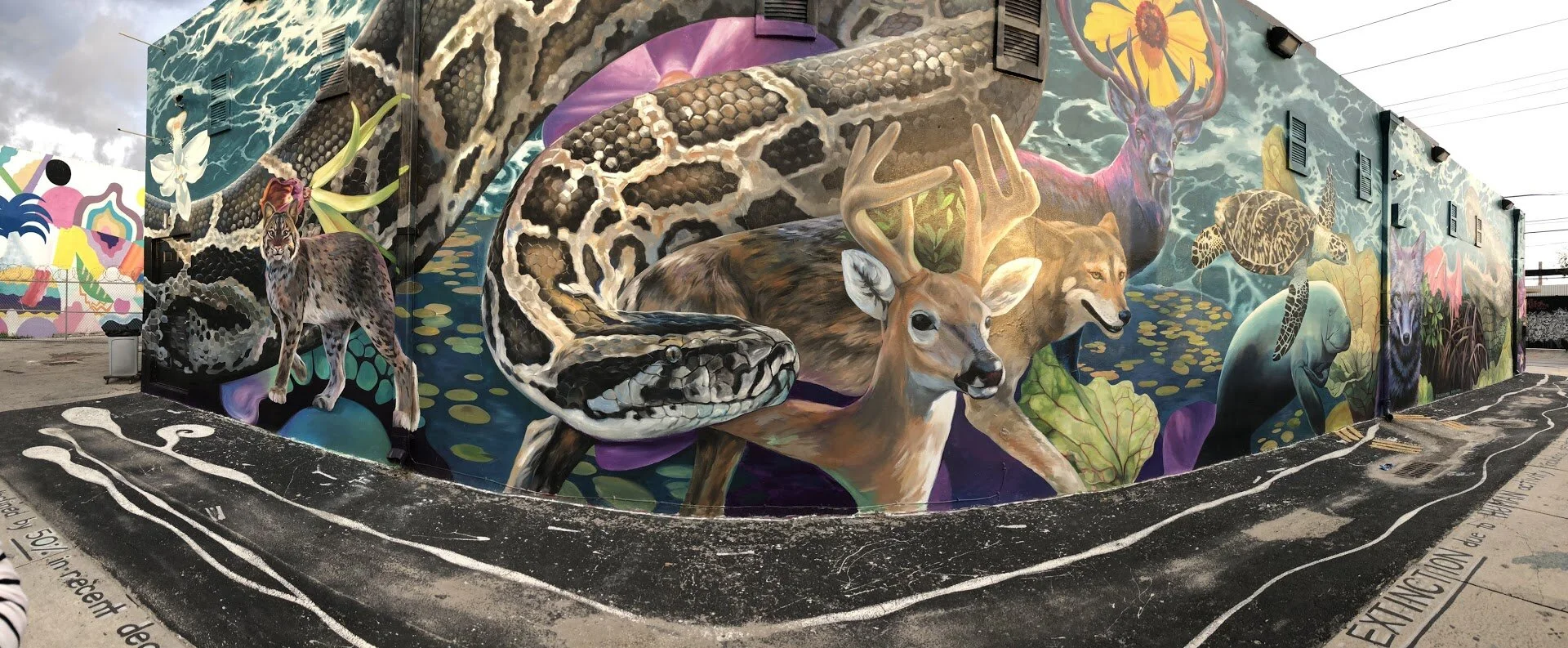
Interactive Murals : Large-scale works of art that respond to scanning, unveiling animations of species, hidden messages, and climate narratives. Murals like Anthropocene Extinction in Wynwood became portals into conversations about extinction, invasive species, and the future of Florida’s ecosystems.
My Role
As Lead AR/VR Architect, I directed the concept, design, and Unity XR implementation of these experiences. I architected pipelines that merged environmental science data with interactive storytelling, while collaborating with artists, educators, and scientists to ensure each activation was both visually compelling and scientifically accurate.
Impact
Produced multiple AR installations across Miami, reaching thousands of residents and visitors.
Raised awareness about biodiversity loss, rising seas, and resilience through playful, interactive learning.
Featured by The Miami Herald, PBS NewsHour, The New Yorker Magazine, NBC6, DecoDrive, and NBC10 as leading examples of climate storytelling through immersive media.
Reached 10,000+ participants through events, installations, and city activations.
Future Vision
Looking ahead, I see these AR murals as templates for global climate storytelling , adaptable frameworks I aim to expand into coral reef preservation, rainforest protection, and beyond.
Since the dawn of civilization, humanity has caused the loss of 83% of all wild mammals and half of plants. This mural raises awareness for the Mass Extinction of Biodiversity that is happening today because of human activity including deforestation, pollution, hunting and overfishing. Everyday new species go extinct, yet most of us remain unaware, caught up in the other news and events that distract us daily instead of the big picture of Life. The mural depicts a local lens to the biodiversity issue by featuring 25 species found in Florida’s wildlife. Native, invasive and endangered species are shown together, representing how all of us must find harmony inhabiting the same space. Furthermore the mural is placed in the context of Sea Level Rise that will displace many humans and animals who live here. South Florida faces 2 to 3 feet of sea level rise by 2050 and far more dire circumstances by the end of the century if adequate climate action is not taken.
Main Artistic Team:
Linda Cheung – Creative Director & Digital Designer Reinier Gamboa – Painter
Juan Carlos Gallo – AR Designer
Dane Myers – Musician
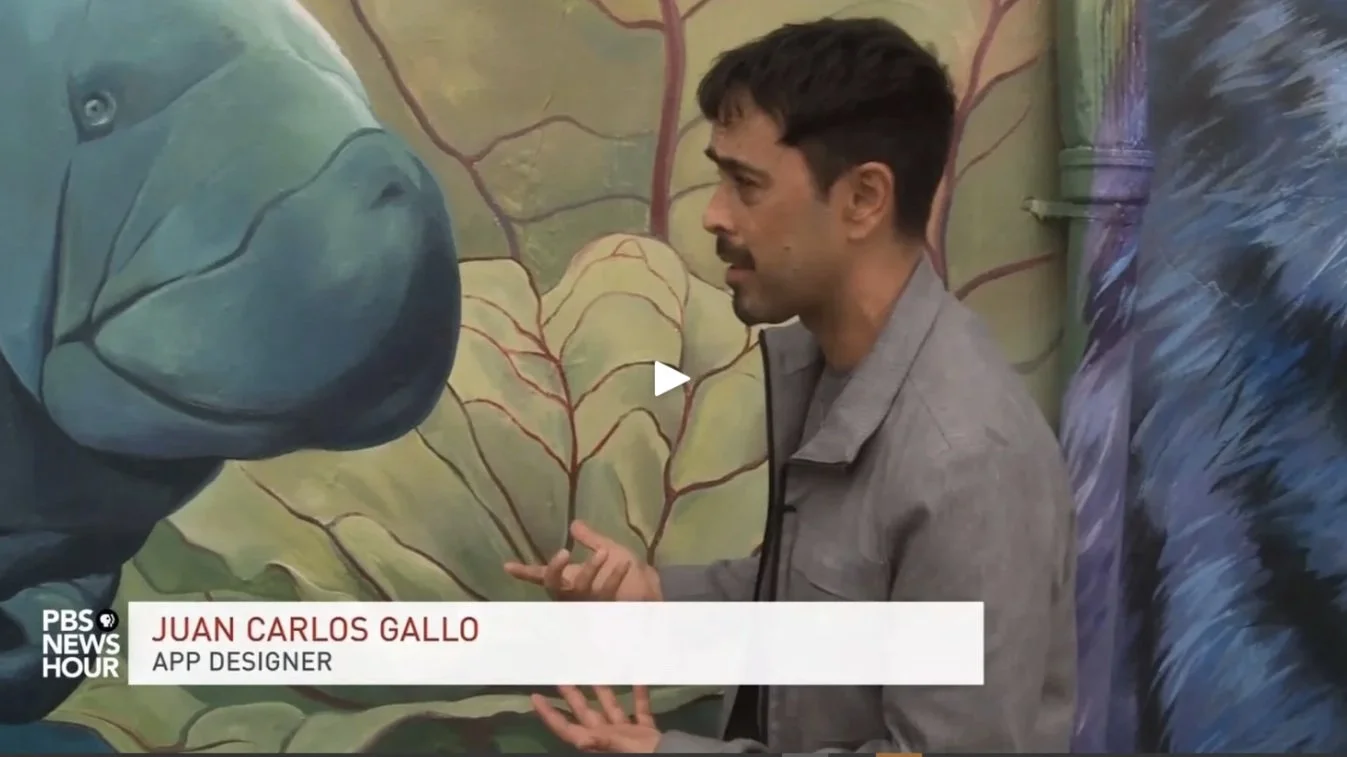
PBS NewsHour feature
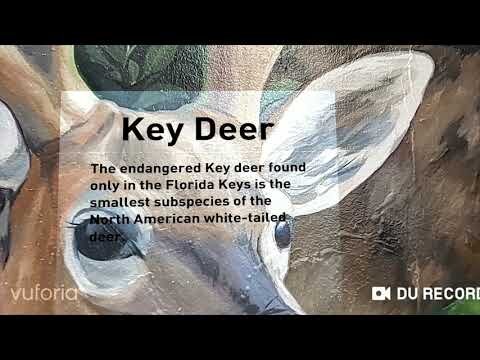
Anthropocene Extinction Phone Capture
"What future do you choose for Miami?"
Located at 1800 N Miami Ave.
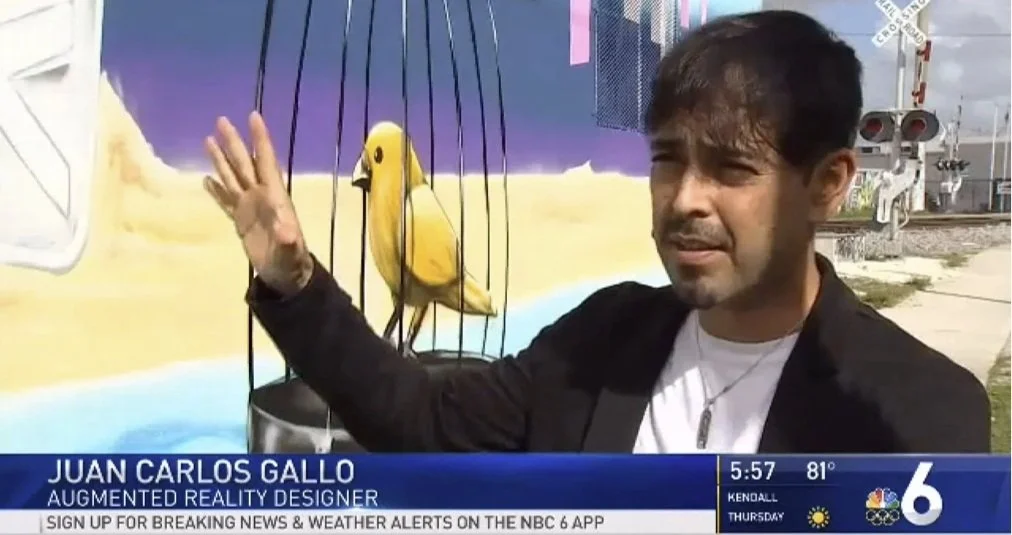
Here with the crew from NBC 6 when they shot their segment.
Download the app "Miami murals AR" and stand across the street to view the mural.
Miami Murals NBC 6 News Story
"What future do you choose for Miami?"
Pilot Augmented Reality Mural
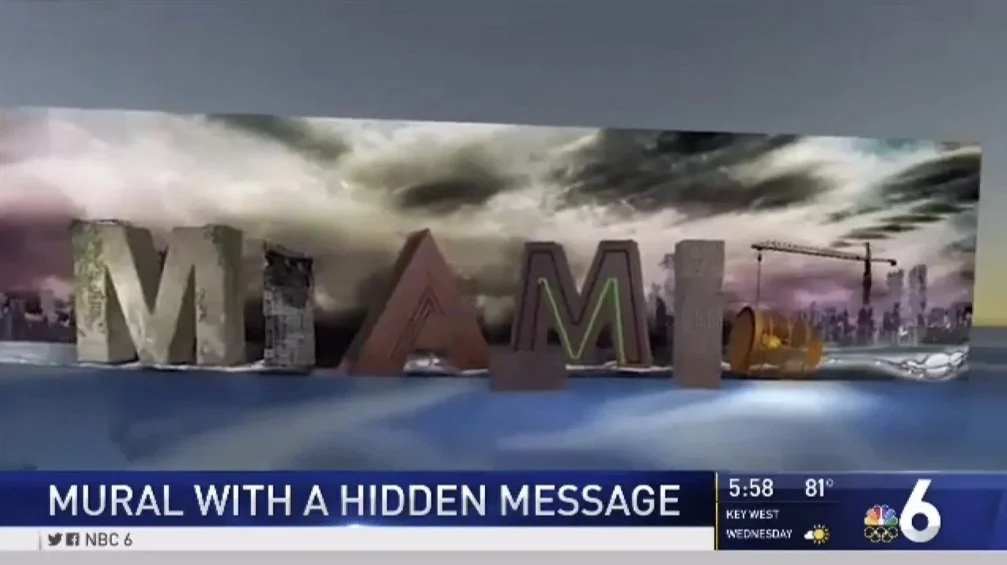
This first AR mural invites you to look beyond Miami’s vibrant colors, nightlife, and party culture to uncover the hidden story beneath the surface. Subtle warnings, like the rising sea level line and a lone canary, signal the looming threat of climate change and our collective denial. Through the AR experience, participants witness two starkly different futures for Miami: one where we “Make No Change” and face the consequences, and another where we “Be the Change” and shape a resilient, sustainable city. The choice, and the future is in our hands.
AR Mural - "What future do you choose?"
“Liberty Gardens Park AR Mural”
Augmented Reality Mural, December 2019
735-701 NE 125th St, North Miami, FL 33161
The Butterfly Garden transforms an ordinary park into a living, augmented ecosystem.
Stepping inside, guests find themselves surrounded by butterflies and bees that move naturally through the air in full 3D, fluttering past as though they truly inhabit the space. Each insect can be paused, inspected, or carried along, turning the environment into an interactive classroom where nature feels alive and responsive. What begins as a simple park becomes an immersive habitat, a place where play, exploration, and ecology converge through augmented reality.
Learn more >
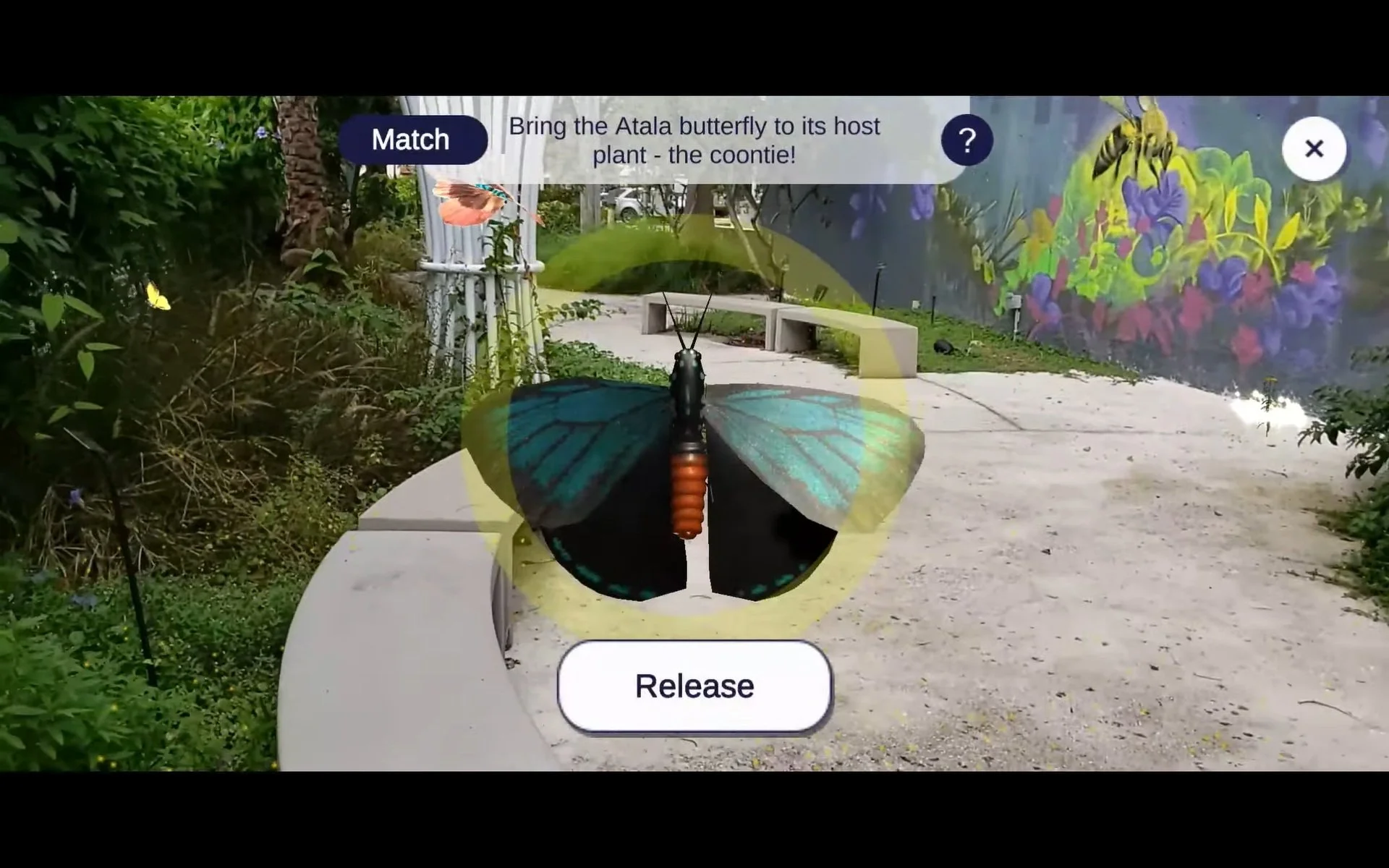
When selected, yellow ring appears.
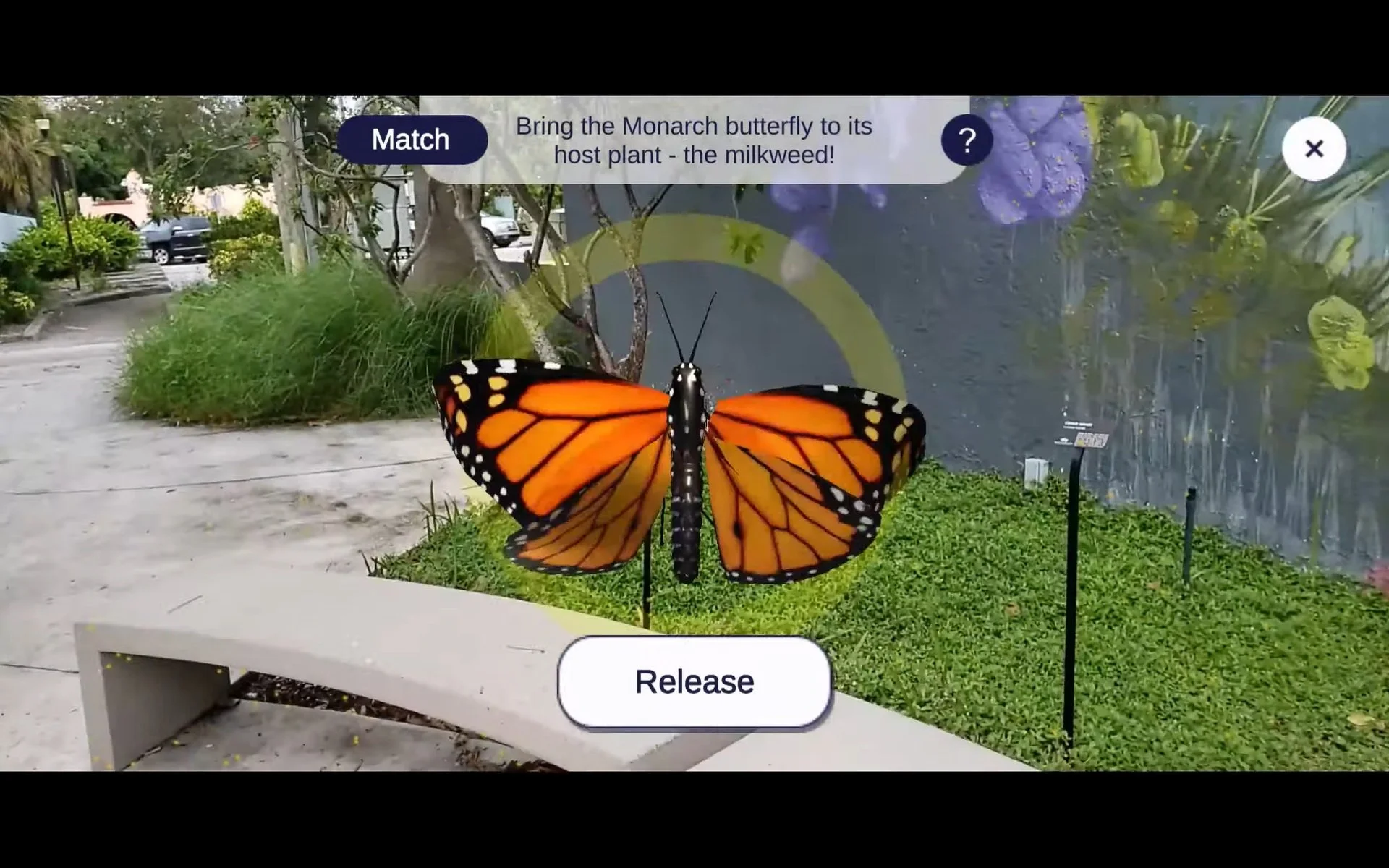
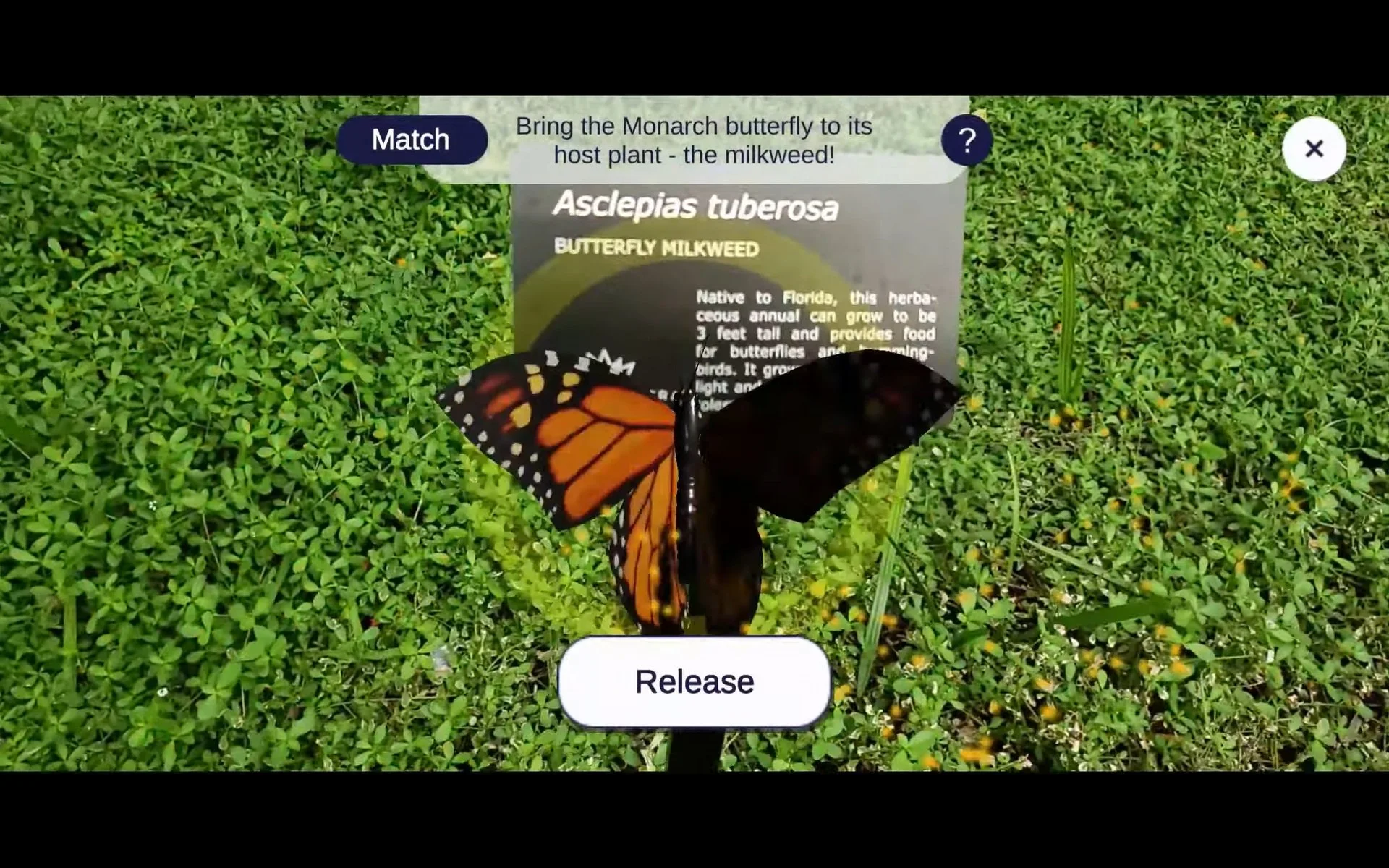
Carry the Atala Butterfly to its host plant.
Match butterfly to host plant to hatch the eggs.
Immersive Educational Experience
Liberty Gardens App Learn More
Overview
The Butterfly Garden transforms a real park into a living, augmented ecosystem. Guests step into a space where butterflies and bees drift through the air in 3D, behaving as if part of the natural environment. Unlike decorative overlays, these creatures are interactive companions, designed to be paused, inspected, carried, and guided to their native host plants. Each interaction reveals a new stage in their lifecycle, teaching ecological interdependence through embodied play. Built in Unity XR with AR Foundation, the experience blends geolocation triggers, image recognition, and interactive mechanics into a playful but scientifically accurate exploration of biodiversity.
Core Interactions
Tap to Pause: Freeze a butterfly or bee mid-flight; a glowing anchor holds it in space.
Inspect Up Close: Walk around the insect, observing wing patterns and lifelike behaviors up close.
Catch & Carry: Attach it to the phone, simulating capture while keeping it alive and in motion.
Search & Match: Hunt through the real garden to locate its host plant, guided by AR markers and subtle cues.
Eggs & Hatching: Correct matches trigger eggs to be laid and hatch before the guest’s eyes, completing the life cycle.
Release: Return the insect to the ecosystem, maintaining balance and reinforcing ecological awareness.
My Role
As Lead AR/VR Architect, I directed the concept, design, and Unity XR implementation. I developed pipelines merging interactive physics, geolocation cues, and image recognition to simulate natural behaviors. I also collaborated with educators and scientists to ensure the experience was engaging for families while remaining ecologically accurate.
Impact
The Butterfly Garden reimagined a public park as an outdoor classroom without walls, allowing children, families, and visitors to learn ecology through active play. It demonstrated how XR can transform environmental education, turning abstract ideas like pollination and interdependence into embodied, memorable encounters. The project was showcased as part of Before It’s Too Late’s climate awareness initiatives and remains a scalable template for museums, classrooms, and civic parks.
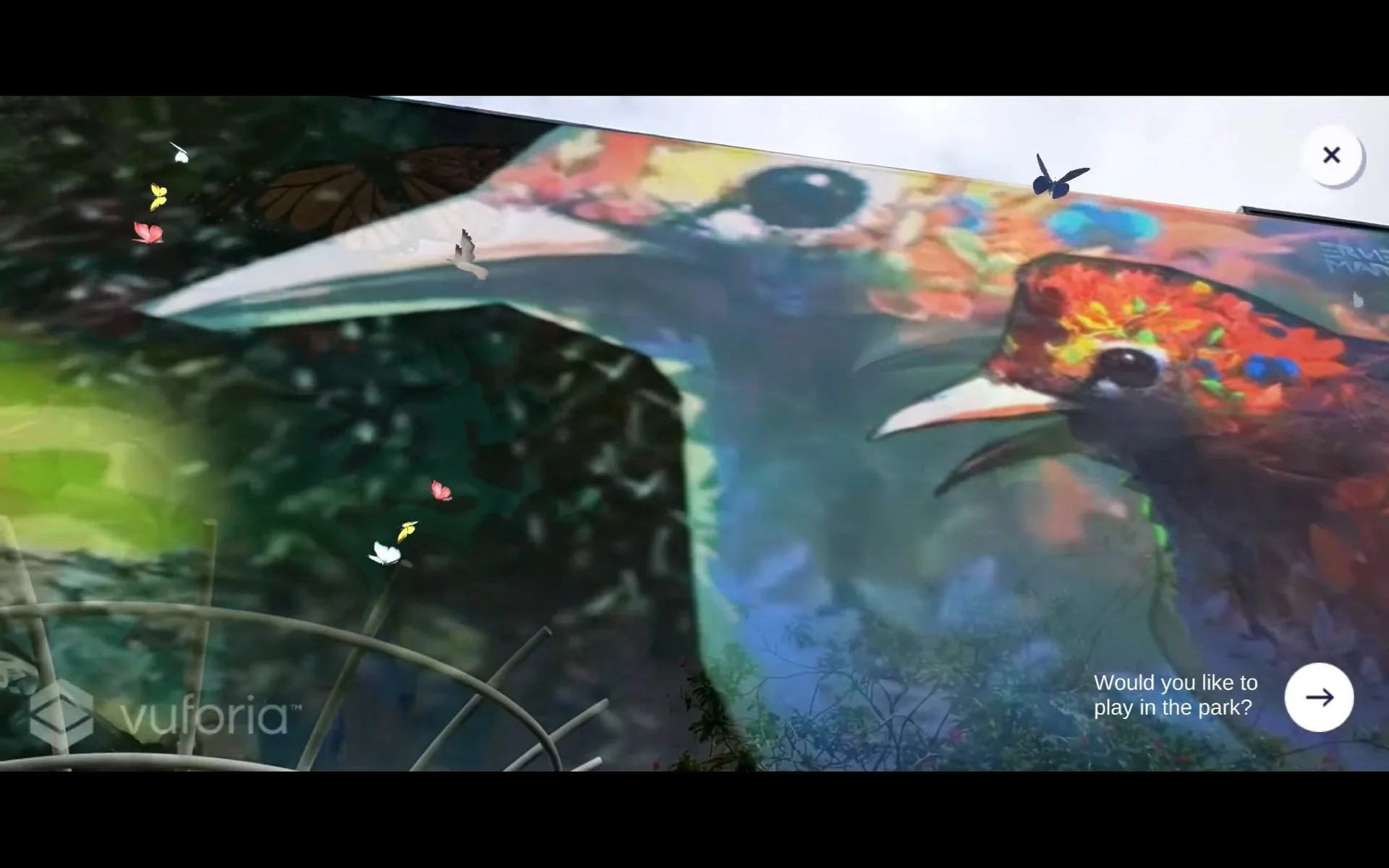
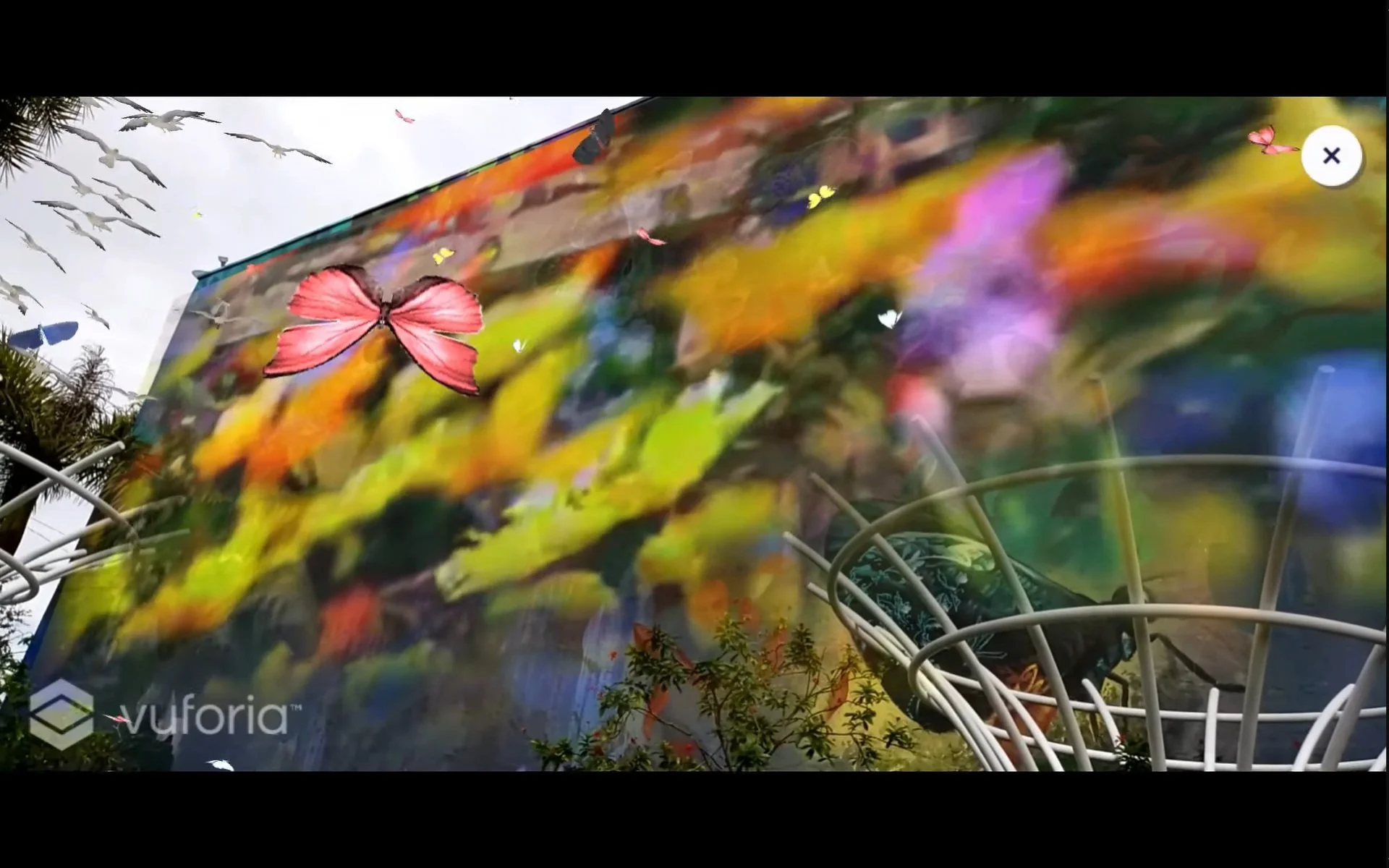
With Linda Chen (BITL) on the rooftop across from our 50′ × 30′ AR-animated mural, a breathing forest where light, birds, and butterflies move across the wall. It hints at what’s at risk with habitat loss and invites guests to enter the story in AR.
Phone capture of AR Experience
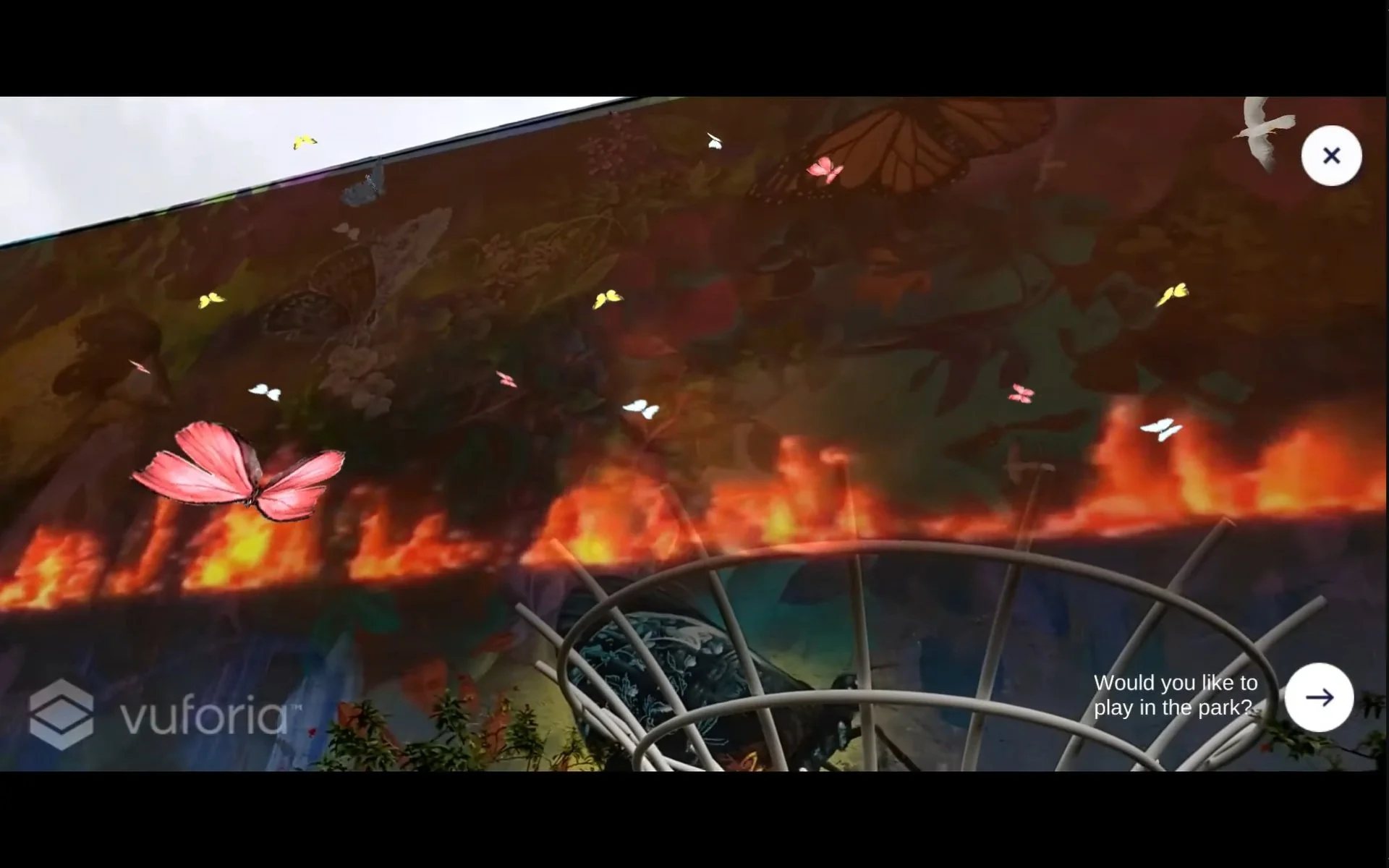
Living Forest : AR Animation on Habitat Loss
We brought the mural to life by mixing filmed video with real-time 3D birds and butterflies. As the wall animates, the scene shifts from a vibrant canopy to a threatened habitat, conveying how deforestation and loss of nesting plants endanger local pollinators and migratory birds. This animated moment sets the message for the experience that follows: a beautiful ecosystem under pressure, seen up close through AR.
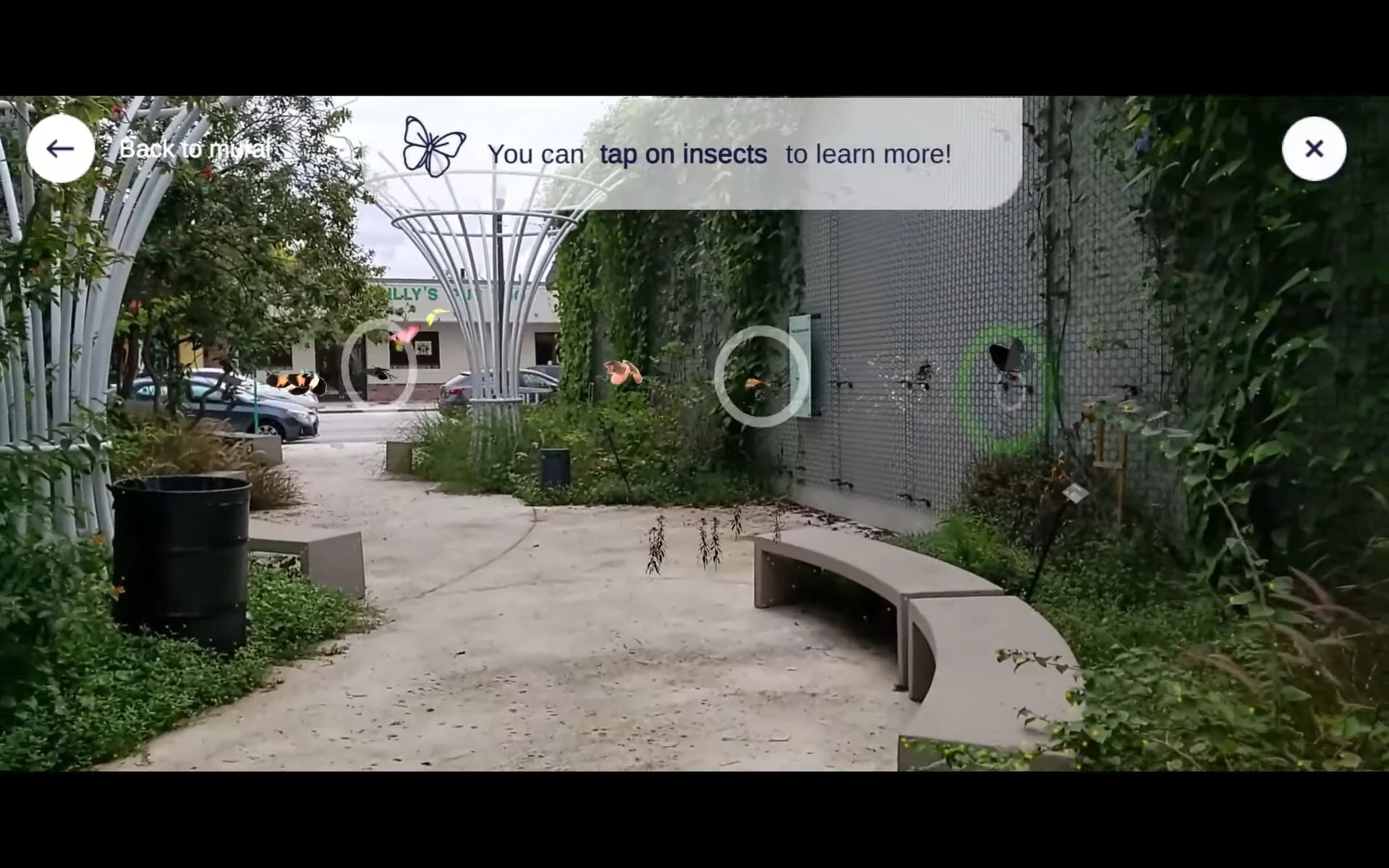
The Virtual Garden Reveals itself
“Would you like to play in the park?” The garden becomes your stage.
Interact with the Insects
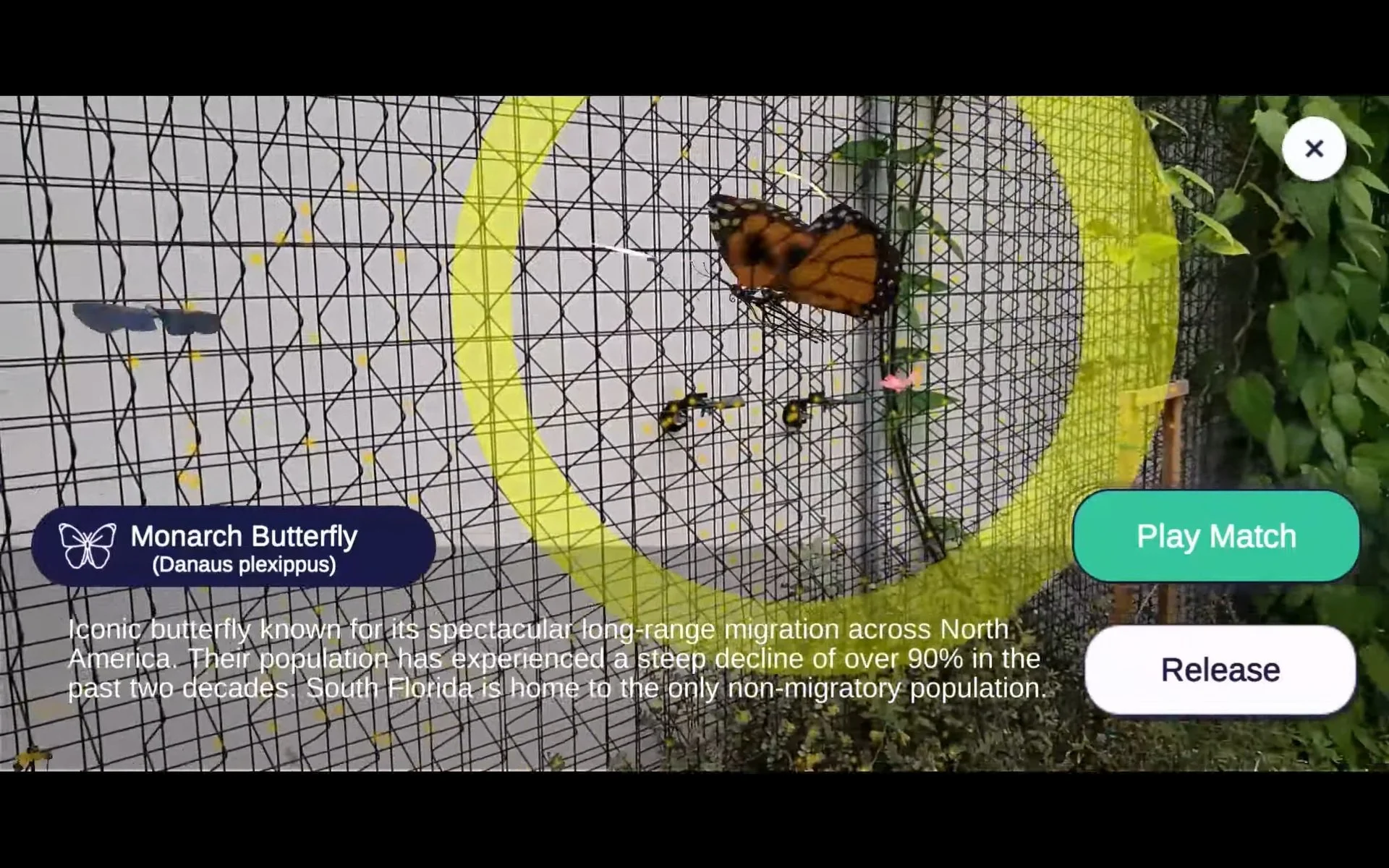
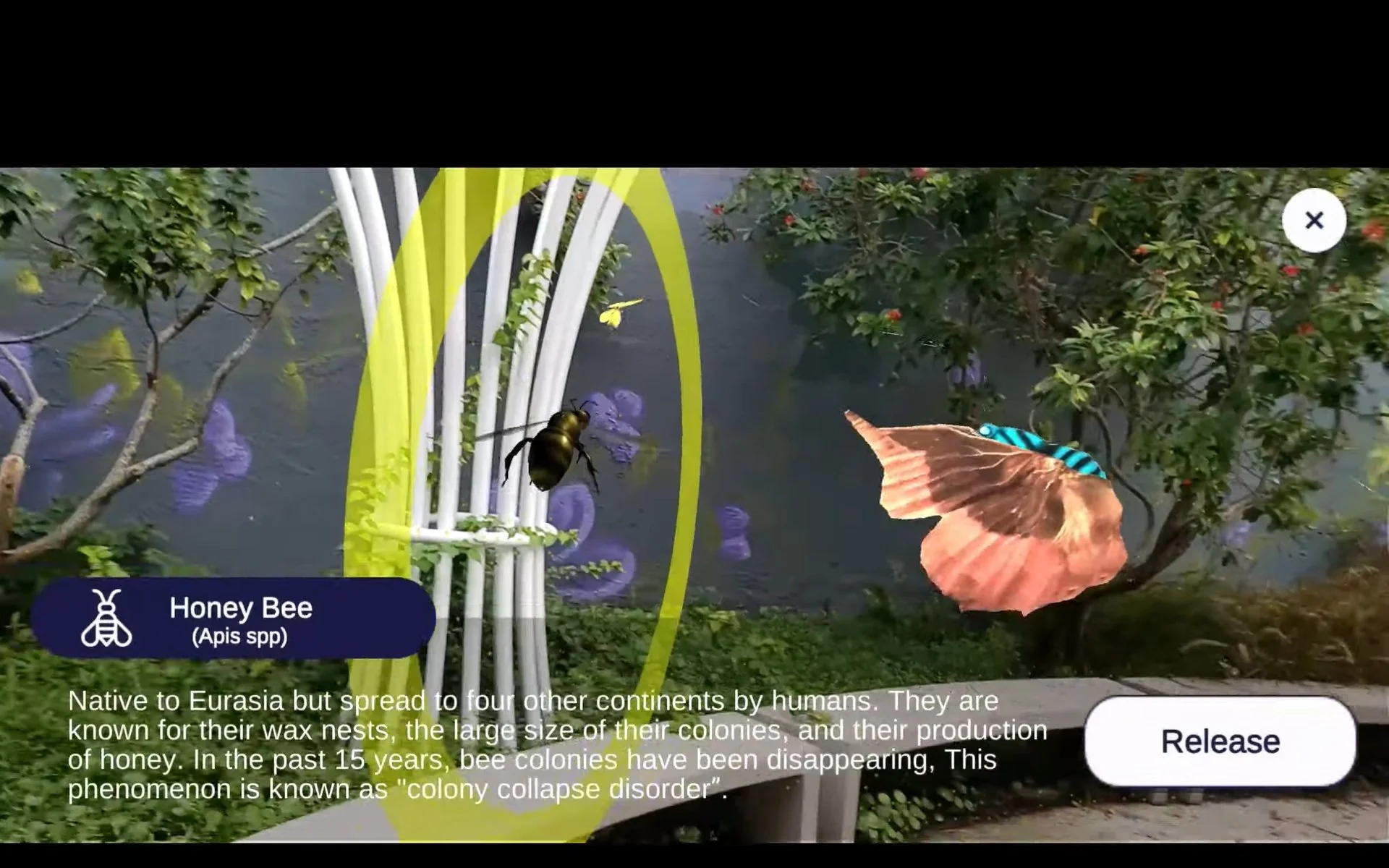
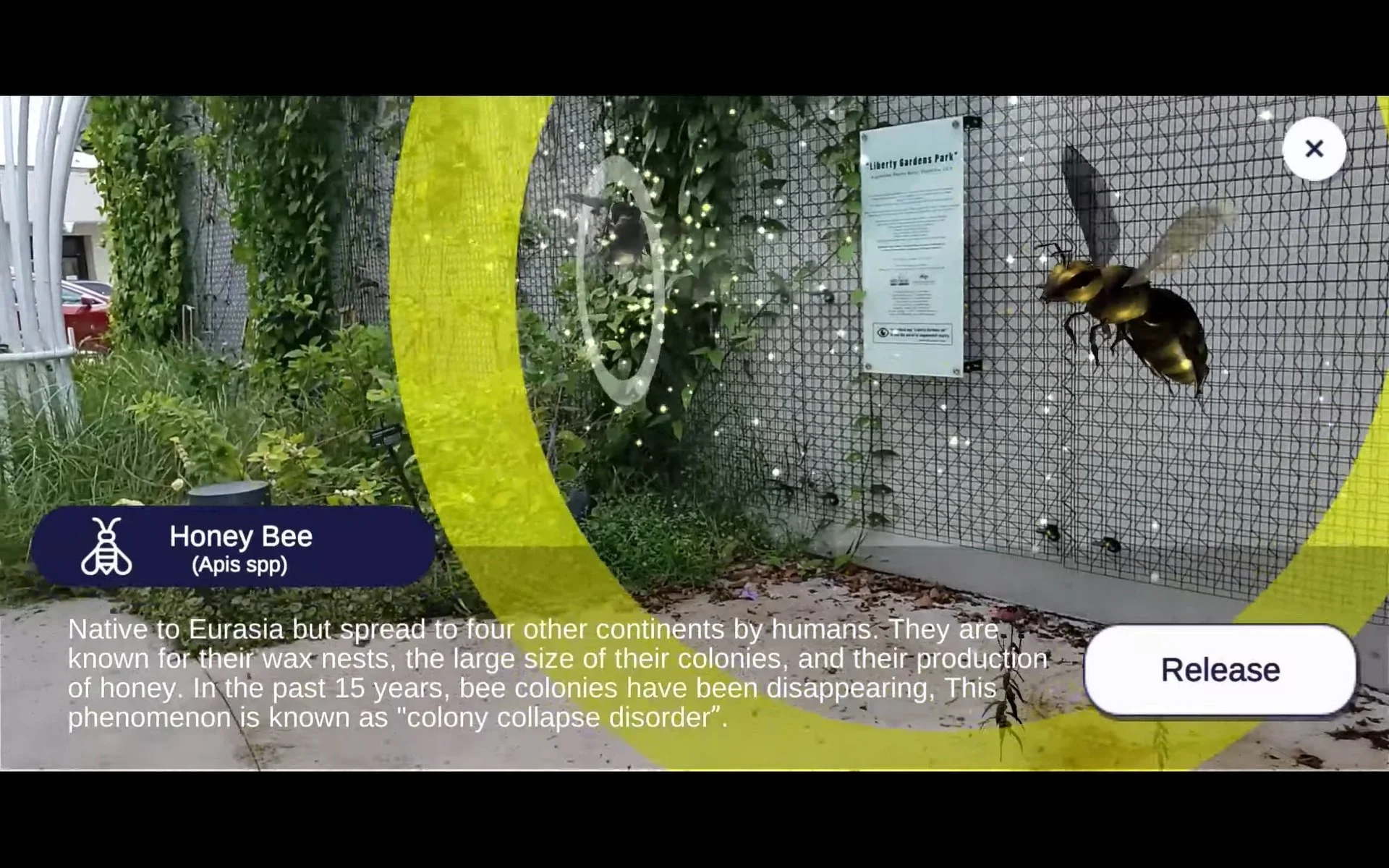
Walk around and explore. Tap a flying creature to see its stats, the yellow circle confirms you’ve selected it and pauses it in place. Here we’ve found a honey bee; the species panel pops up with quick facts.
Plant a Flower: Make the Garden Grow
Tap any spot in the park to plant a virtual flower. The world responds instantly, blooms anchor to the ground and sway in place. This simple action teaches spatial awareness (ground-plane detection) and gives players real agency: shape the space, leave color behind, and make the garden your own.
Encounter with a Monarch
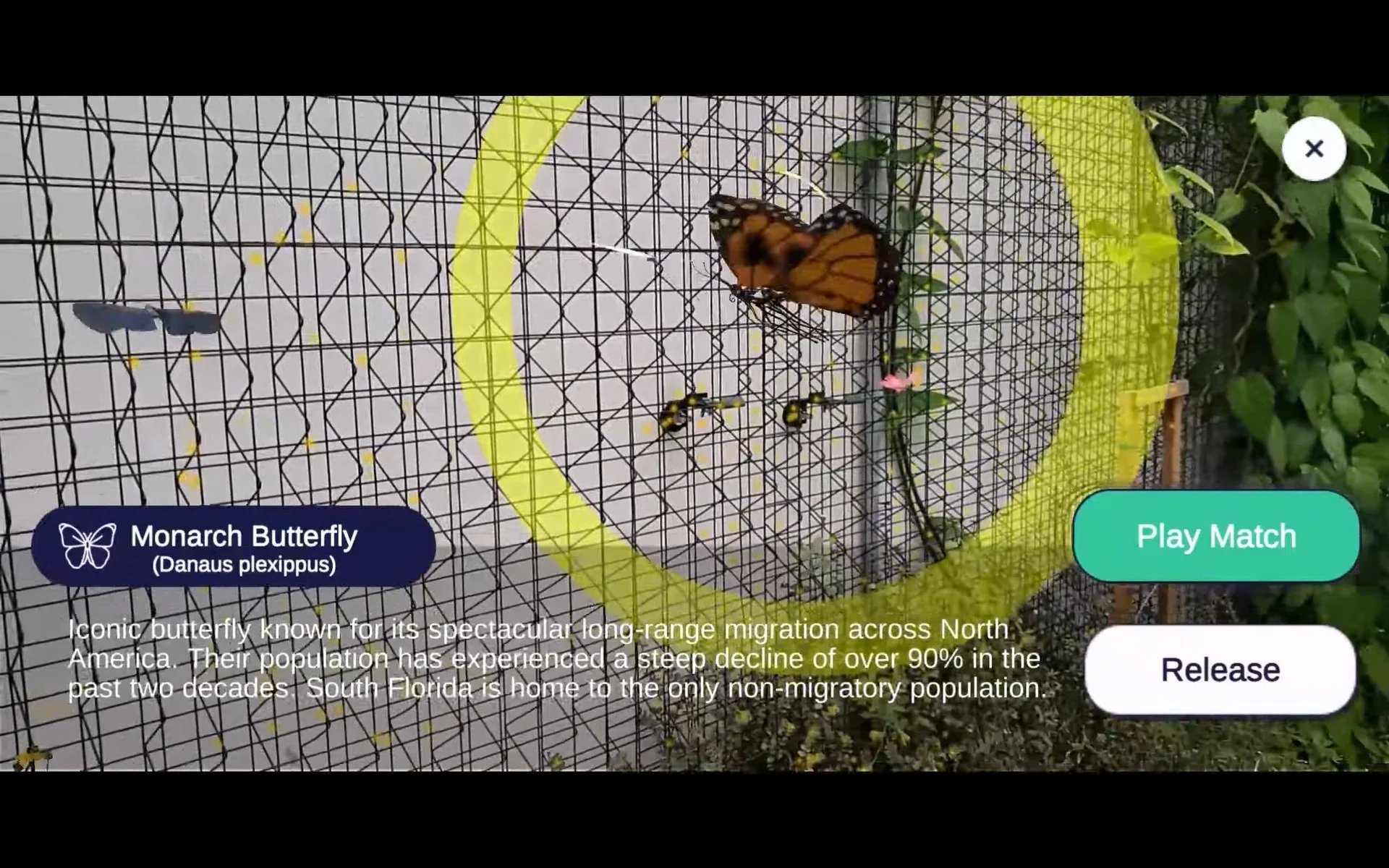
A Monarch butterfly drifts into view. Tap to select and a glowing yellow ring locks onto it, signaling interaction. A quick info card introduces the species. From here, the choice is yours: grab it to carry along on your journey, or release it to continue its natural flight. Each decision adds to the sense of presence, making every encounter feel alive and meaningful.
The Monarch Becomes Yours
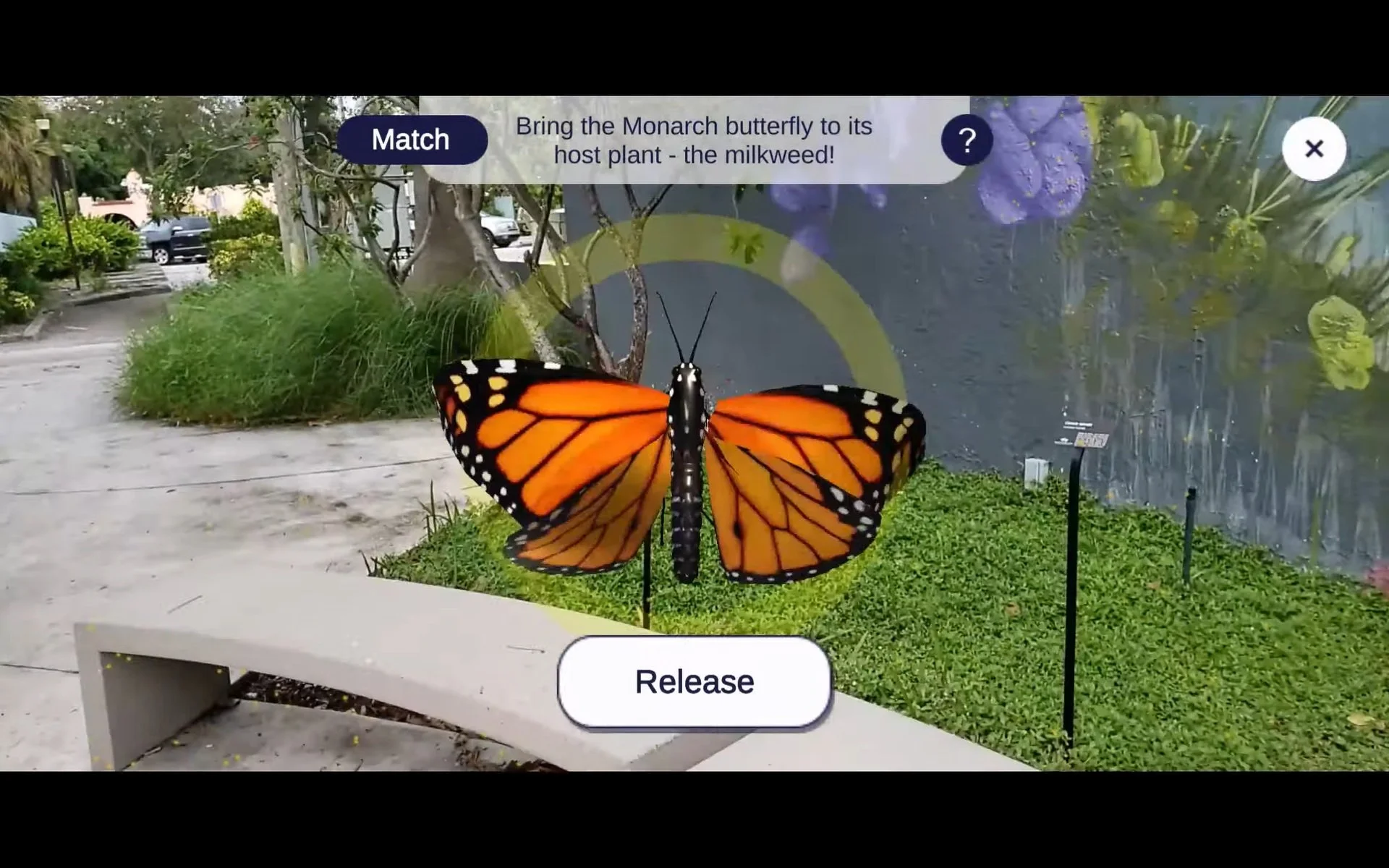
With a second tap, the Monarch leaves the air and lands on your phone, its wings still moving as if perched in your hand. Now you carry it with you, its journey linked to yours. The role shifts: you’re no longer just an observer, but a caretaker with a responsibility.
Your task: find its native host plant. The garden becomes a scavenger hunt, guiding you through AR markers and subtle visual cues. Only by bringing the Monarch to the right plant can its life continue, connecting play with ecology in a tangible, memorable way.
Searching for the Host
Carrying the Monarch on their phone, guests explore the garden to find its native host plant. Here, the butterfly hovers near a milkweed marker. The glowing ring signals a possible match, but the final confirmation comes only when the butterfly is released onto the plant. Scan the Marker and find out!
Matched! The Monarch Finds Its Home
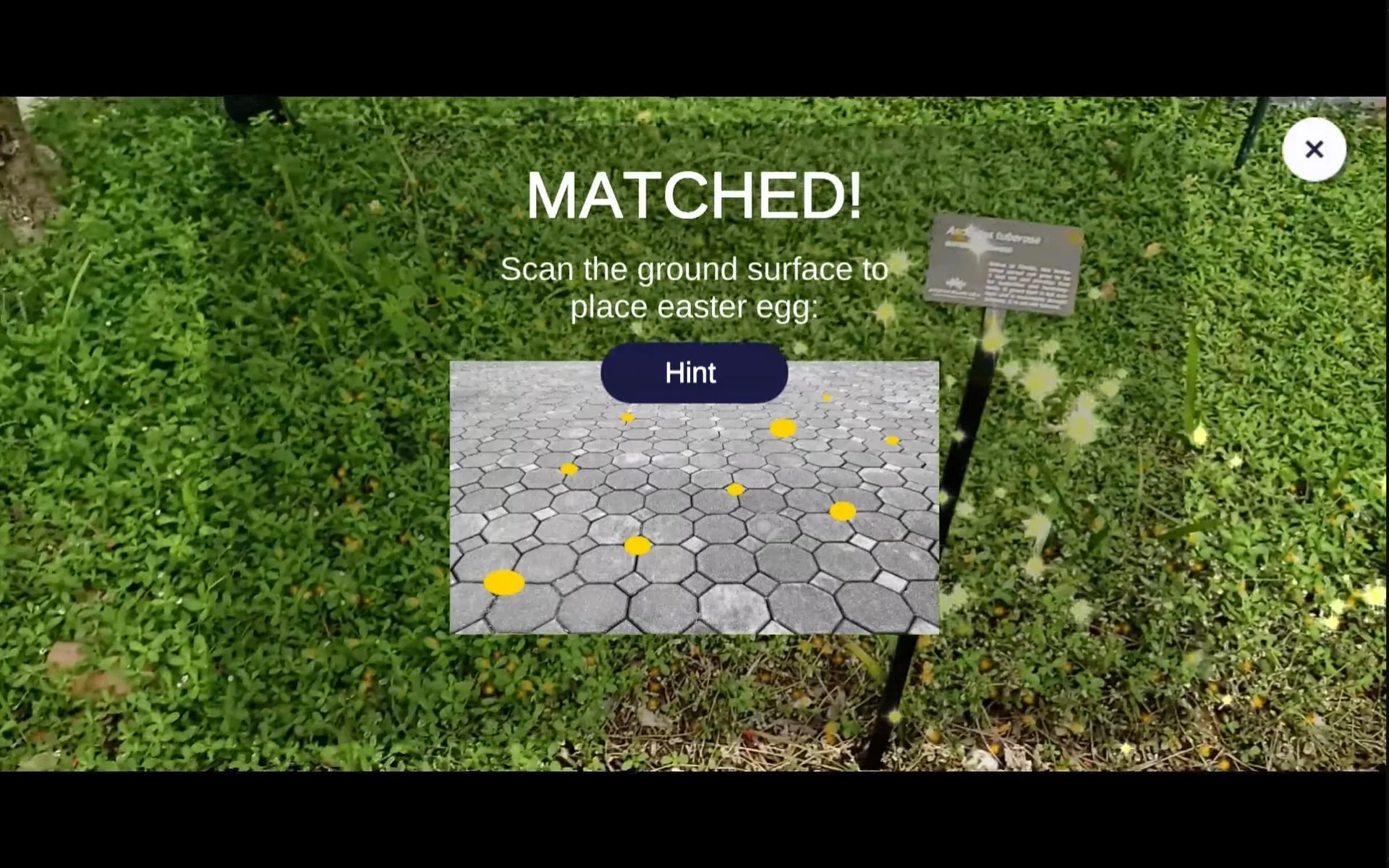
The butterfly recognizes its native host plant, milkweed. With a shimmer of light and celebratory sparkles, the match is confirmed. The guest’s choice is rewarded, and the cycle continues: now it’s time to place eggs and see the next stage of life unfold.
Egg Placement: Life Continues
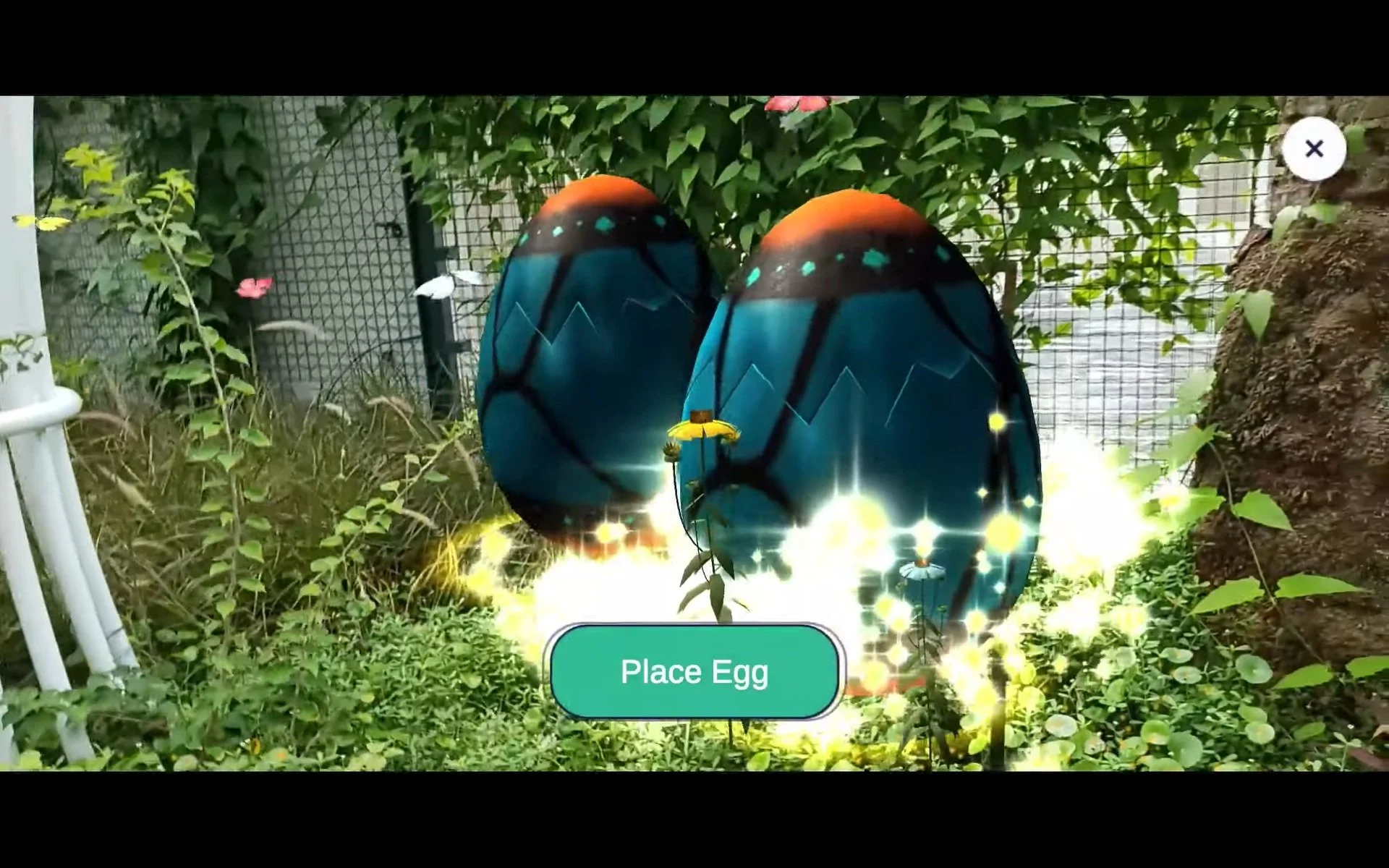
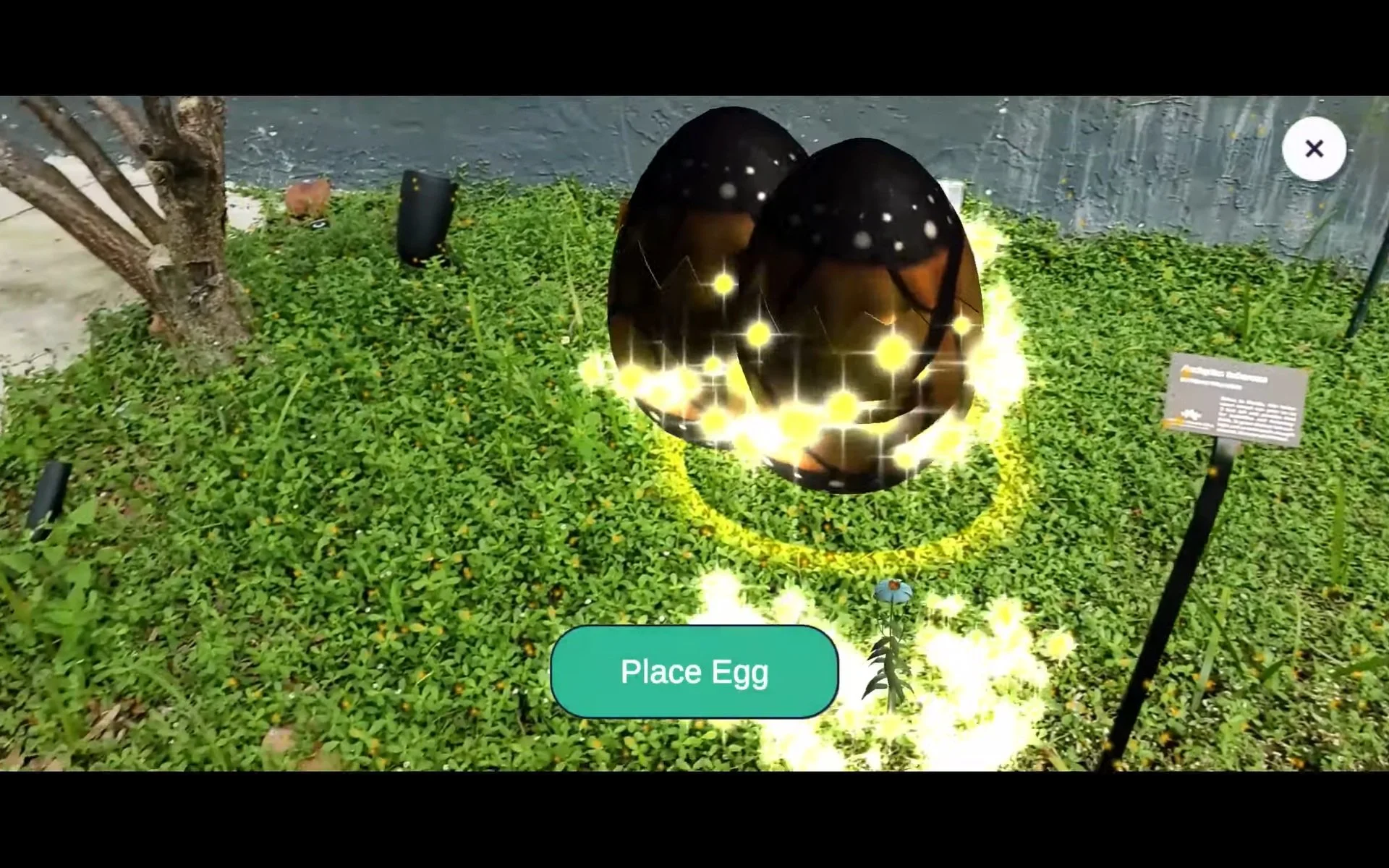
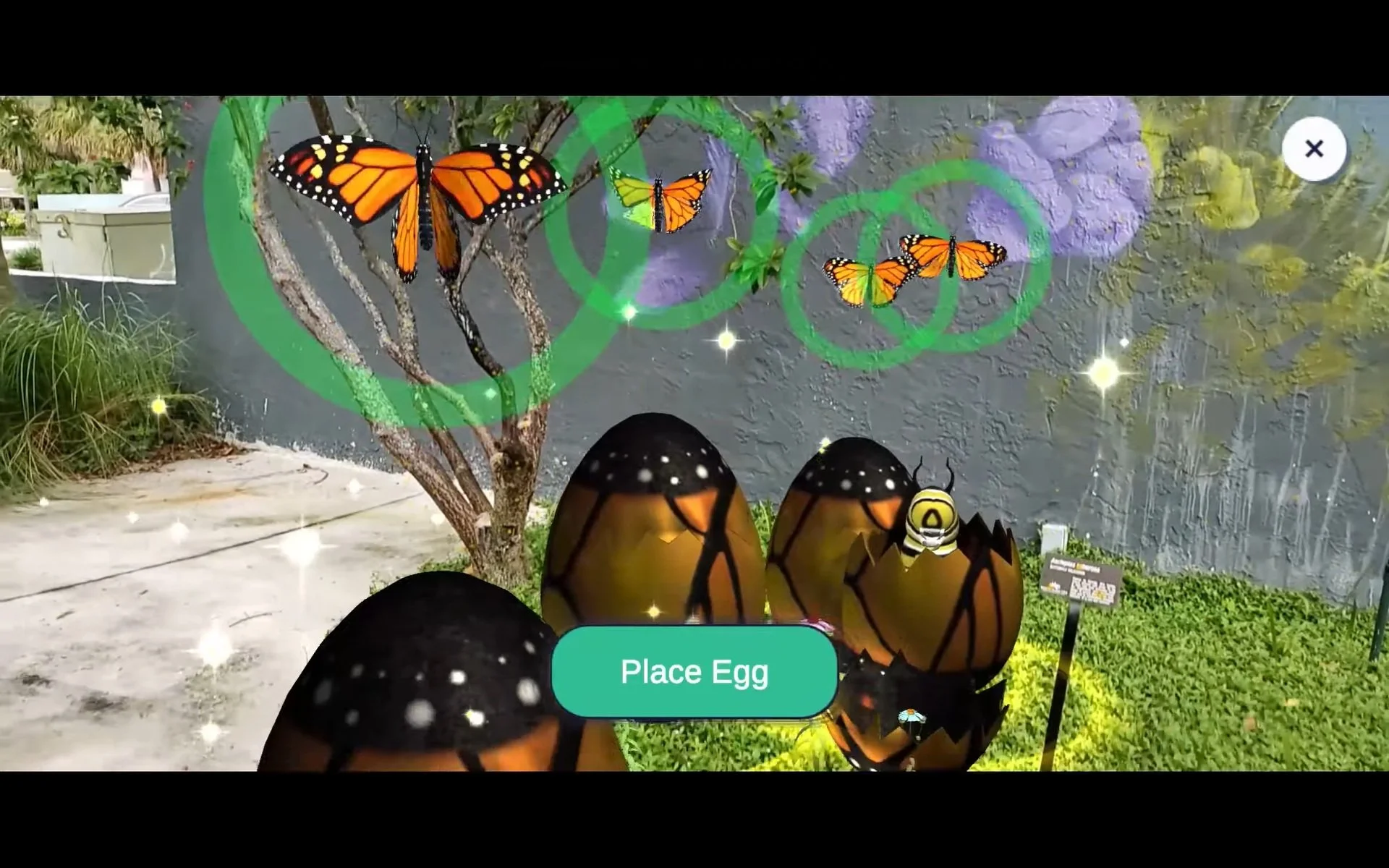
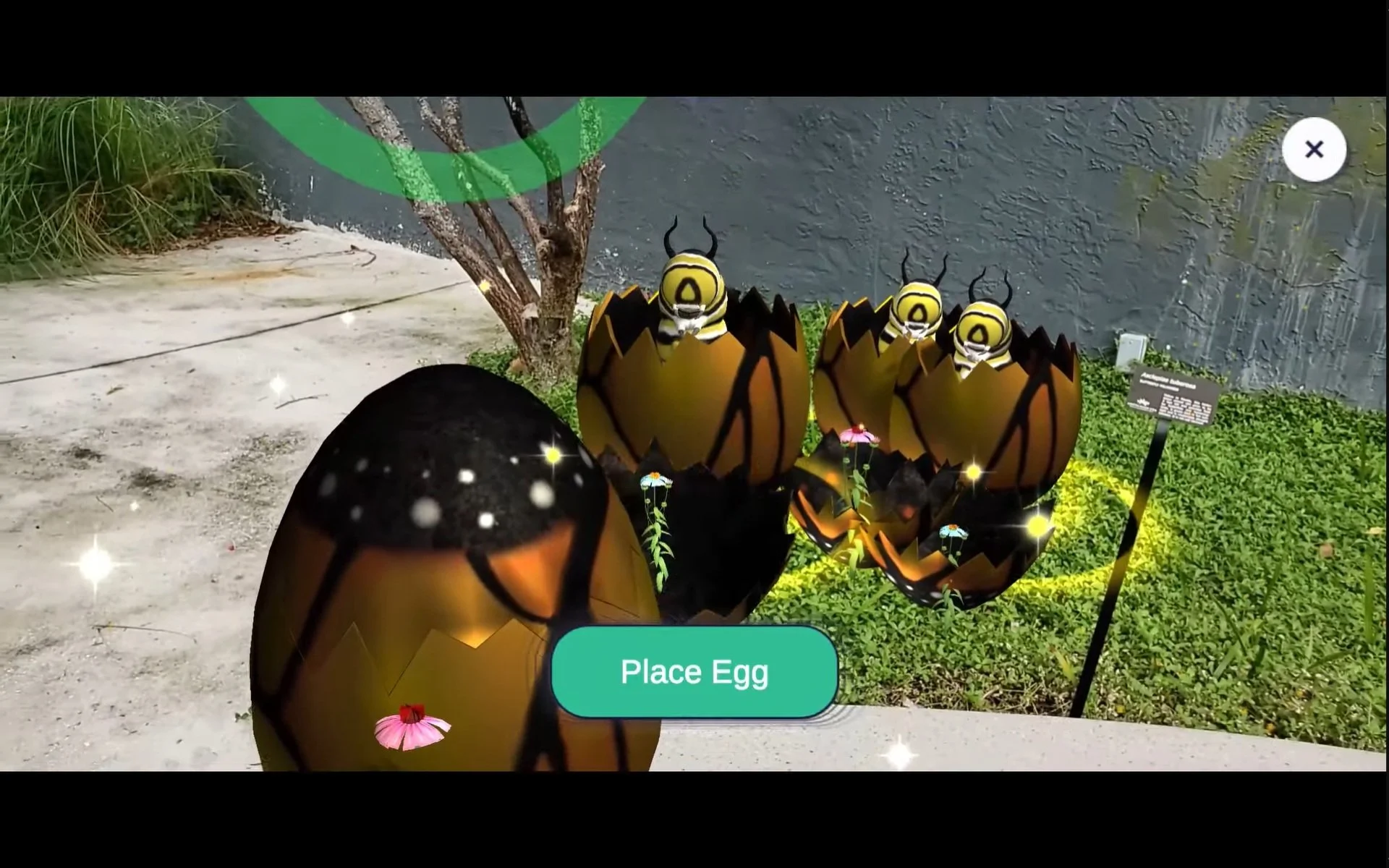
After matching the Monarch with its host plant, guests unlock the next step in the cycle: egg-laying. By pressing “Place Egg,” glowing chrysalises appear exactly where the user scans the ground. The environment responds with sparkles and light, signaling that something new is about to emerge.
This mechanic gives players agency, their choice of where to place the eggs shapes what happens next. A simple tap becomes a powerful teaching tool, turning abstract lessons about ecology into a tactile, magical action. The butterflies’ story is no longer passive; the guest is helping it continue.
The Eggs Stir with Possibility
As each egg is placed, it begins to glow and tremble, shimmering with potential. Green circles pulse into view, almost as if whispering what these eggs might become. Guests watch in suspense, feeling the world respond to their touch. It’s a moment of foreshadowing — magic and science meeting in a shared story of life that is about to unfold.
Larvae Emerge
The eggs crack open, tiny Monarch larvae wriggle into view, their stripes marking the beginning of a new life cycle. What was once a glowing shell now reveals the fragile, critical first stage of transformation.
Take Action: Plant a Garden of Your Own
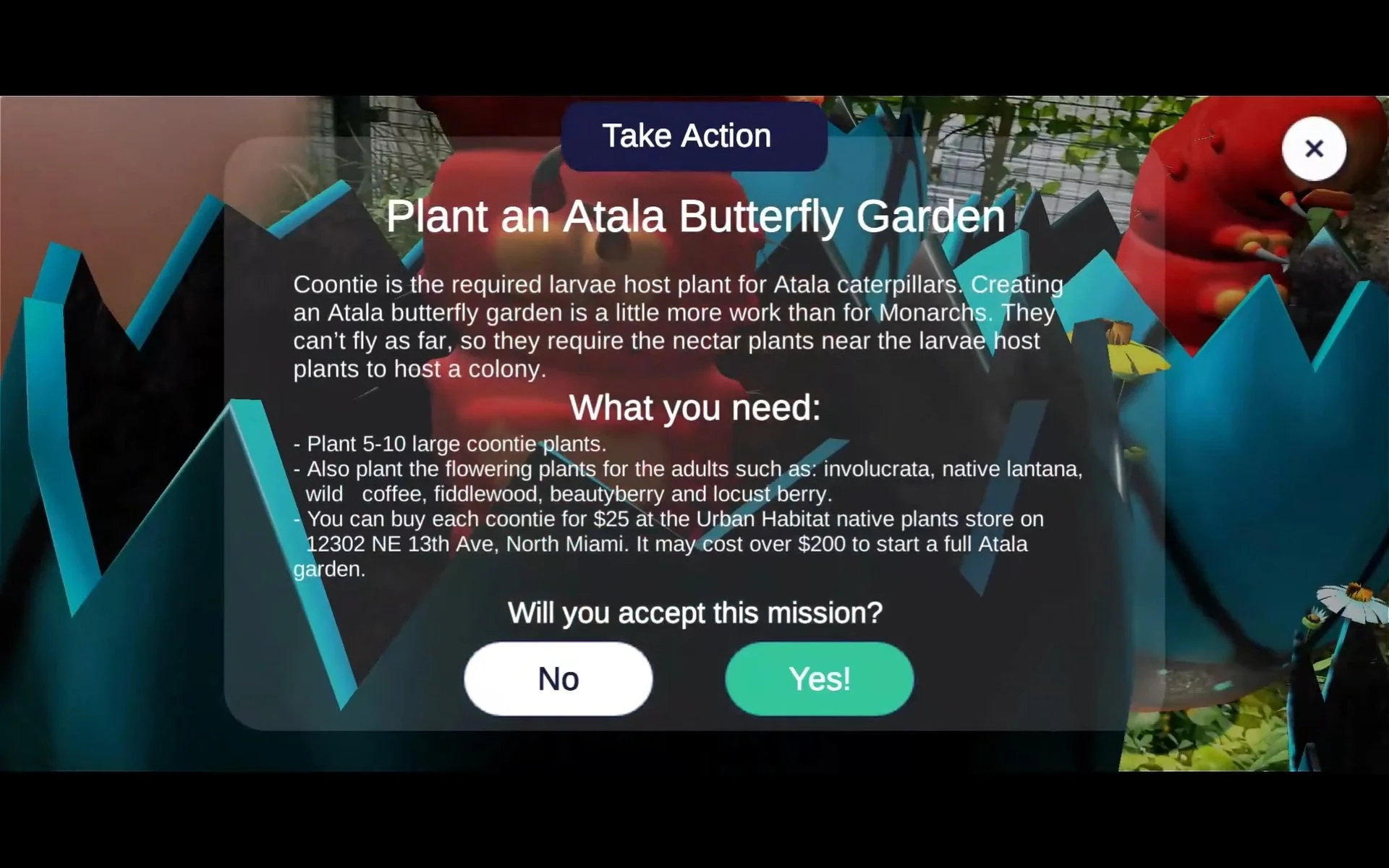
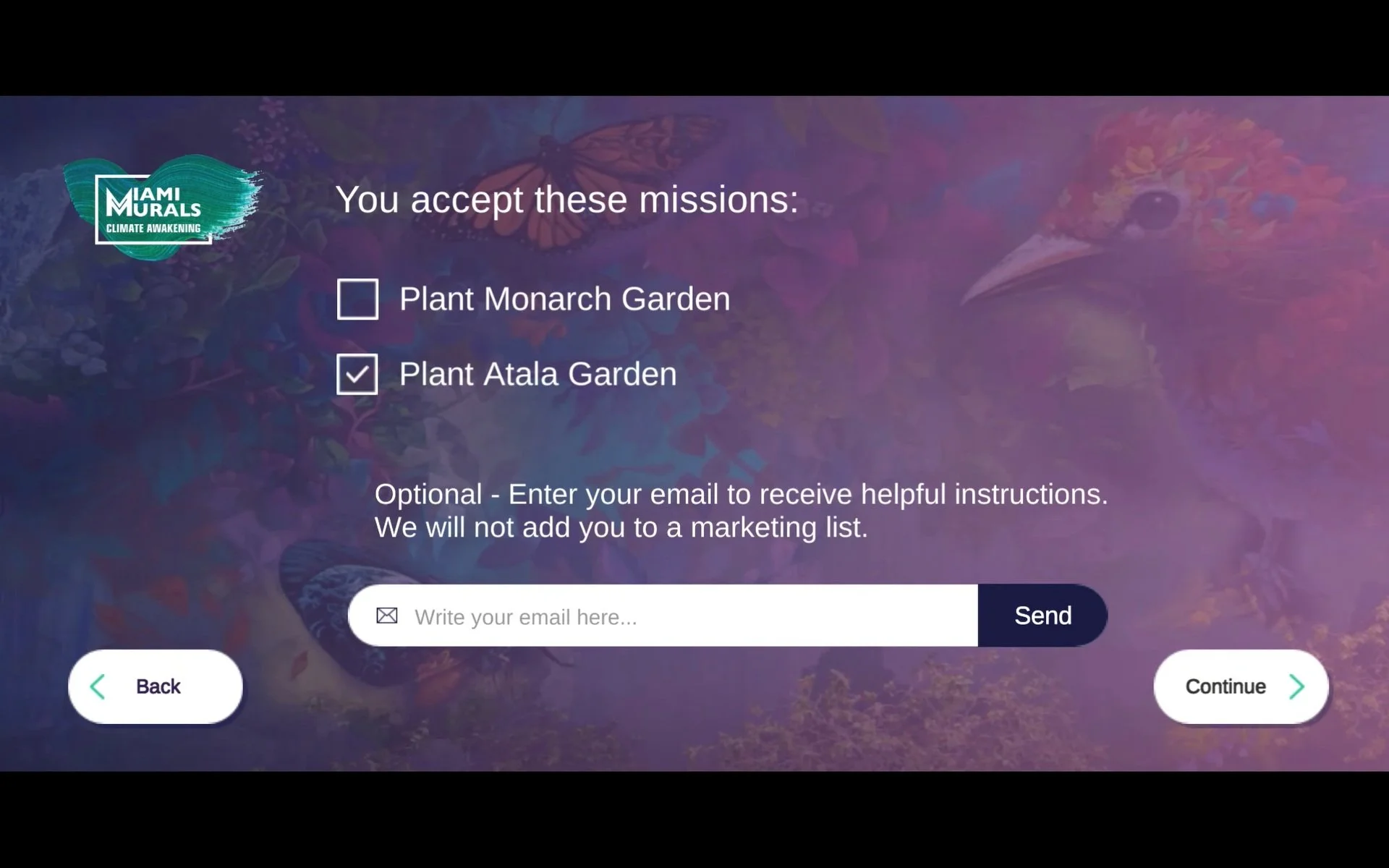
After watching butterflies emerge from their eggs, guests are invited to step beyond the digital world into real impact. A call-to-action screen appears: “Plant an Atala Butterfly Garden.” With clear guidance on host plants, nectar flowers, and even where to source them locally, players are empowered to become part of the solution. The AR story transitions into a real-world mission, turning learning and play into conservation.
Your Mission!
https://www.360entertainment.com/
Overview
For 360 Entertainment, I spearheaded the development of arena-scale XR activations that reached tens of thousands of fans in real time. These projects pioneered some of the first AR JumboTron experiences in U.S. arenas, blending live sports, celebrity collaborations, and Unity XR development. From football stadiums to basketball arenas, the work redefined how audiences interact with live events, transforming passive spectatorship into shared immersive spectacles.
Highlights
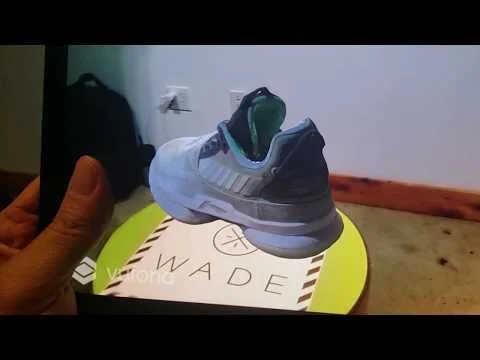
NBA Collaboration: Partnered with Dwyane Wade to launch a 3D/AR version of his signature shoe, extending fan engagement beyond a standard product drop.
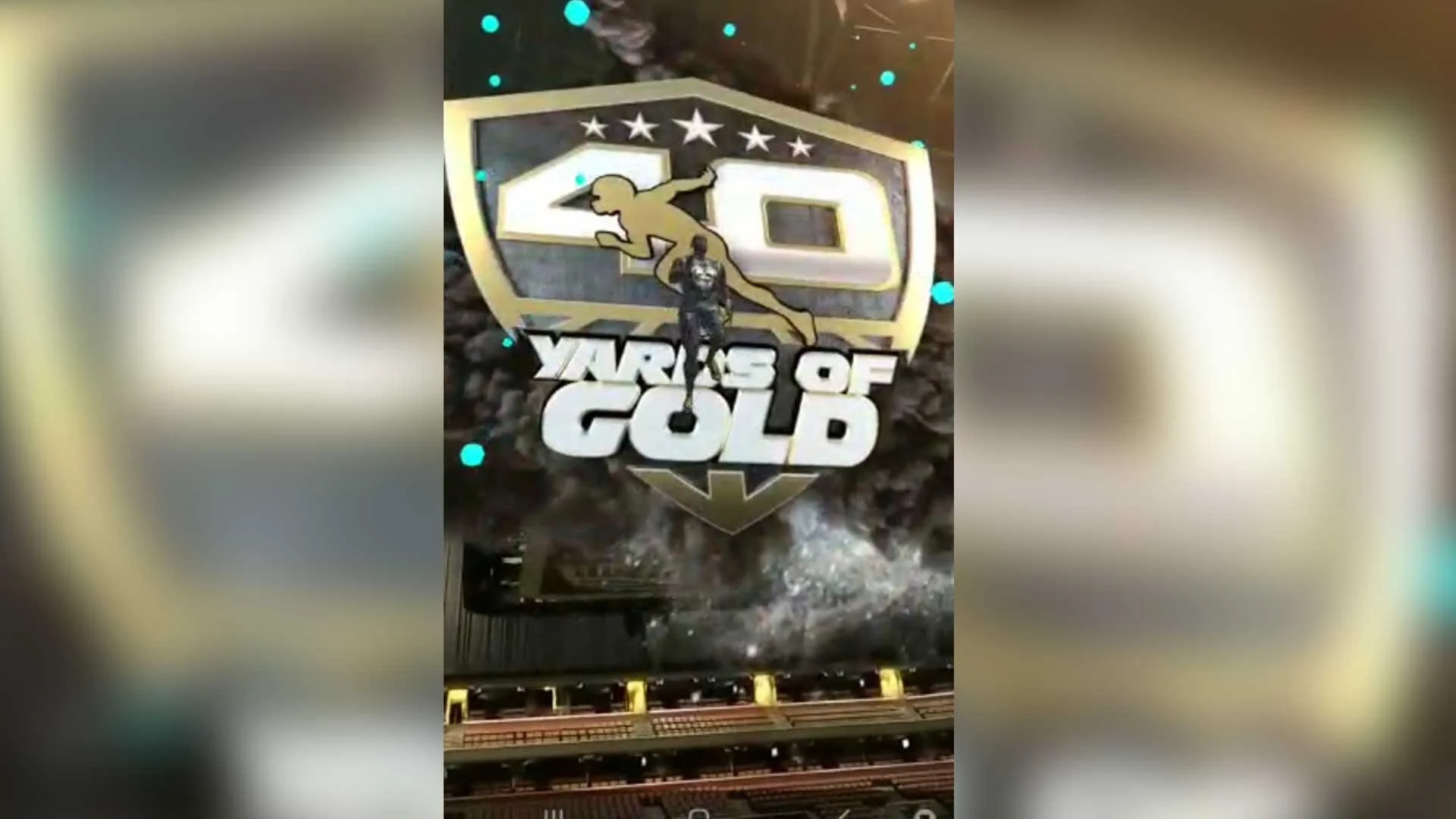
First AR JumboTron Activation: Produced the inaugural arena-scale AR experience at Miami’s BB&T Center during the 40 Yards of Gold event, where the stadium’s JumboTron became an interactive AR marker.
Event Flyer Come to Life: Designed an AR flyer that unfolded into a 3D stage, complete with podiums and holographic appearances of each participant—bringing marketing materials to life in a way fans could interact with.
Halftime JumboTron Animation: Coordinated a full-scale 3D animation for the halftime show, turning the arena screen into a living AR canvas that wowed thousands of spectators.
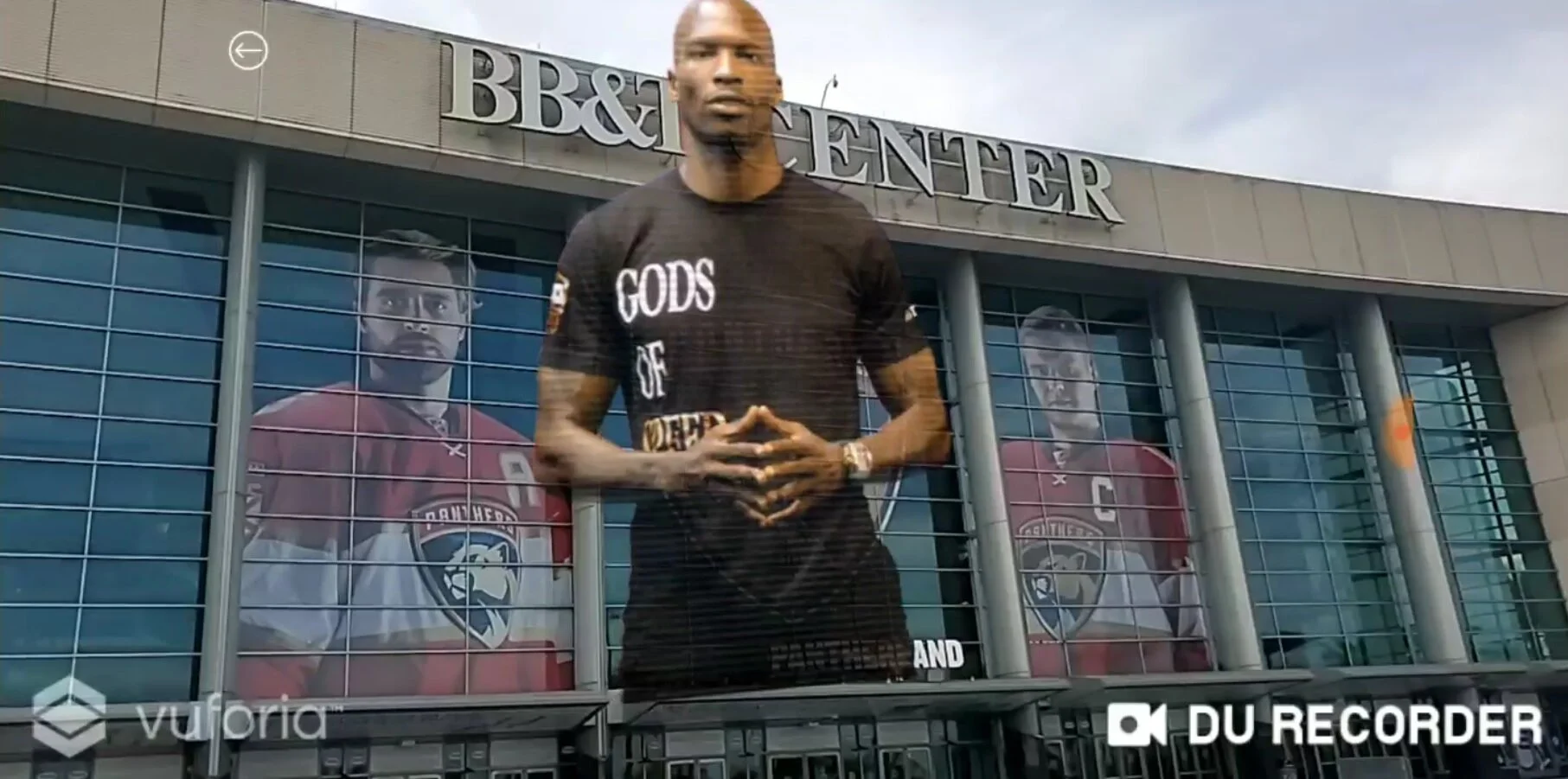
Building-Sized Hologram of Ocho Cinco: Directed the process of filming NFL star Chad “Ocho Cinco” Johnson, creating holographic effects, and deploying a stadium-scale AR hologram anchored to a 50-foot entrance graphic at the BB&T Center, welcoming fans as they arrived.
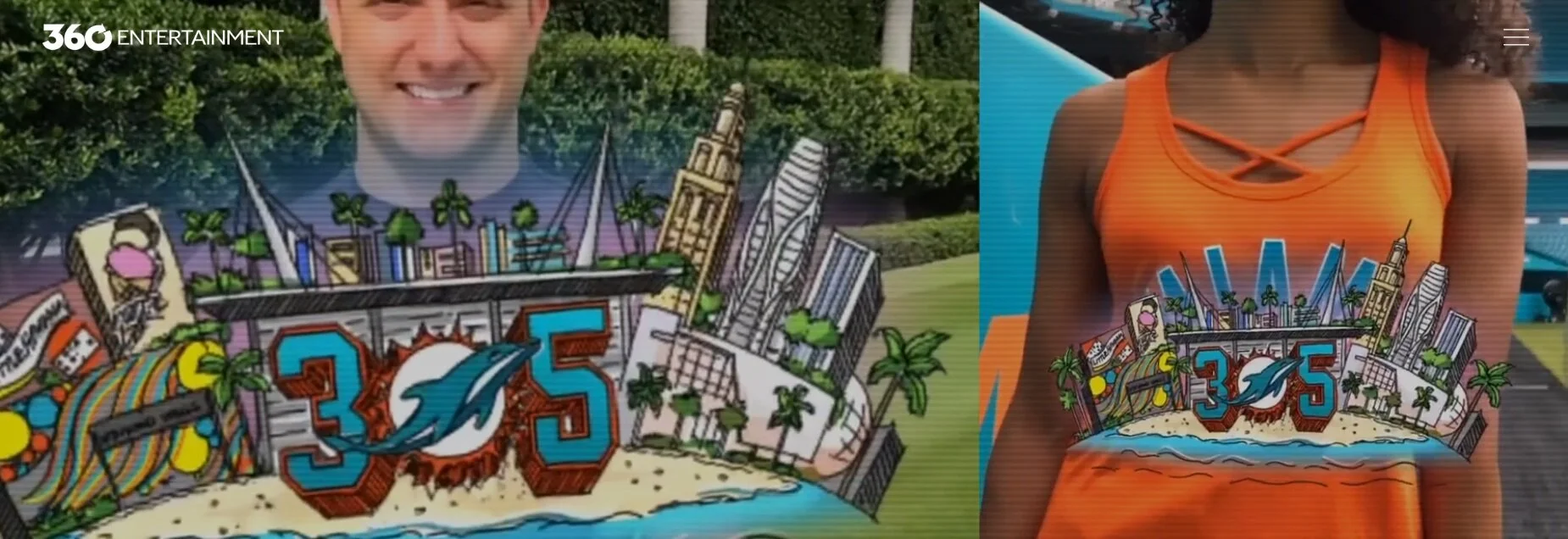
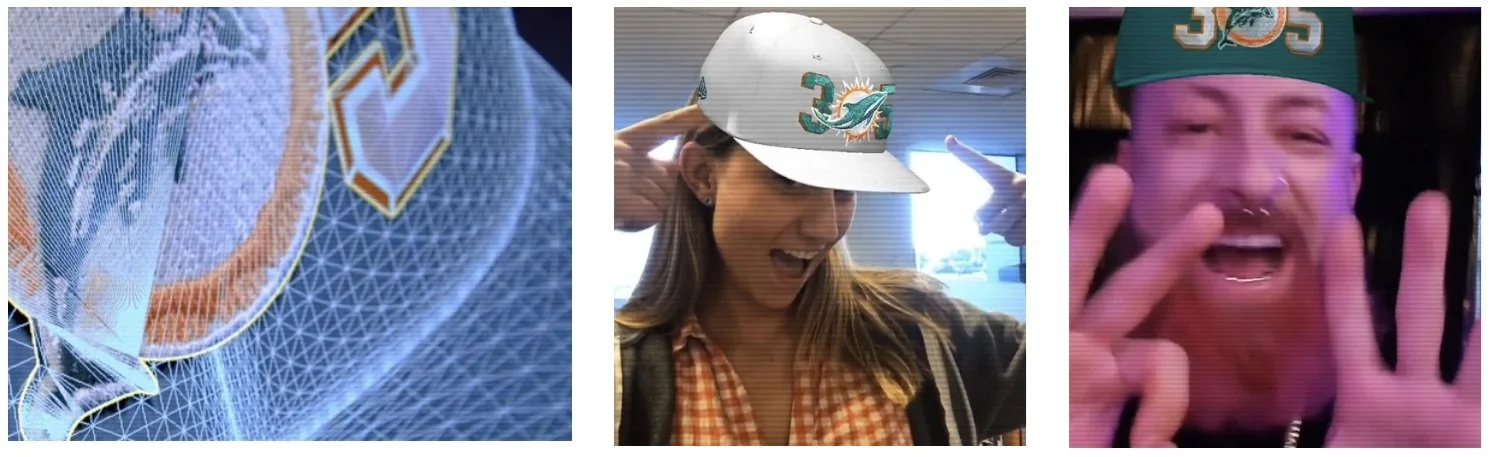
NFL Fan Engagement : Designed AR filters and merchandise-driven activations for the Miami Dolphins, animating hats and t-shirts to trigger branded holograms and overlays.
Technical Innovation: Directed Unity pipelines combining marker AR, real-time graphics, and stadium-scale deployment, ensuring smooth synchronization across cameras, mobile, and big screens.
My Role
As Lead AR/VR Architect, I:
Coordinated the projects, managing both creative and technical teams across multiple activations.
Directed the filming and VFX process for Chad “Ocho Cinco” Johnson, translating raw footage into a full-scale AR hologram.
Contributed as part of the animation team, shaping the 3D visuals for flyers, halftime shows, and crowd-facing spectacles.
Produced the Unity XR pipelines, integrating holographic content with real-world stadium infrastructure.
Worked closely with athletes, event organizers, and brand partners to align technology with storytelling goals and live crowd dynamics.
Impact
Pioneered the first-ever AR JumboTron activations in U.S. sports arenas.
Delivered one of the earliest stadium-scale AR holograms (Ocho Cinco at 50 feet), raising the profile of XR in live events.
Reached tens of thousands of fans per event with highly visible immersive content.
Demonstrated how AR can transform marketing collateral, athlete appearances, and halftime shows into memorable fan spectacles.
Future Vision
These activations illustrate how XR can elevate large-scale entertainment, from sports to concerts, festivals, and touring productions. The same frameworks can power theme park spectaculars, arena concerts, and citywide fan events, pointing toward a future where shared immersive moments become the centerpiece of live entertainment.
360 Entertainment - Lead XR Developer
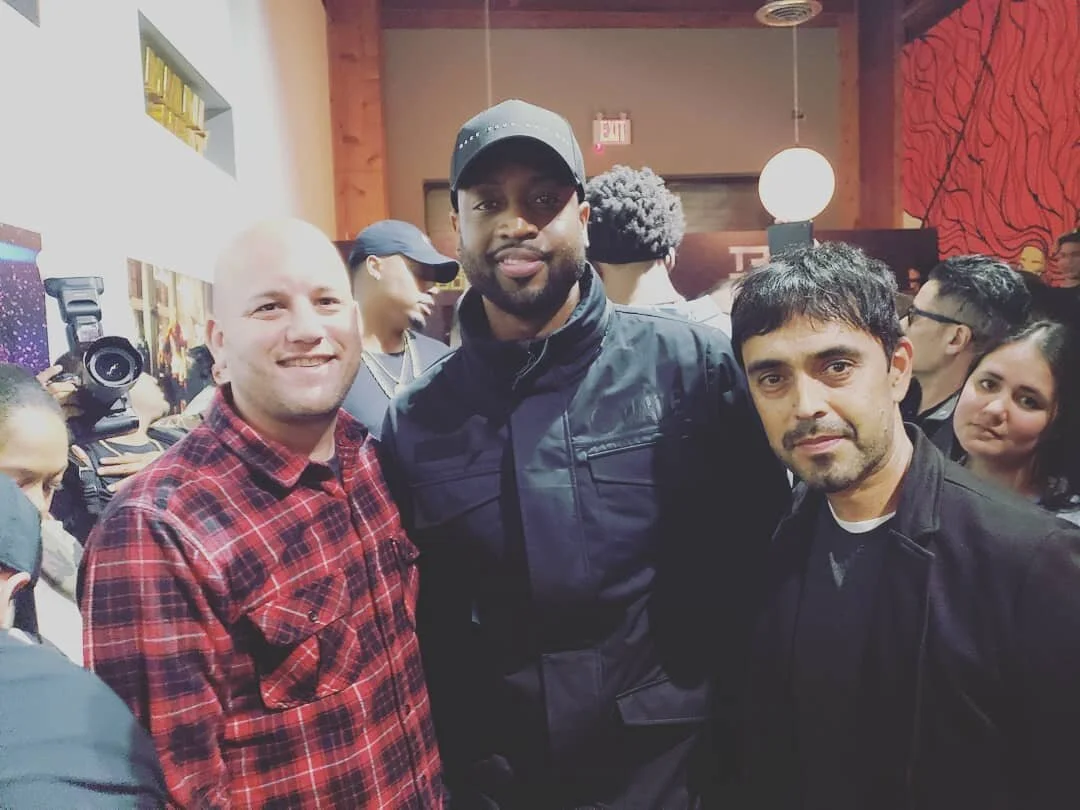
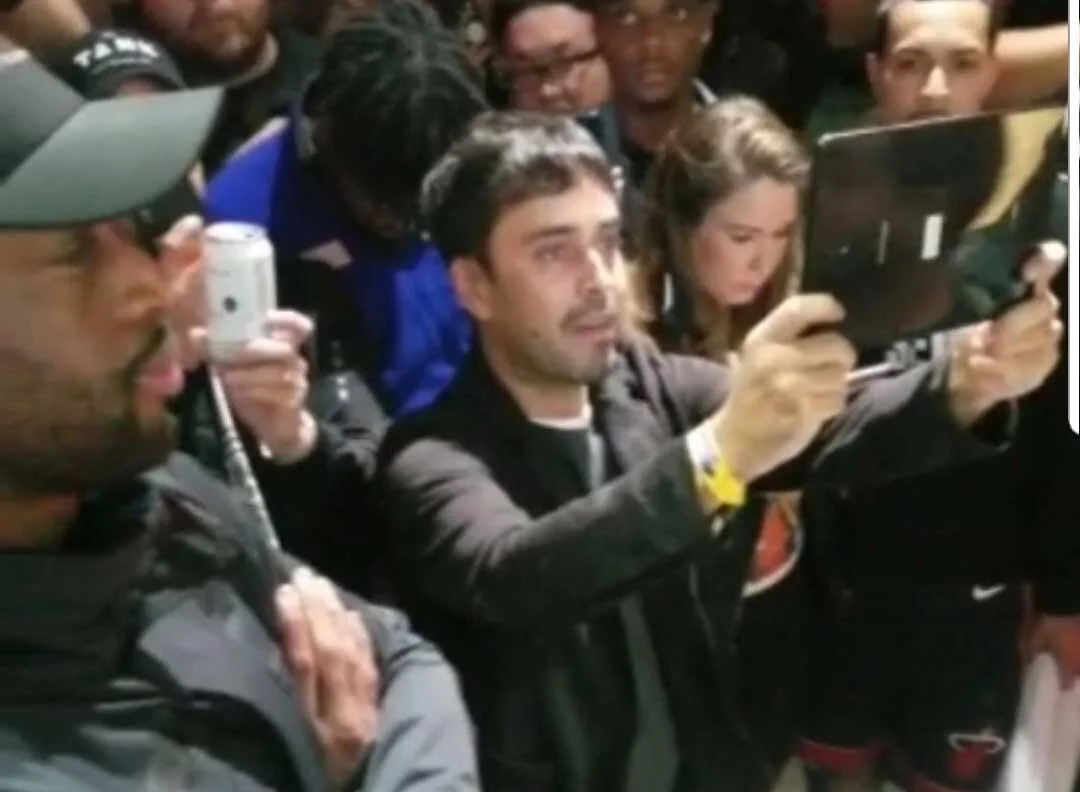
A few clips of Dwyane Wade, during the showings of the AR experiences we created for him and other Heat players. 40 Yards of Gold at the BB&T center also featured the 1st AR Jumbo Tron experience.
Showing Dwyane his new shoe in AR.
Ocho Cinco Hologram greeting you at the BB&T Center during the 40 Yards of Gold Event.
Jumbotron AR Experience
@ the BB&T Center during 40 Yards of Gold Event.
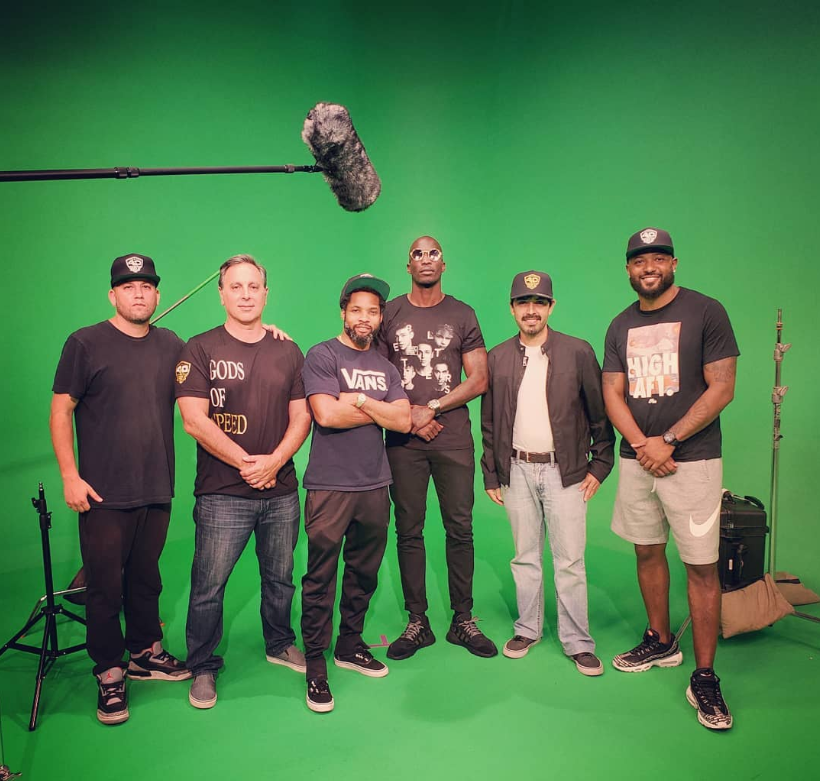
With Ocho Cinco and the crew from 40 Yards of Gold.
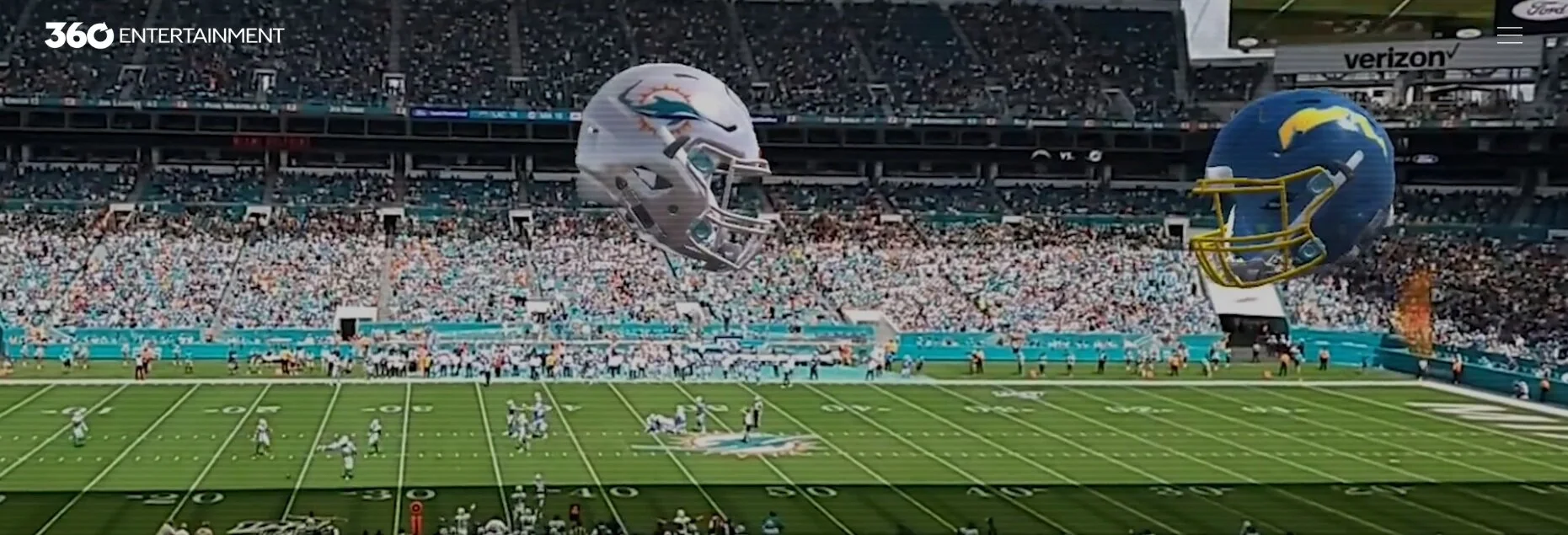
Miami Dolphins AR Showdown
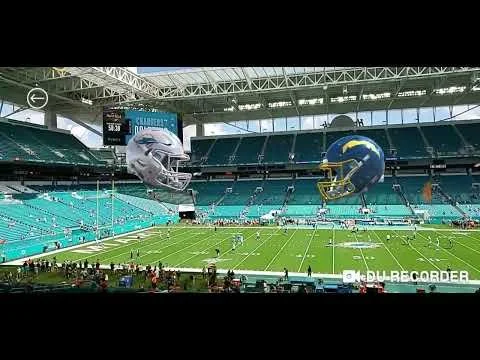
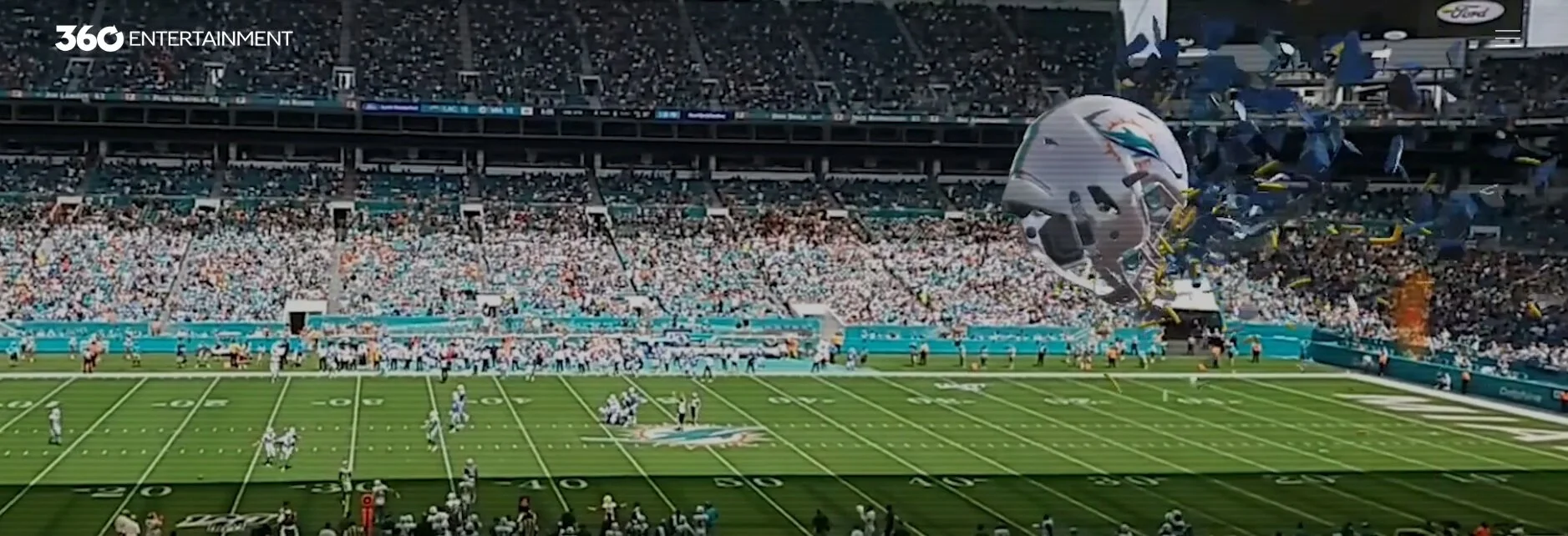
Virtual Helmets Collide at Hard Rock Stadium
This demo showcases how GPS-positioned augmented reality can turn iconic locations into immersive canvases for sports, entertainment, and fan engagement.
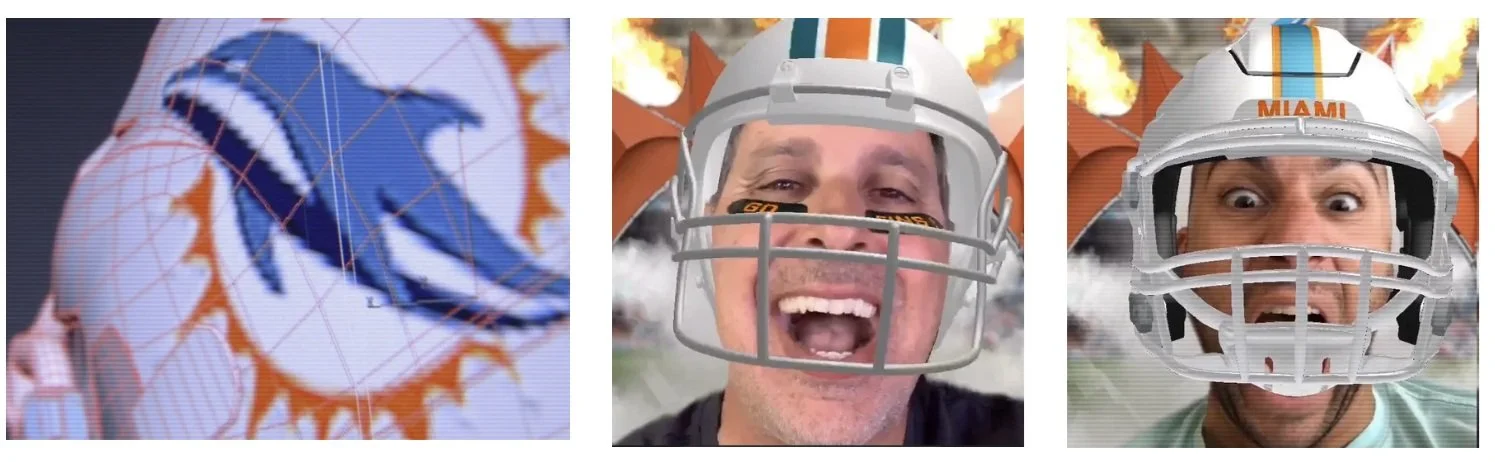
To celebrate the 100 years of the NFL, we produced a Social AR filter that allows the user to select from a current helmet style to a throwback Dolphins helmet. Elements from the stadium and the walkout tunnel were included in the scene. Additional interactivity included ignited the flamethrowers when the user opened their mouth. A fun filter to get ready for game day.
Dolphins T-Shirt filter
Using Spark AR we created a filter for the Miami Dolphins that projected an animation celebrating “305” on to the Dolphin T-Shirt.
To coincide with the release of their new “305” hat, the Dolphins asks us to create a companion filter that showed off the the colors and styles available, and to allow users a preview of the fit. The user was able to tap on screen to change between a hat with the current Miami Dolphins logo and one with the ‘72 Dolphins logo.
Using geo-location we were able to project animations in the middle of the playing field.
Megga World (2017–2018, Spinteractive)
An Early Prototype of the Metaverse
Overview
Megga World was a persistent, multi-user VR environment developed in High Fidelity, a platform years ahead of its time. The vision: create a virtual city where users could buy land, own homes, interact with NPCs, and participate in a shared economy. This project was one of the earliest explorations of what we now call the “metaverse,” blending interactive storytelling, avatar customization, and persistent systems into a living, virtual world.
Core Experiences
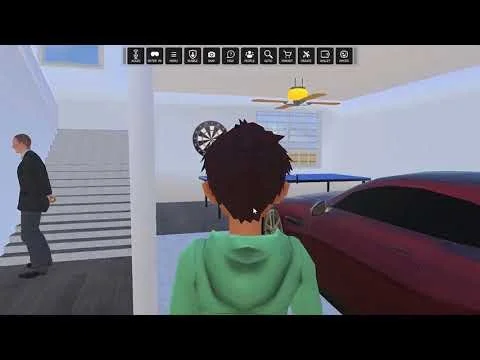
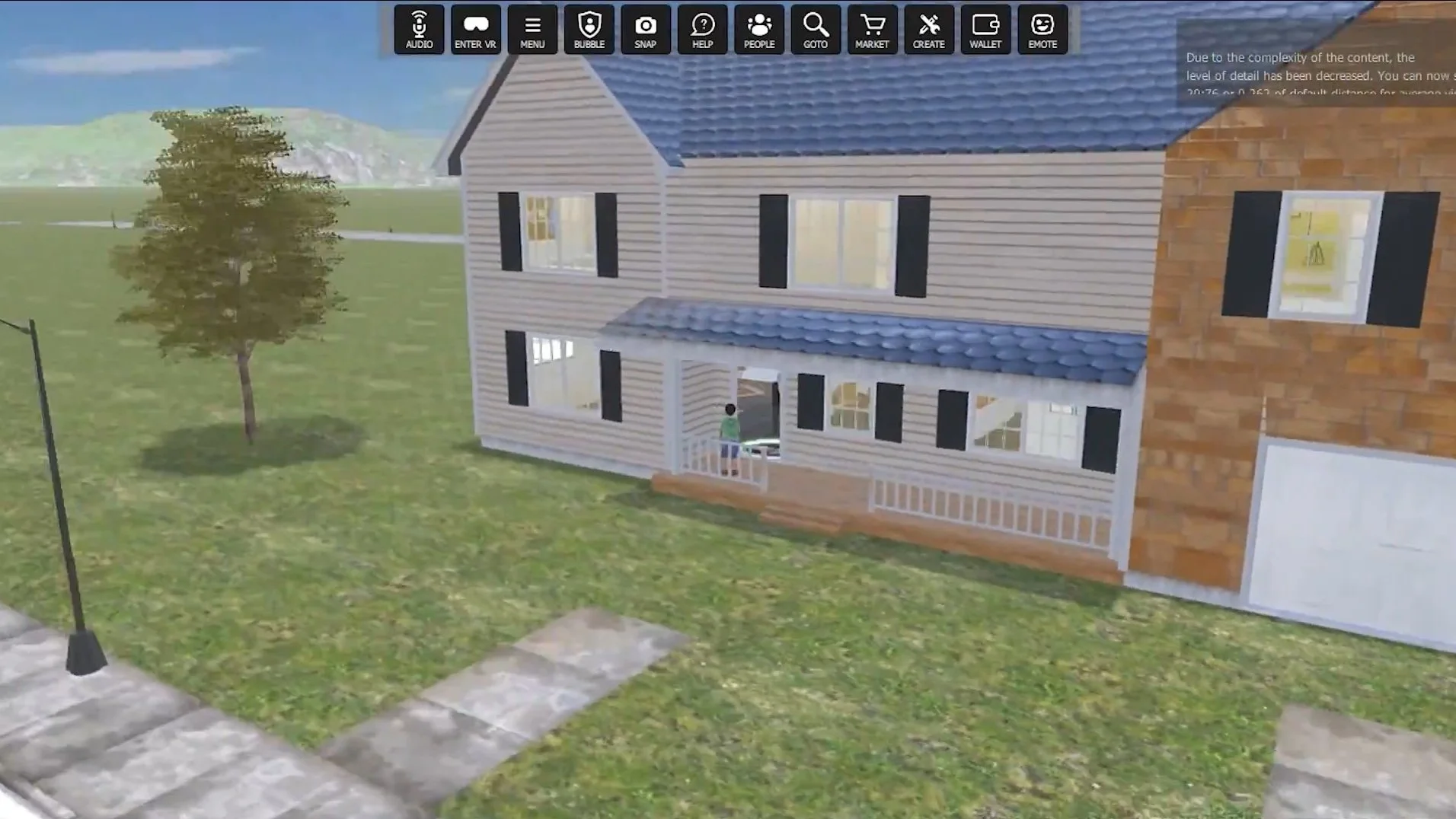
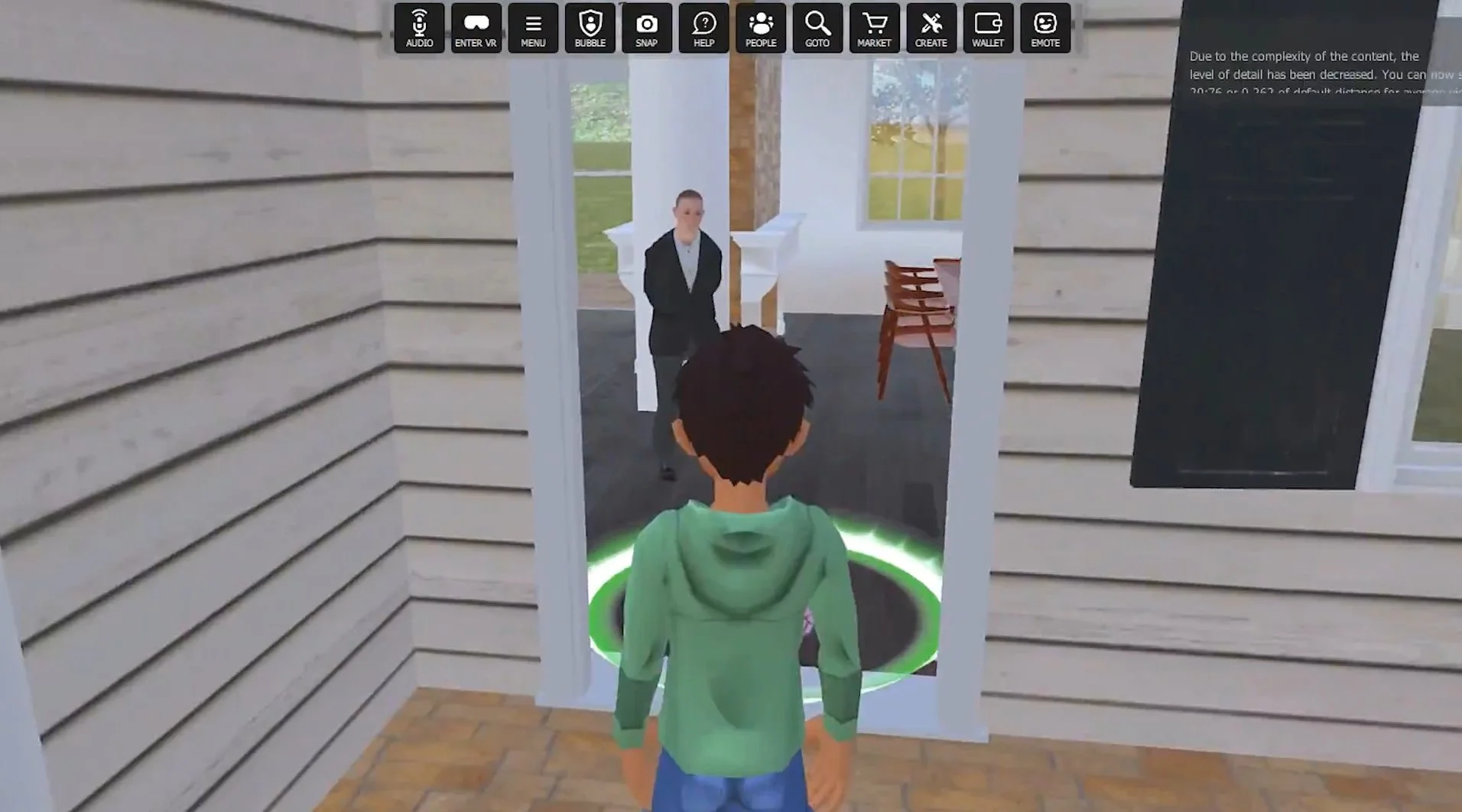
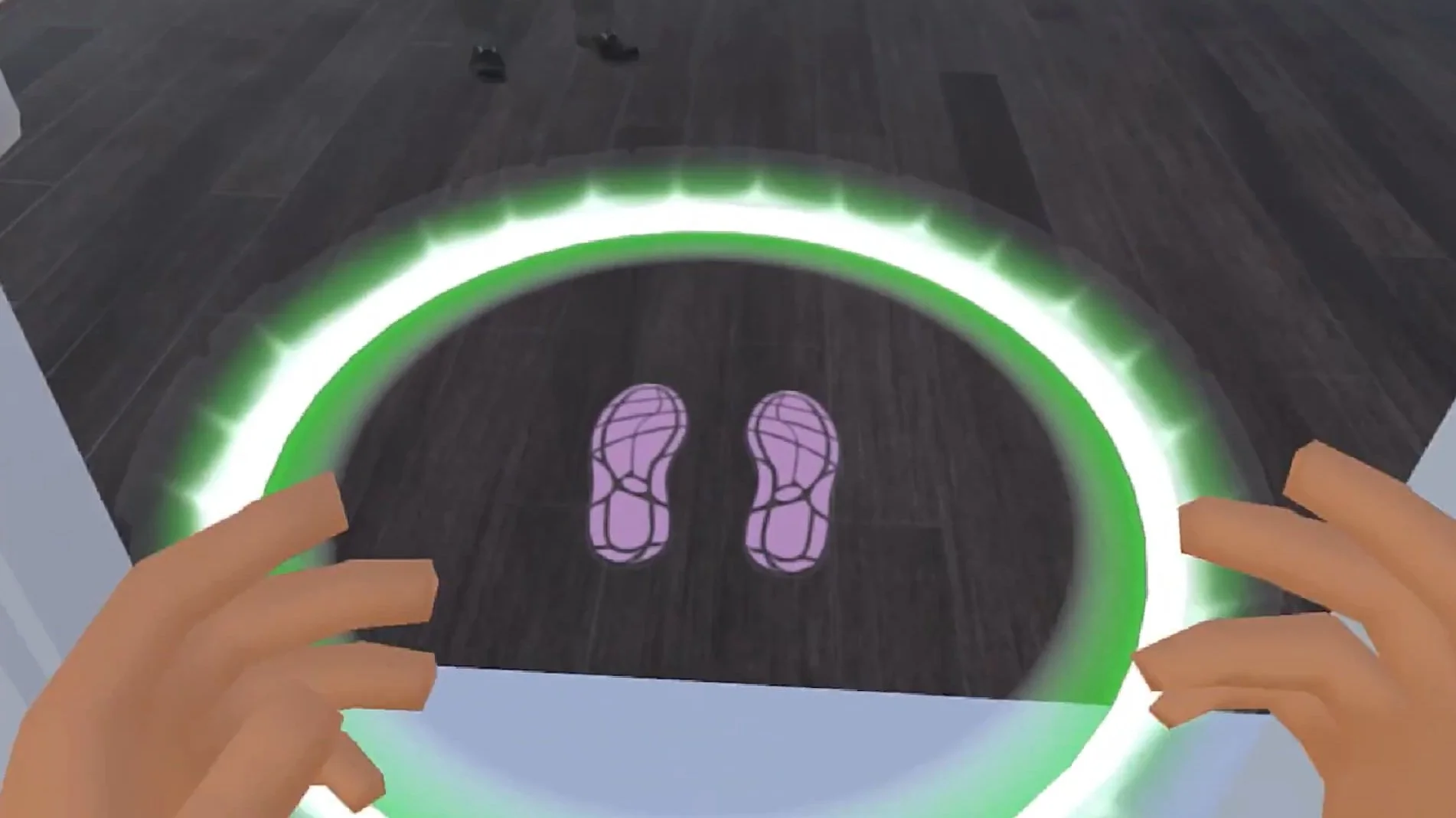
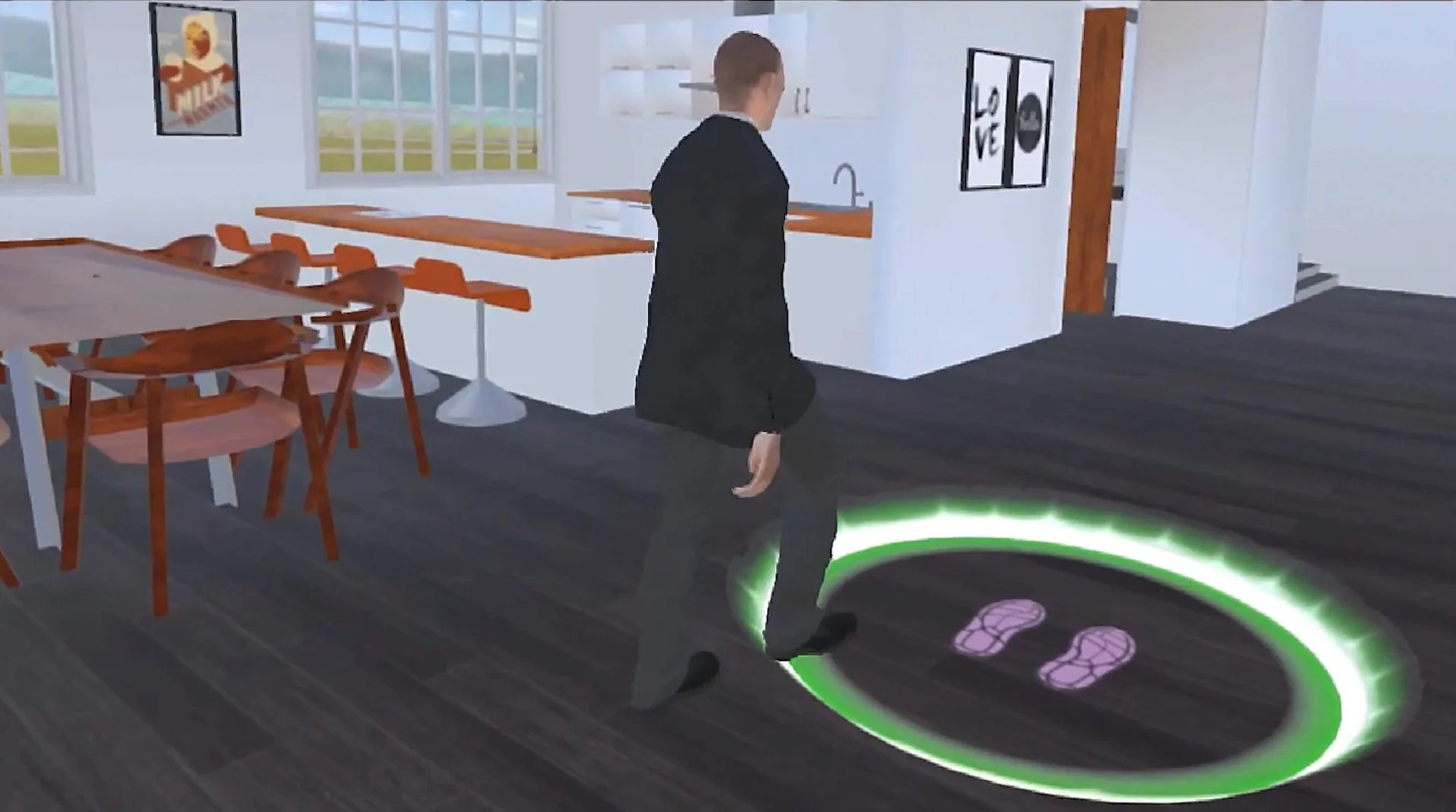
Onboarding Journey : Users spawned at the door of a house, greeted by a butler NPC, and guided by green footprint markers triggering scripted animations and interactions.
Interactive Props: Picked up a newspaper announcing them as the first citizen, found a key to unlock a safe, and retrieved a map to orientation.
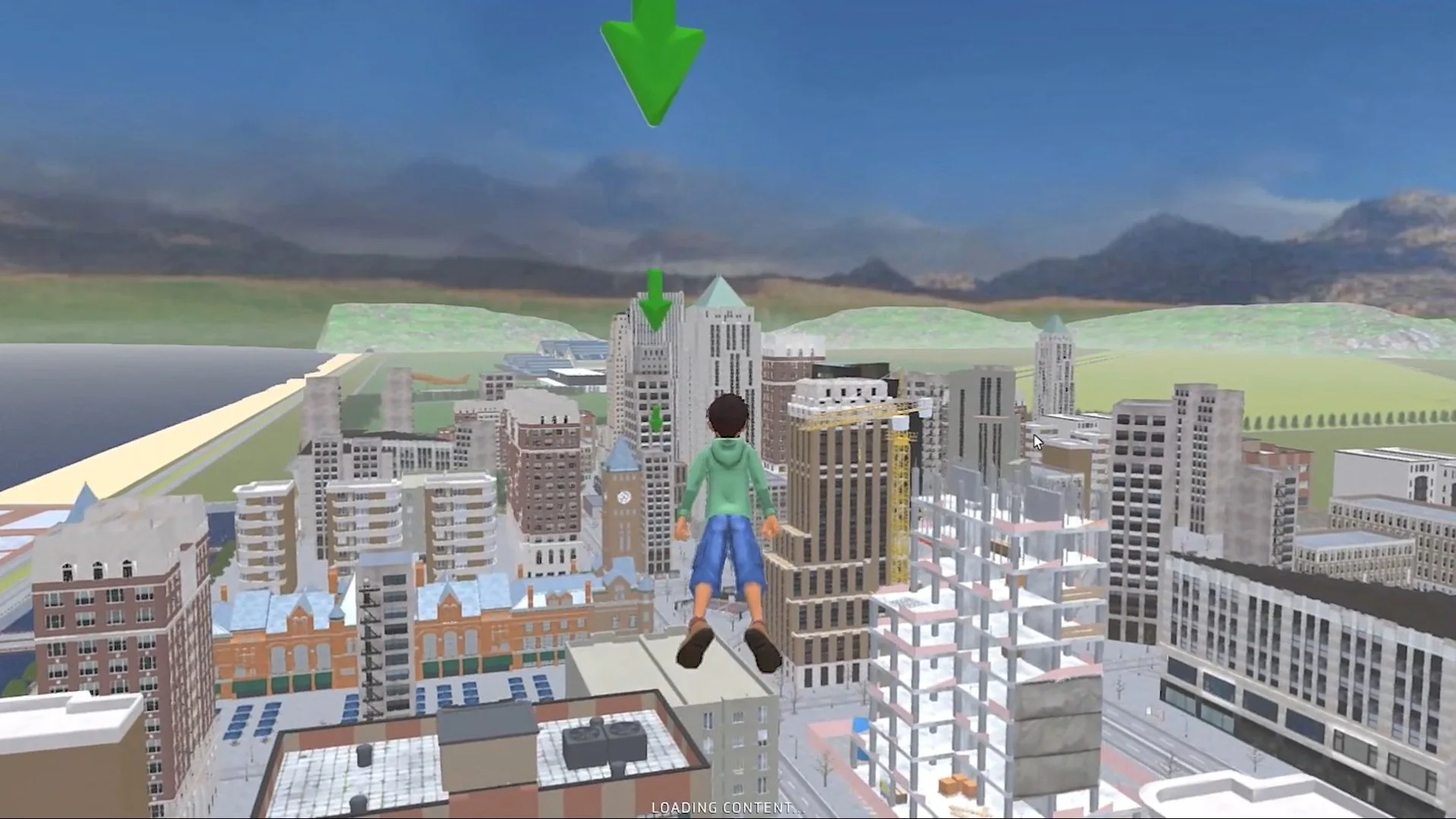
Flight to Orientation: Stepping outside, users saw sky arrows and gained the ability to fly like Superman toward the city center.
The Auditorium: The Mayor of Megga World gave a scripted introduction to the city, complete with animations, speech, and event triggers.
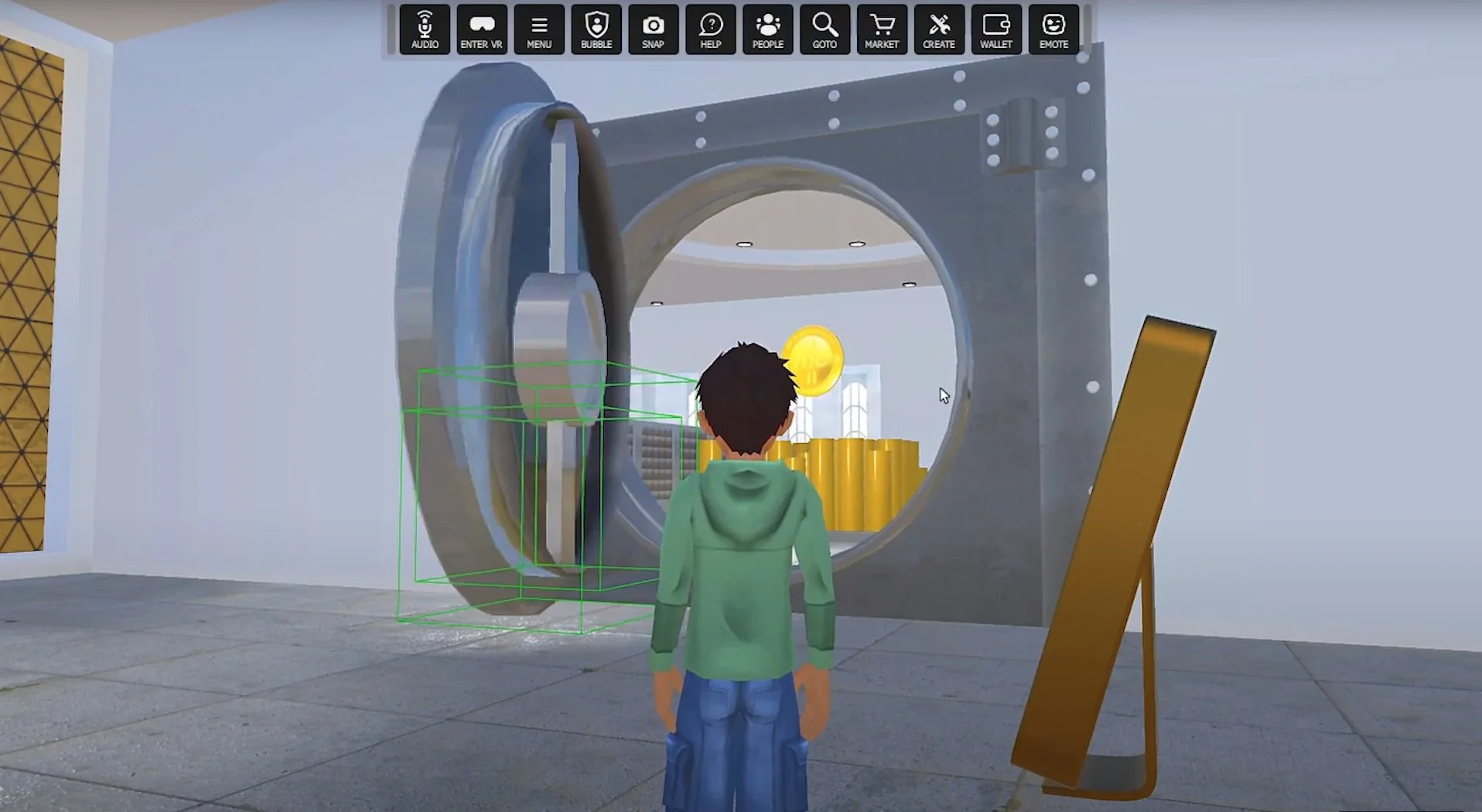
The Bank: Users placed their hand on a sensor pad to access a vault and collect their initial currency, introducing the economic system.
The Body Shop: Inside an avatar hall, players selected their permanent identity, choosing from dozens of avatars before fully entering the open world.
My Role
As Lead XR Developer & Experience Designer, I:
Modeled and textured 3D assets, environments, and props.
Programmed interactions, triggers, and animations using JavaScript (High Fidelity’s scripting language).
Designed UX flows for onboarding and progression, ensuring each step felt natural and rewarding.
Integrated sound, animation, and interactive events to create a cohesive experience.
Collaborated with a small, agile team to architect systems for economy, NPC behaviors, and persistent world logic.
Impact
Helped built one of the first multi-system onboarding flows in VR (spawn → tutorial → economy → avatar identity).
Demonstrated how a VR city could integrate storytelling, social interaction, and economic mechanics.
Pioneered an early metaverse prototype years before mainstream adoption, highlighting the challenges and opportunities of persistent virtual worlds.
Provided valuable lessons in engine limitations, user onboarding, and system architecture that inform my XR practice today.
Future Vision
Megga World was one of the early experiments in persistent multi-user VR city building. While it remained a prototype, the creative and technical lessons learned, from onboarding flows to NPC-driven storytelling, continue to inform today’s XR applications. These early explorations proved invaluable in shaping how immersive worlds can balance interactivity, narrative, and technical resilience.
This video captures the full onboarding flow we designed for Megga World, an early persistent VR platform built in High Fidelity. Users logged in through a web portal, entered the world (Here shown desktop mode), and were guided step by step through an interactive house tour. Scripted triggers introduced key elements, finding a key, opening a safe, and unlocking the city map, before they flew to the orientation center to meet the mayor. From there, players visited the bank to receive currency and entered the ‘Body Shop’ to select their avatar, completing the onboarding journey into a shared VR city.
A view of the plot of land and house that became yours once you joined Megga World.
When you first arrived, your journey began at the door, an introduction that guided you step by step through your new home.
Green circles with footprints guided users where to walk next. Stepping onto a marker triggered interactive moments, like the butler introducing key features of their new home.
Continuing to the next location.
Interactive Storytelling: A virtual newspaper announced the arrival of the first citizens, blending narrative with worldbuilding to make players feel part of Megga World’s history.
The map of Megga World is on the 2nd floor.
The key that opens the safe.
Finally is time to fly to orientation.
Megga World is a vast city to explore.
After orientation it was time to claim your money at the bank.
A Traveling Portal for Immersive Art & Culture
https://armiami.io/moksha-mobile-xr-bus
Overview
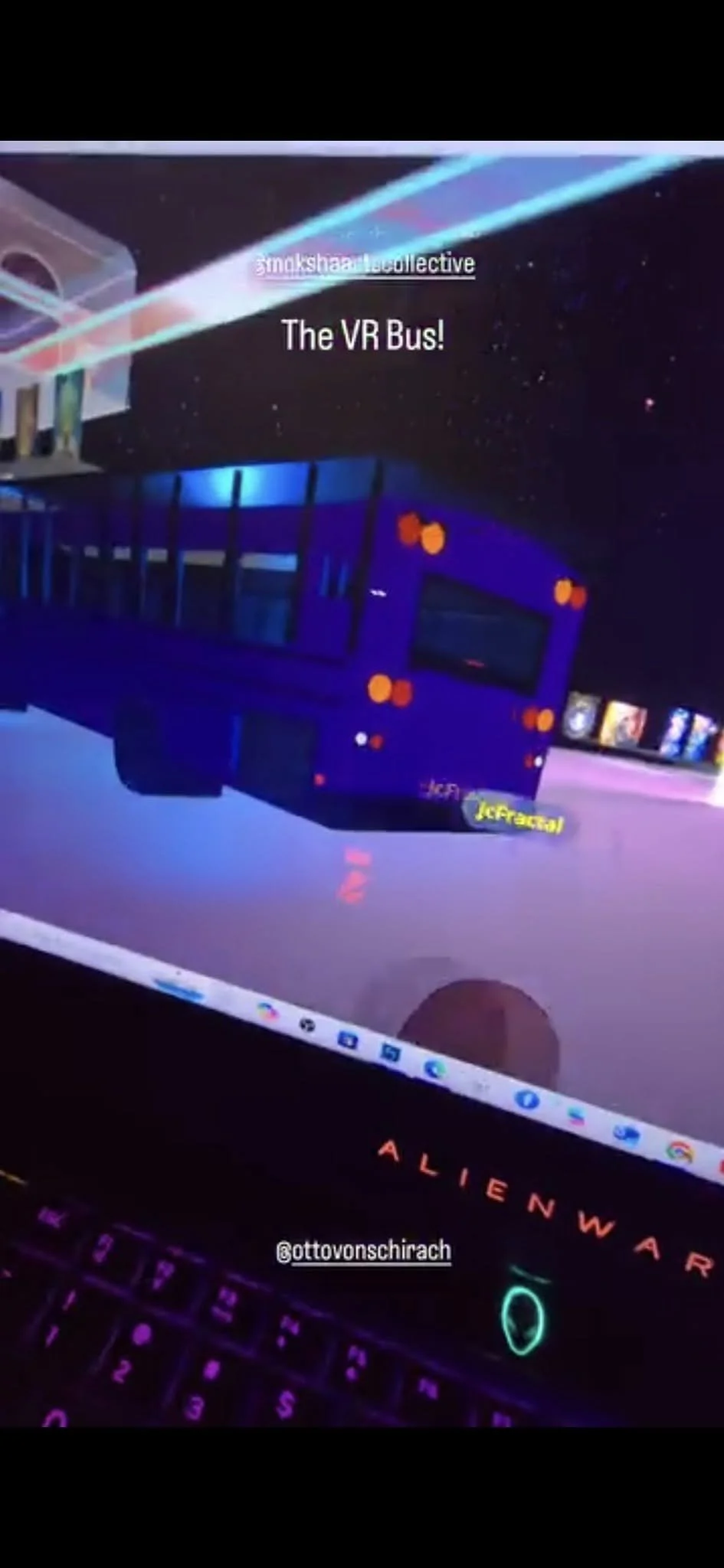
The Moksha XR Bus - “Magic Bus” is the culmination of an ongoing experiment in art and technology, a “labor of love” created in collaboration with the Moksha Arts Collective. Since 2016, I’ve been building VR galleries as a way to explore the future of digital culture. These worlds began as early Unity experiments, later published in VRChat, and ultimately featured at Burning Man 2020–2021 as part of the festival’s global digital program.
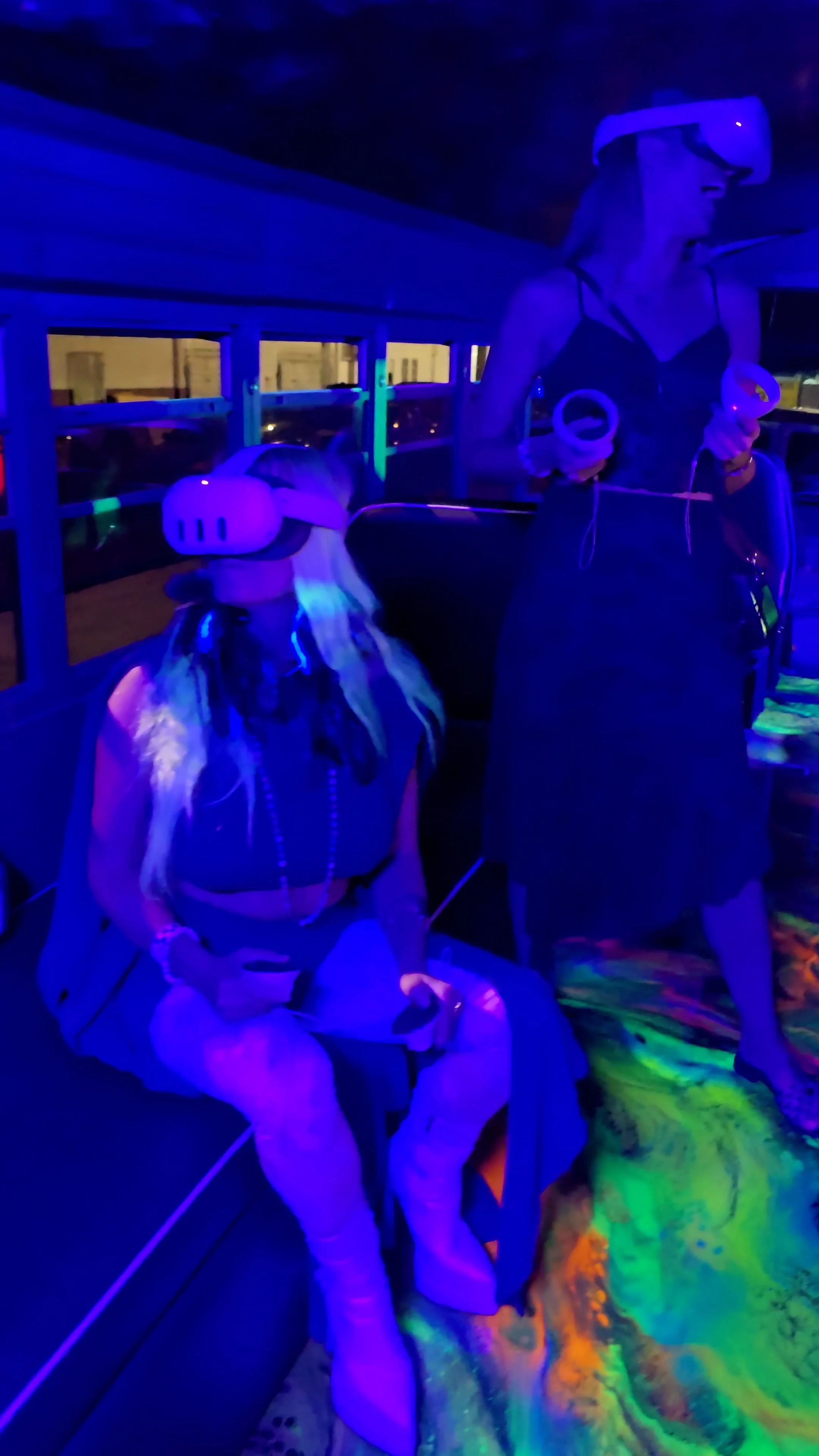
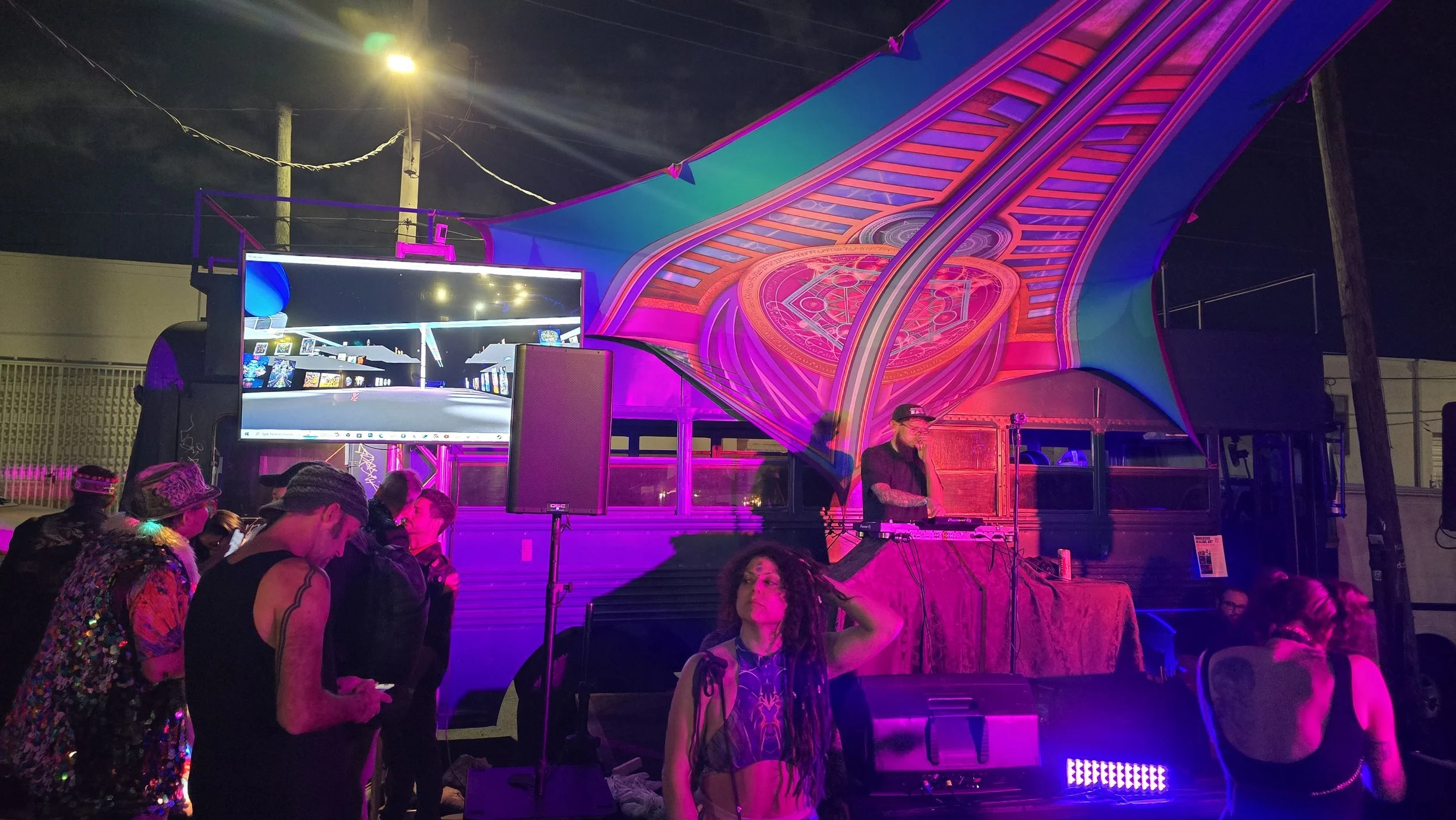
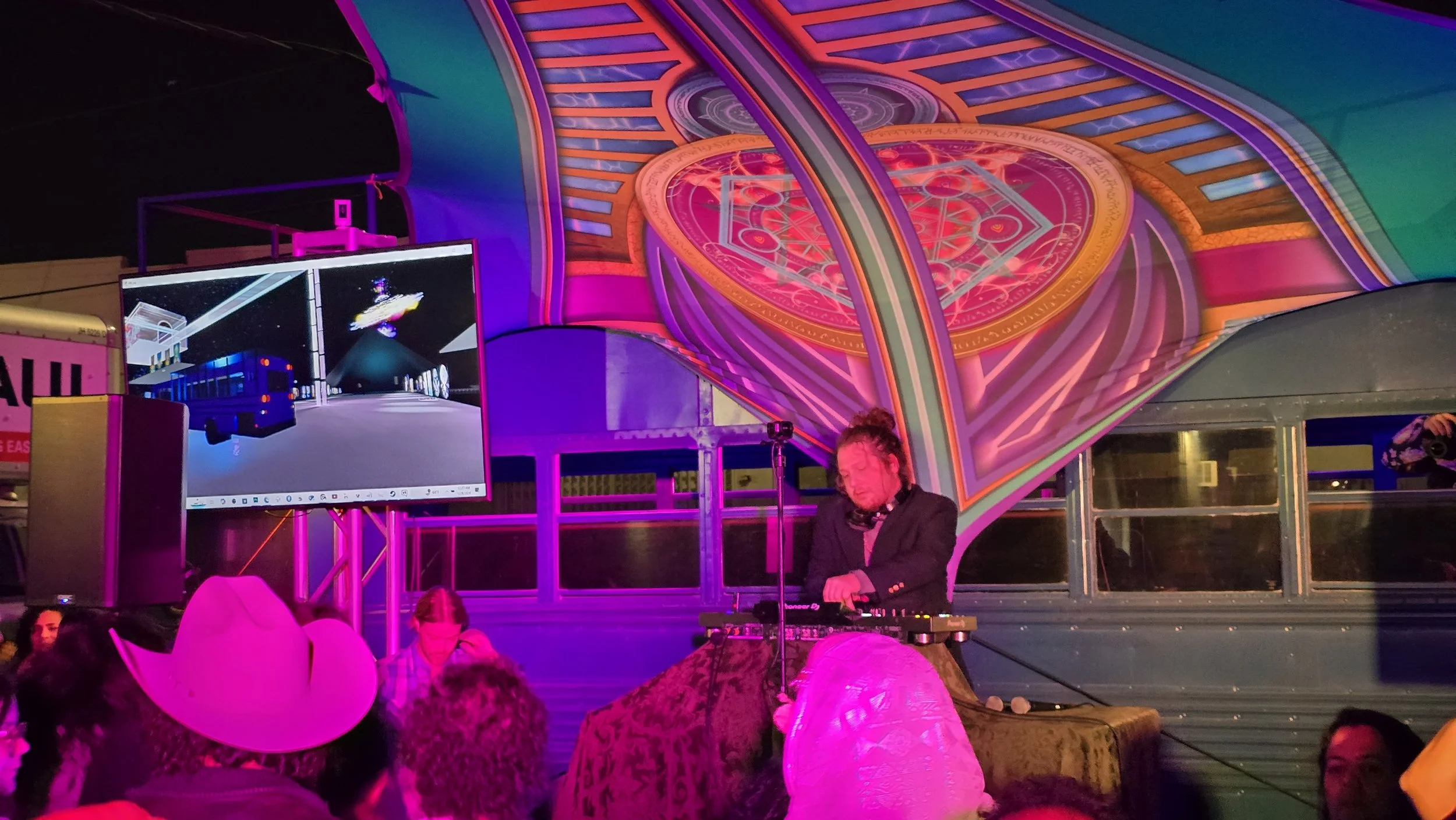
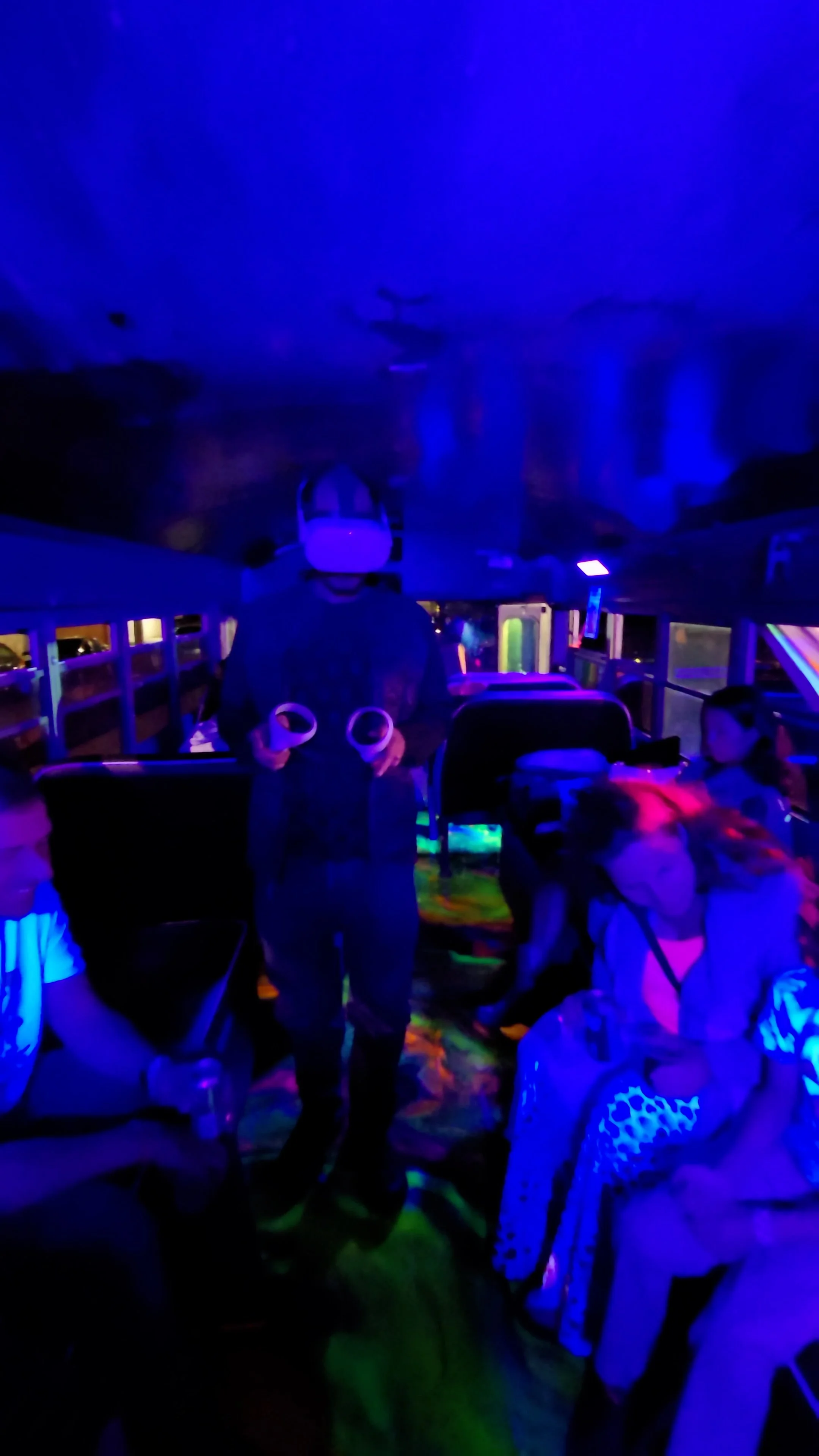
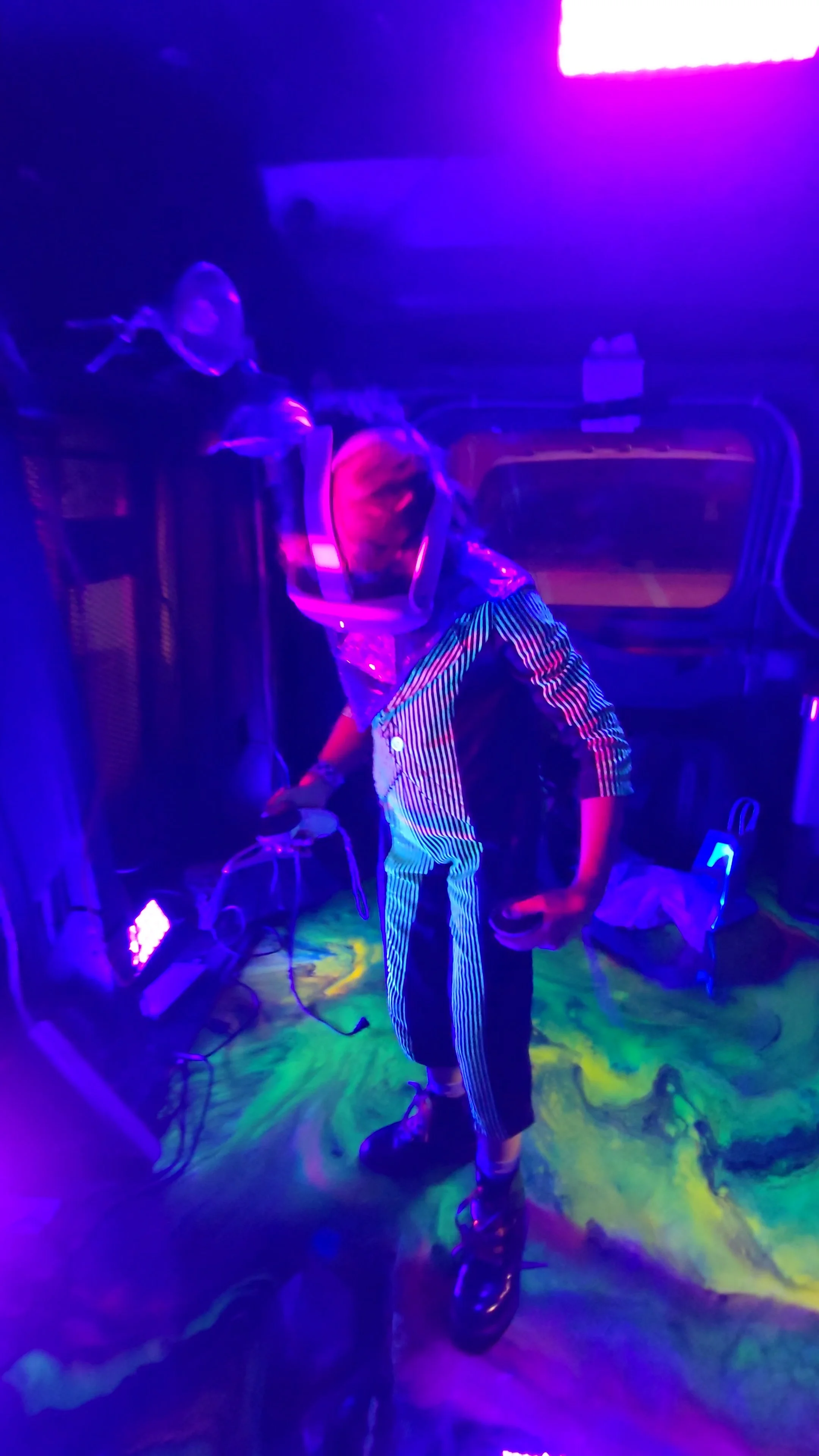
From there, the vision expanded into AR Miami, where entire streets became interactive art galleries. The “Magic Bus” represents the final crystallization of that journey: a traveling immersive venue that parks outside events and invites audiences to step into new worlds. Guests board a retrofitted bus, put on headsets, and enter a virtual replica of the same bus, only to step out into surreal VR galleries filled with art. Meanwhile, the streets outside transform into an AR art walk, extending the experience beyond the vehicle itself.
Core Experiences
Multi-User VR Gallery: Guests inside the bus co-inhabit fantastical VRChat worlds, exploring multi-level, surreal galleries featuring 2D, 3D, and animated art.
Burning Man Legacy: Builds on the VR galleries I developed since 2016, featured in Burning Man’s 2020 and 2021 digital programs.
AR Street Galleries: 20+ artworks anchored via the AR Miami platform, turning walls and streets into open-air digital galleries.
The Magic Bus Effect: A real bus that becomes a portal, board it in reality, step out into a different dimension, blurring the boundaries between festival culture, digital art, and community storytelling.
My Role
As AR/VR Architect, I:
Designed and built the VR gallery worlds in Unity and VRChat.
Managed the technical setup inside the bus, from syncing Quest headsets to configuring Wi-Fi for multi-user VR.
Produced the AR Miami integration, placing 20+ artist pieces across physical event spaces.
Directed the creative vision in partnership with the Moksha Arts Collective founder, continually pushing XR experimentation at the intersection of art and technology.
Impact
Created one of the first traveling XR venues, merging VR, AR, and live festival culture.
Showcased 30+ artists through hybrid digital/physical activations.
Extended the Moksha Arts Collective’s legacy into immersive media, expanding its reach globally.
Future Vision
Moksha’s “Magic Bus” is a scalable platform for touring immersive worlds, capable of transforming festivals, cities, and schools into portals for art, culture, and storytelling. What began as experimental VR galleries has evolved into a model for mobile immersive experiences, taking immersive media directly to communities, wherever they are.
Shared Presence
As they look down the aisle, they see each other in avatar form, chatting, waving, and reacting in real time. The sense of social presence is immediate, this isn’t just VR, it’s a shared space where the physical and digital blur.
The Walk to Wonderland
With joysticks in hand, guests rise from their seats and walk down the aisle toward the glowing bus door. Stepping outside, they emerge not onto a city street, but into a boundless, floating gallery. The world expands into a surreal art wonderland, walls of 2D paintings, 3D sculptures, looping animations, and interactive installations stretch into infinity.
Moksha XR Bus "Magic Bus" - Art Basel 2024 - AR Miami
Bringing VR and AR into one experience.
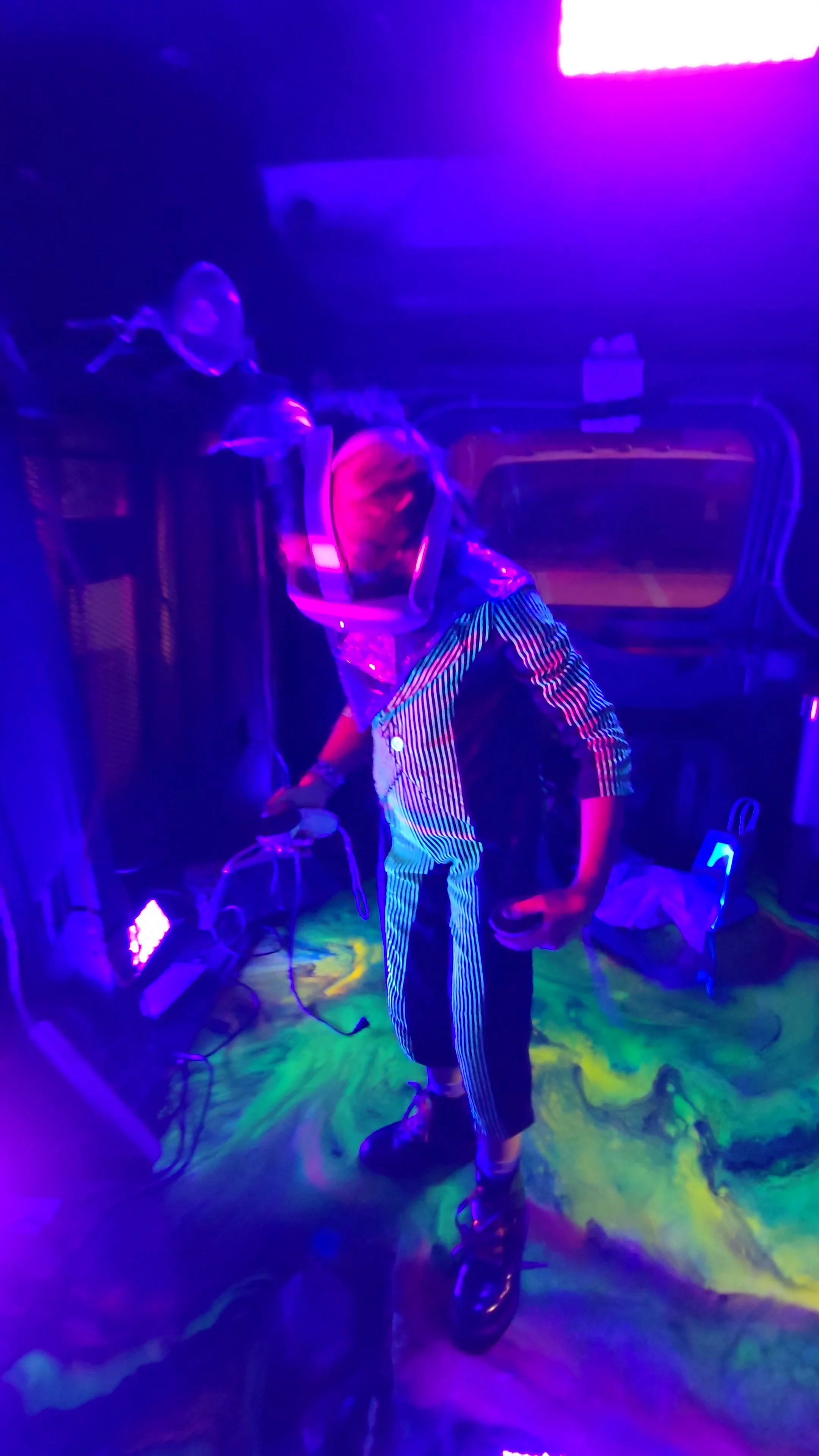
Guests board a real bus, but when they slip on their Quest headsets, they remain in the same seats, only now inside a virtual twin of the bus. Around them, friends are transformed into avatars, creating the uncanny feeling that the group has crossed into another dimension together.
Educational AR Adventure
Overview
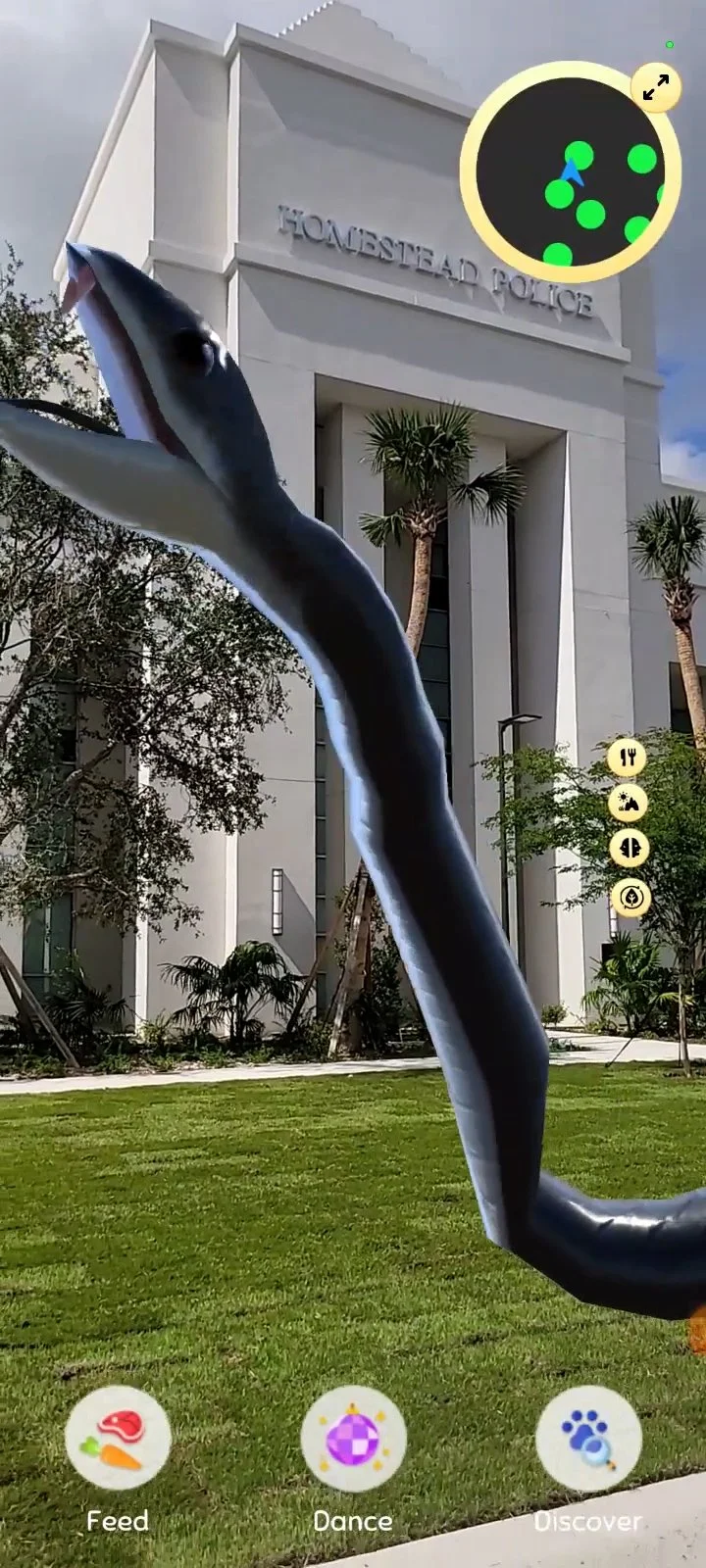
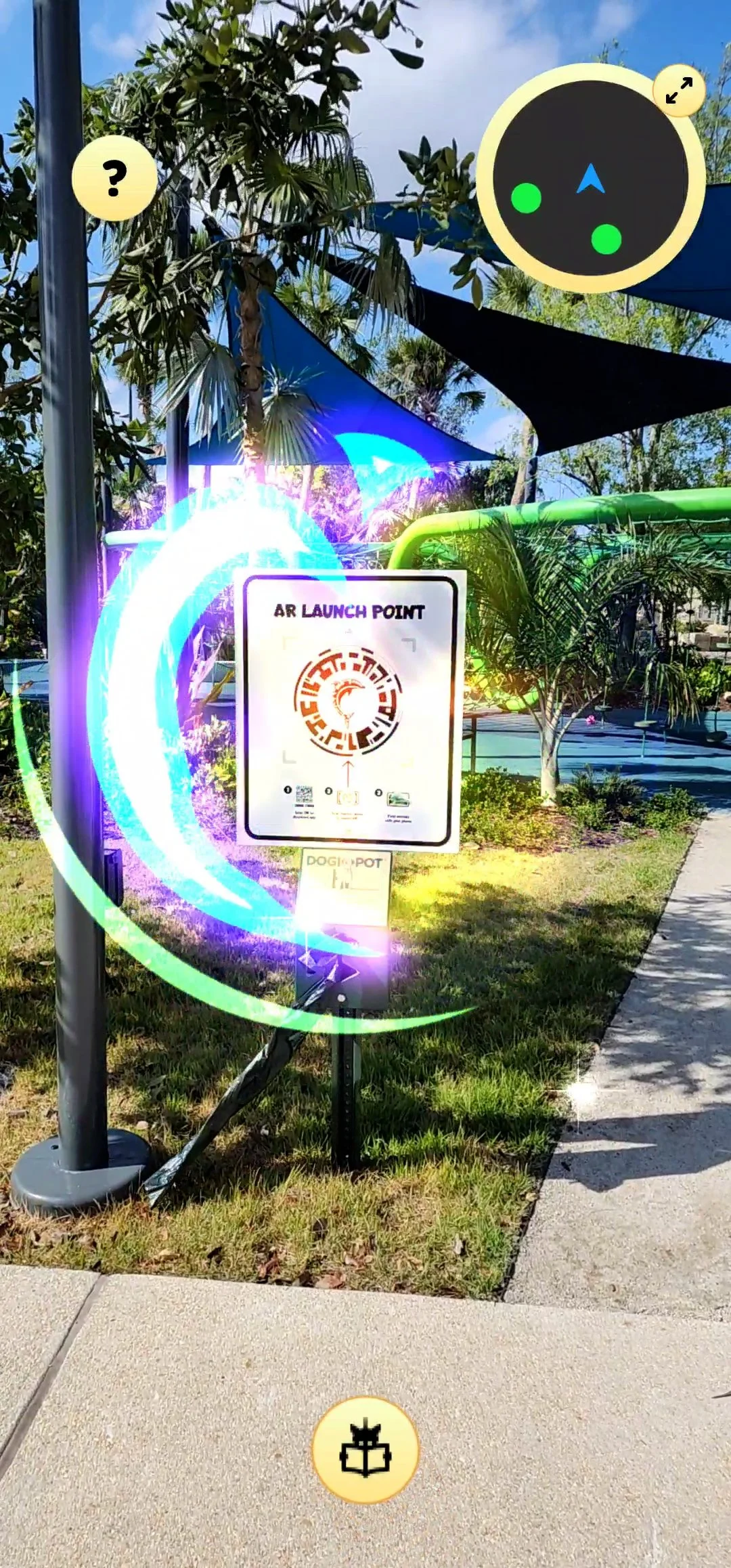
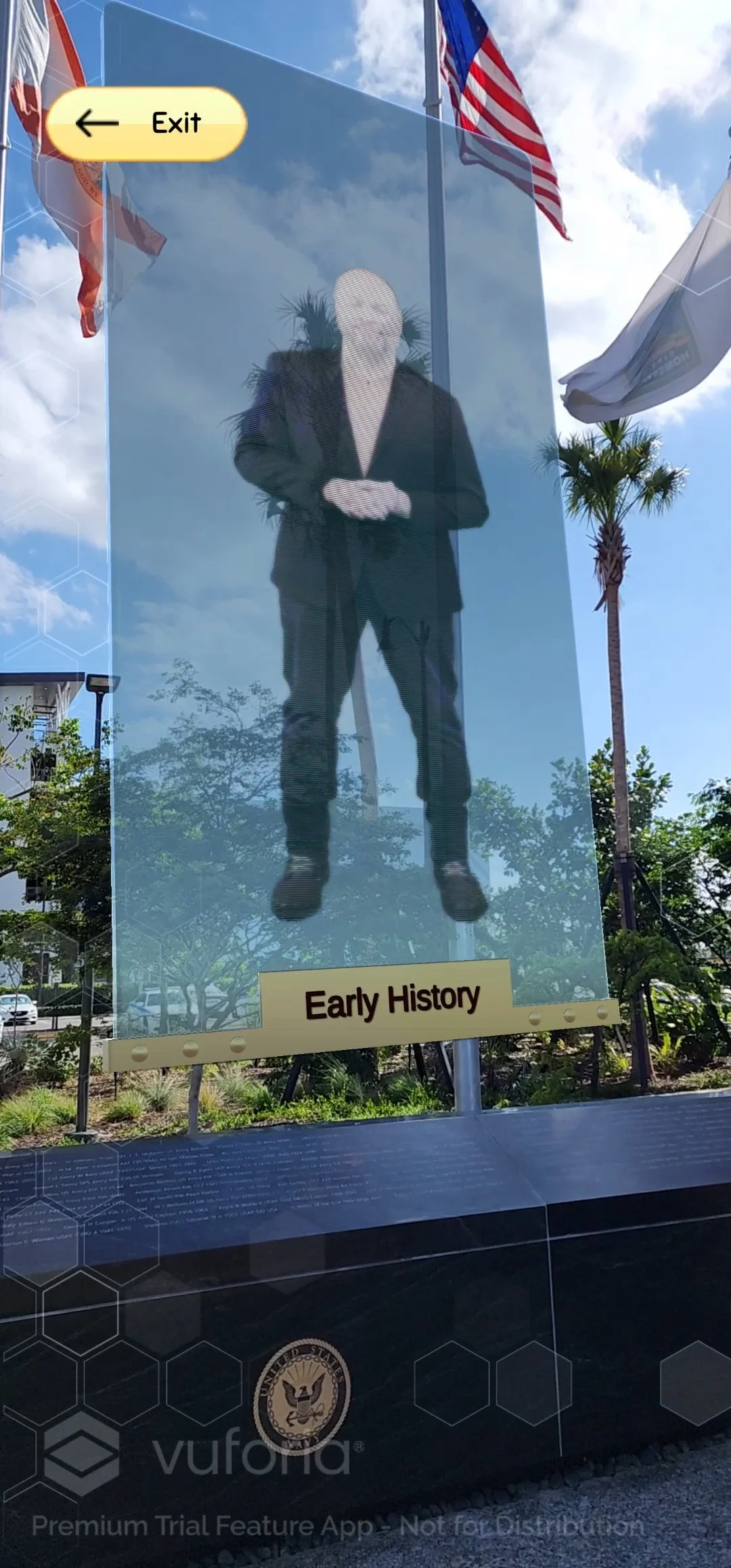
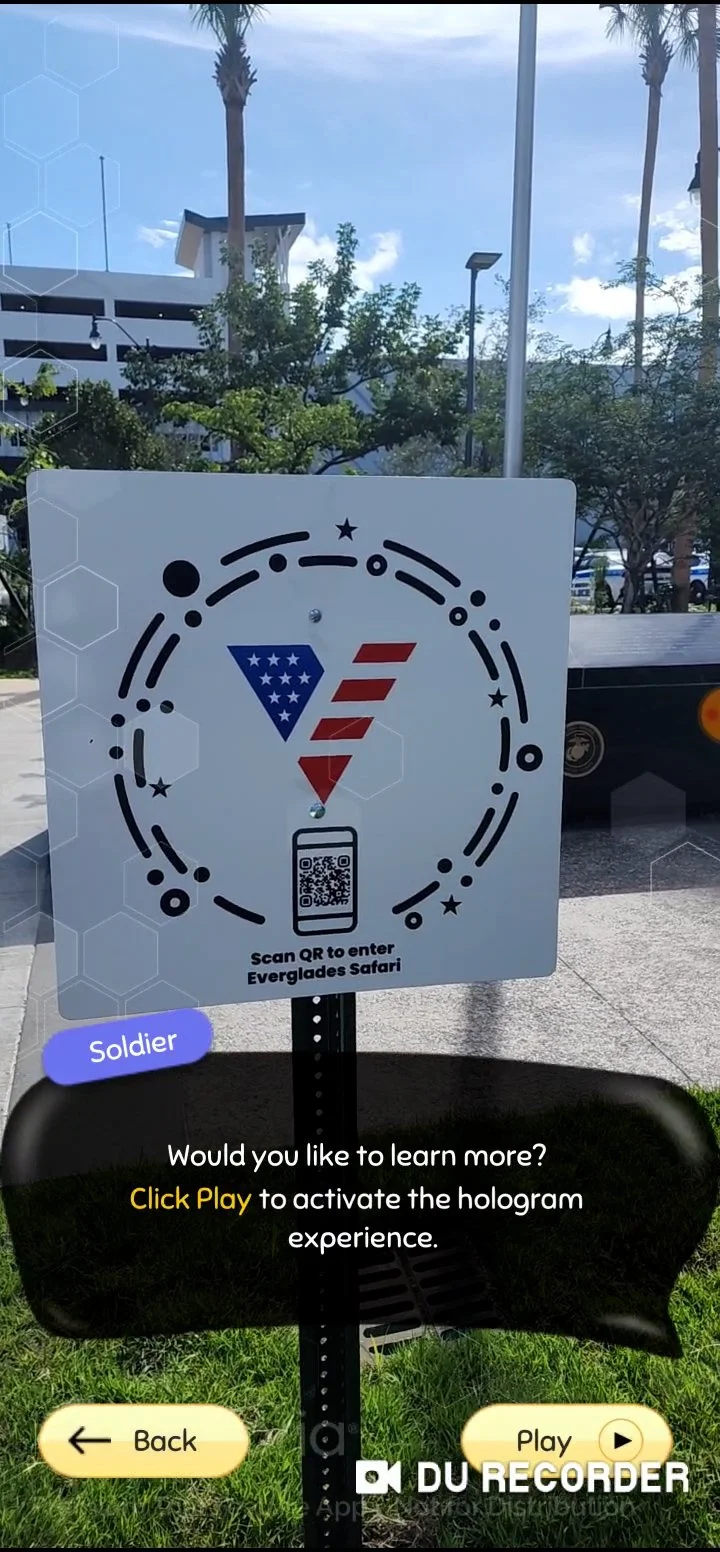
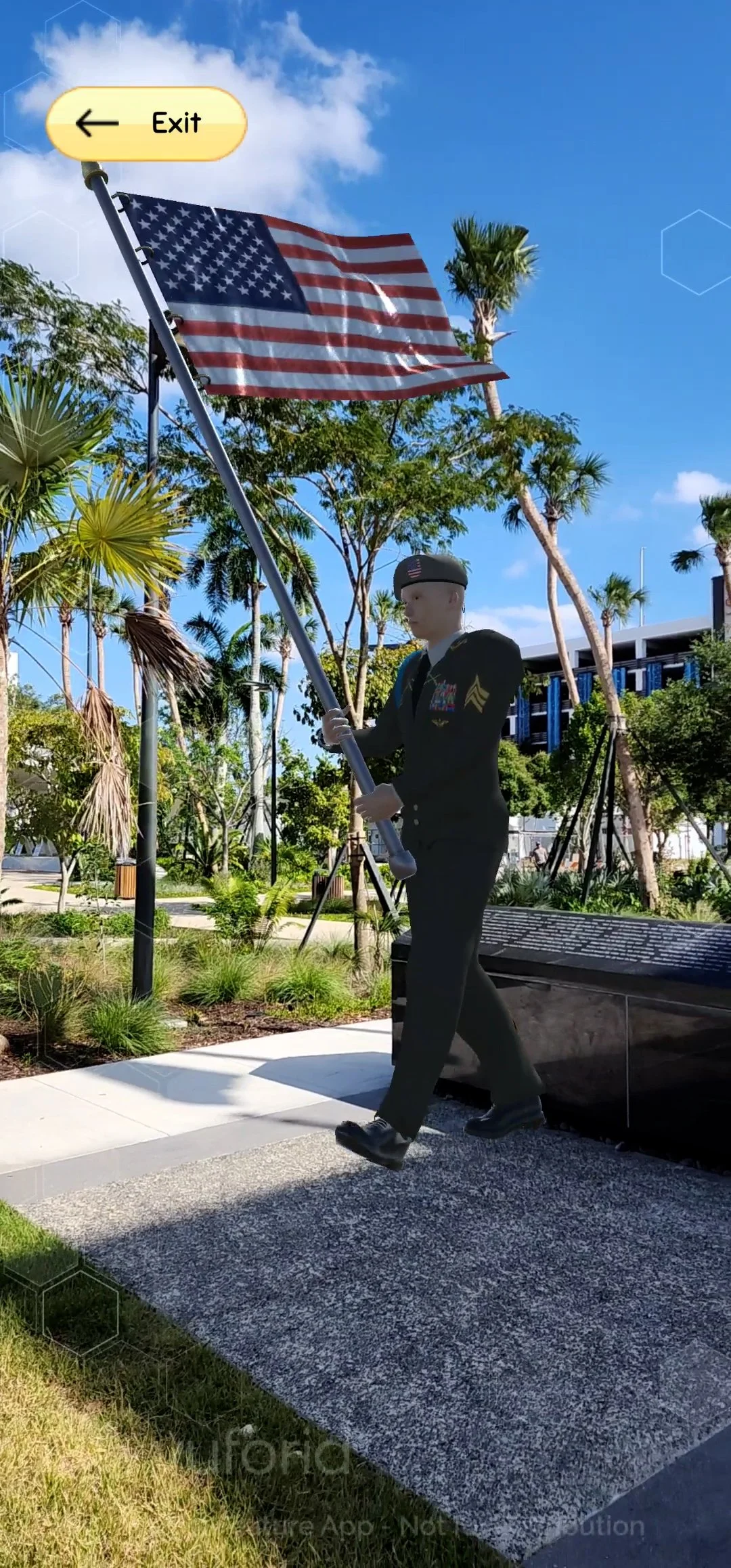
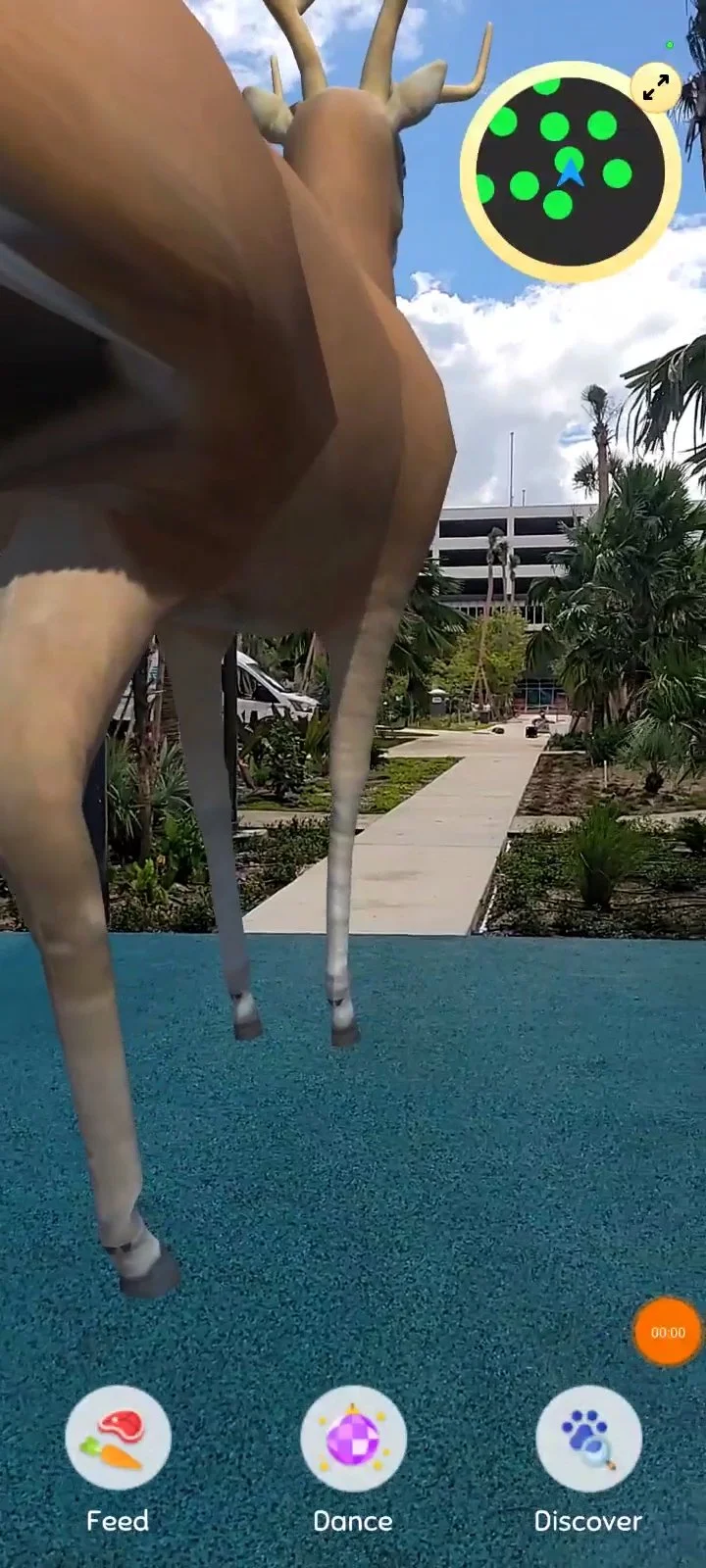
Homestead Everglades Safari is an educational AR adventure designed for Losner Park, blending history, wildlife, and play into a single immersive journey. Beginning at the World War II memorial wall, visitors scan an AR marker to awaken the experience. A holographic AI guide, projected within shimmering virtual glass panels, welcomes them and shares the significance of the site. From there, the park transforms into a living safari where Florida’s native species come to life, each encounter teaching ecological awareness through interactive storytelling.
Core Experiences
AI Memorial Guide: Visitors activate the experience by scanning the marker at the WWII memorial. A holographic AI character appears, narrating the history of the site while setting the stage for the adventure to come. As you move around the memorial, you trigger different holograms to appear, revealing more of the story.
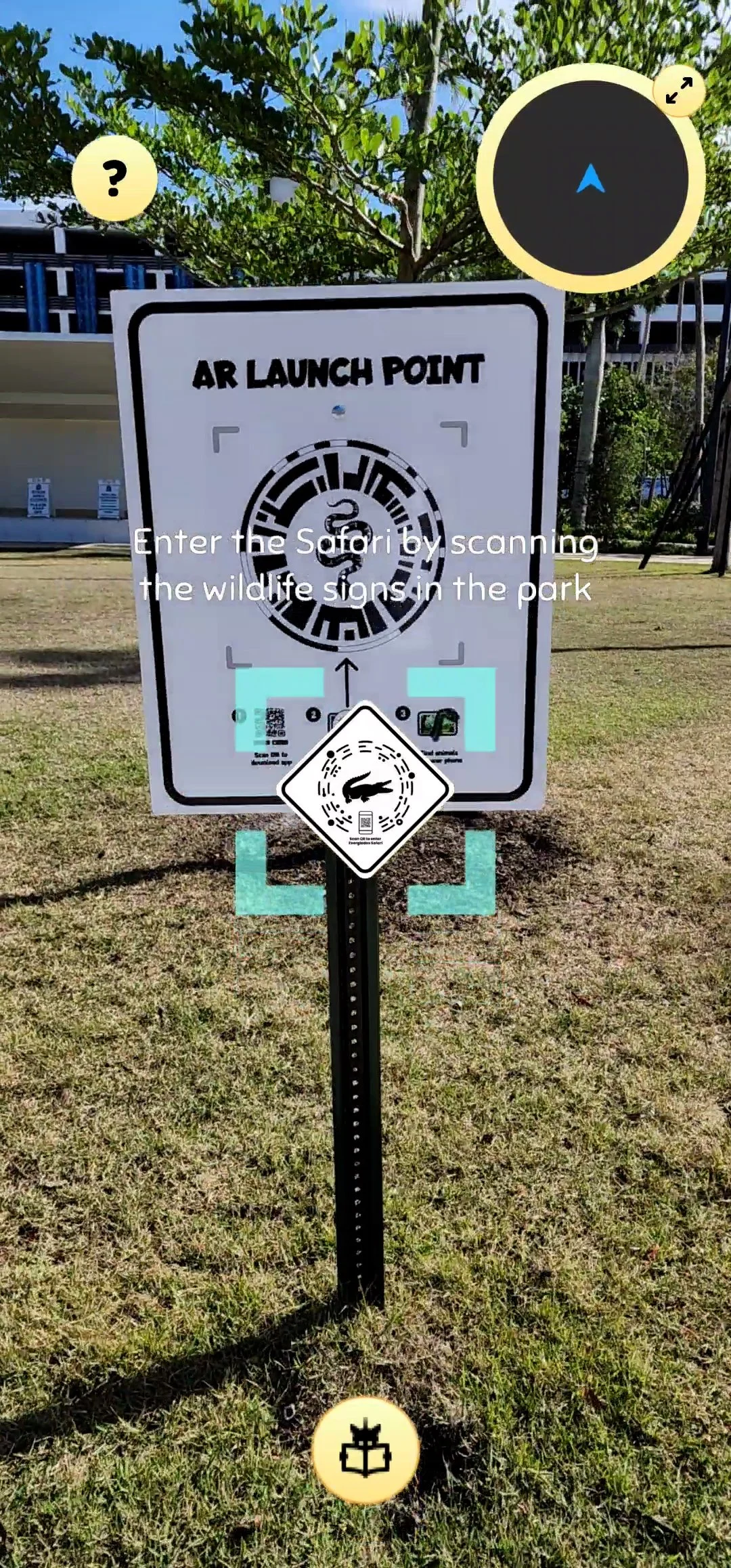
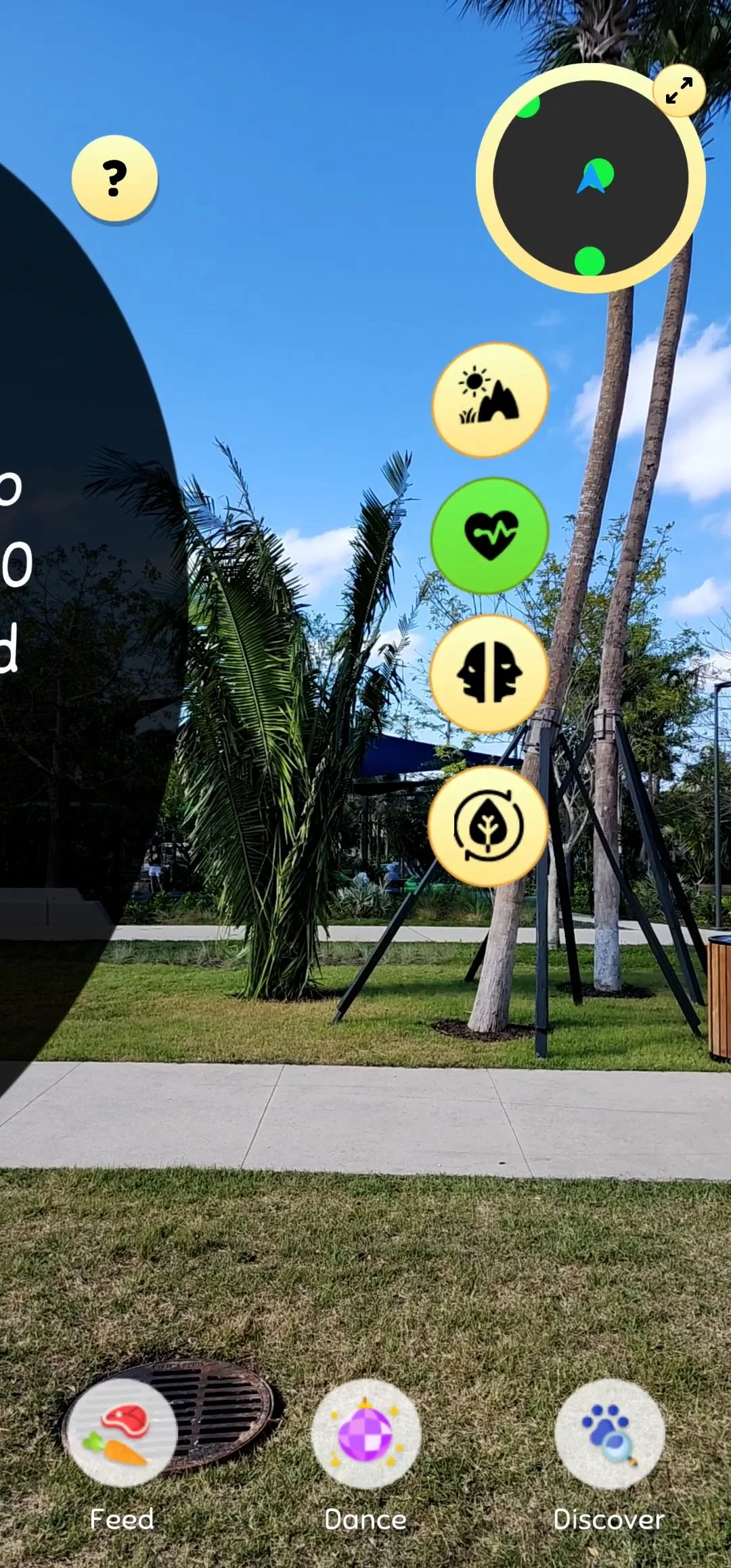
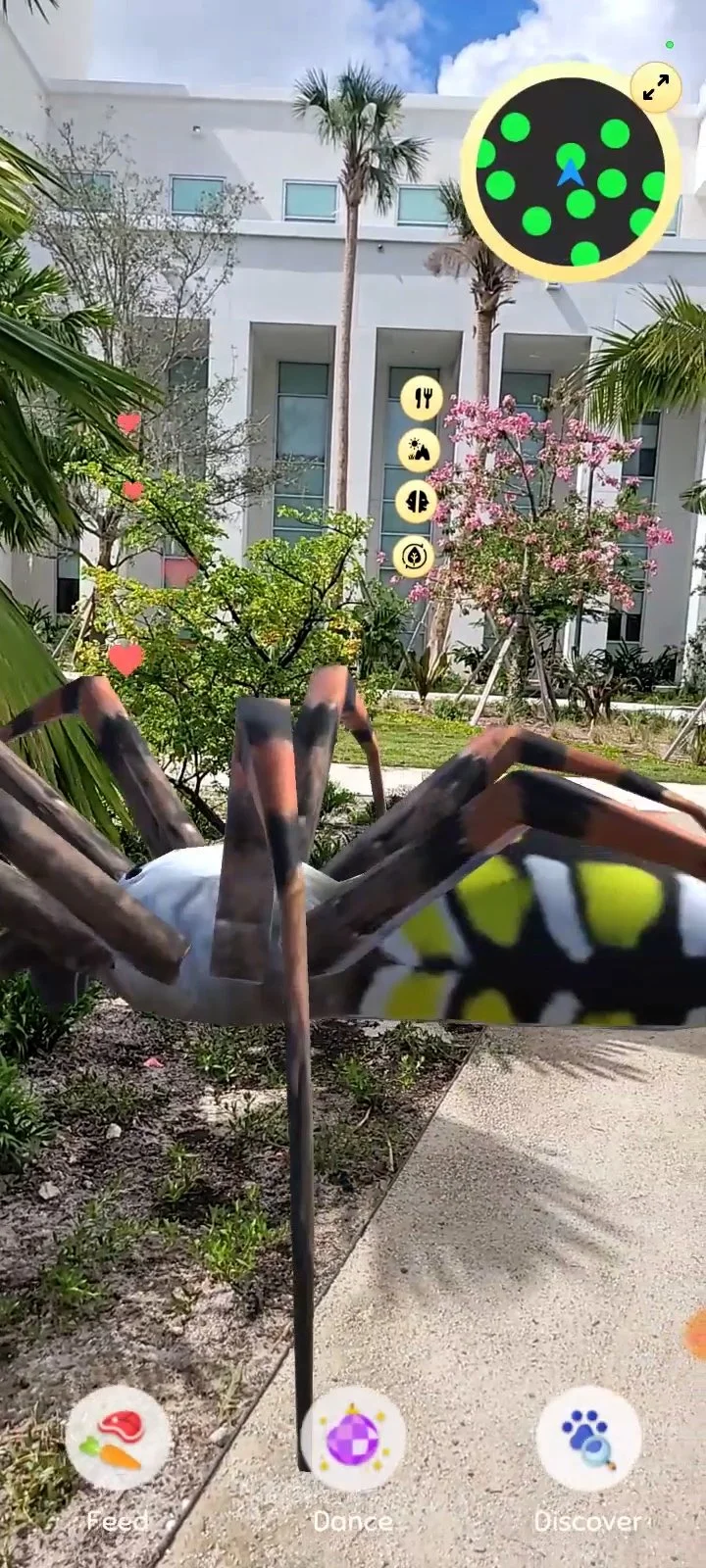
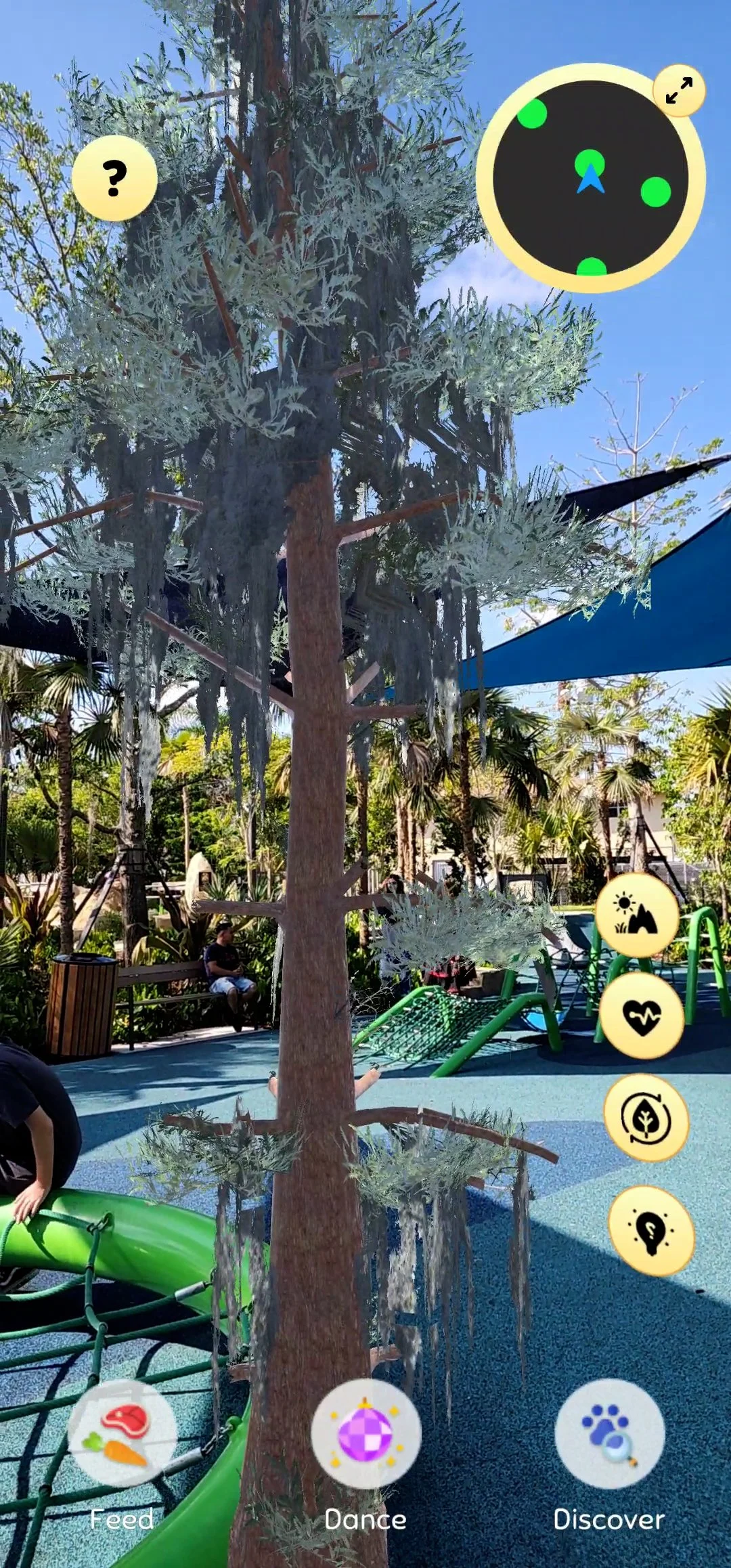
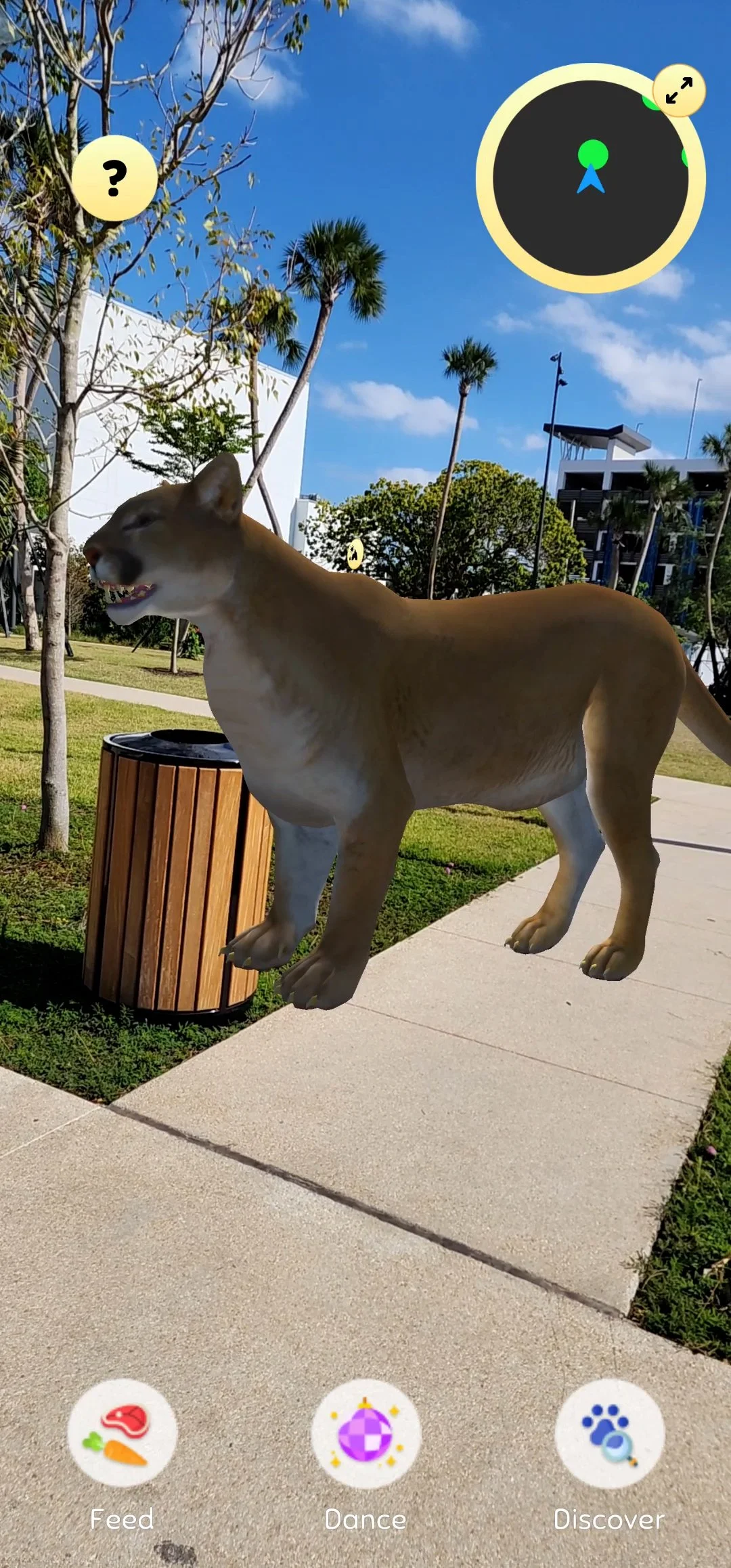
Wildlife Zones: The park is divided into themed zones, each with its own AR markers. Scanning a marker reveals native Florida animals, from fish bursting out of watery spheres to butterflies fluttering into the air. A mini-map guides users to hidden animals represented as glowing green points, encouraging exploration.
Interactive Creatures: Each animal includes two layers of interactivity. Floating UI panels present educational details, habitat, diet, and life cycle, while phone-based controls allow visitors to feed them, trigger animations, and even make them dance.
Collection & Final Mission: As users collect animals across the park, they gradually build their own digital safari. Completing the collection unlocks a final prize and the title of “explorer”, transforming the game into an educational program that encourages ongoing participation and personal connection to Florida’s ecosystems.
My Role
As AR/VR Architect, I directed the concept, design, and Unity XR implementation of the experience. I built interactive pipelines with colliders, mini-map integration, and marker-based triggers to merge play with education. I also led the filming and integration of the AI holographic guide, ensuring the experience carried both narrative depth and technical polish.
Impact
Created a fully interactive AR park experience that merges local history with ecological education.
Introduced children and families to Florida’s native species through embodied learning and gamified play.
Established Homestead Everglades Safari as both a cultural storytelling platform and an educational tool for conservation awareness.
Future Vision
Homestead Everglades Safari AR is designed as a scalable model for public spaces. Future versions can adapt the framework to other parks and cities, expanding from Florida wildlife to different ecosystems, histories, and cultural narratives. By merging AR, education, and play, Homestead Everglades Safari creates a template for how public parks can become living classrooms and immersive story worlds.
Turning a Mural into a Living Lesson on Sustainability
Overview
The Bronzeville Renaissance project transformed a cultural landmark into an interactive AR learning platform. Located in Chicago’s Bronzeville neighborhood, long celebrated as a center of African-American life and culture, the 50’ × 30’ mural blends history, poetry, and vision for the future. Sponsored by ComEd’s Community of the Future initiative, the mural connects Bronzeville’s past to a sustainable tomorrow powered by renewable energy.
Core Experiences
Interactive Mural Triggers: AR menus, animations, and historical videos embedded into the mural.
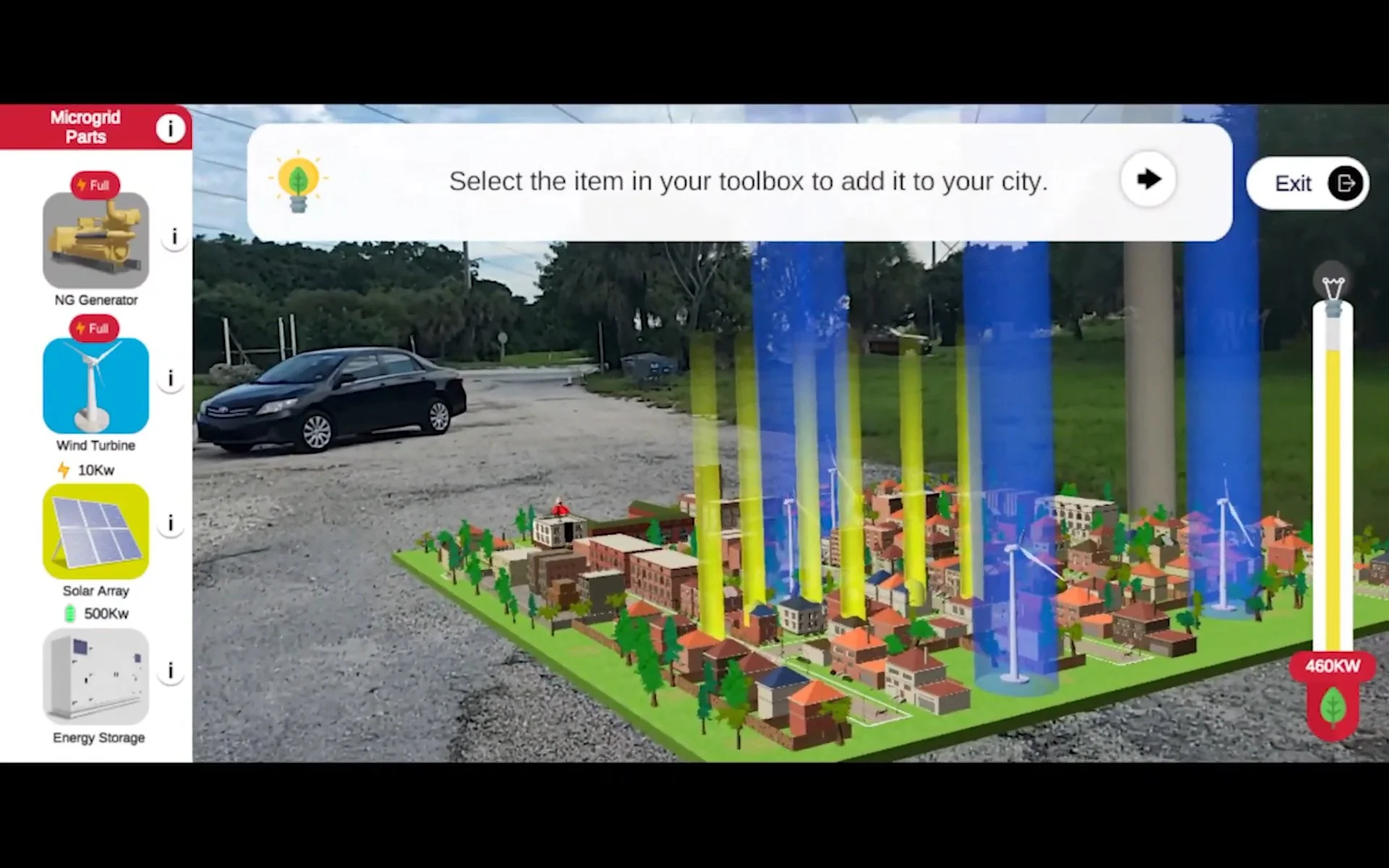
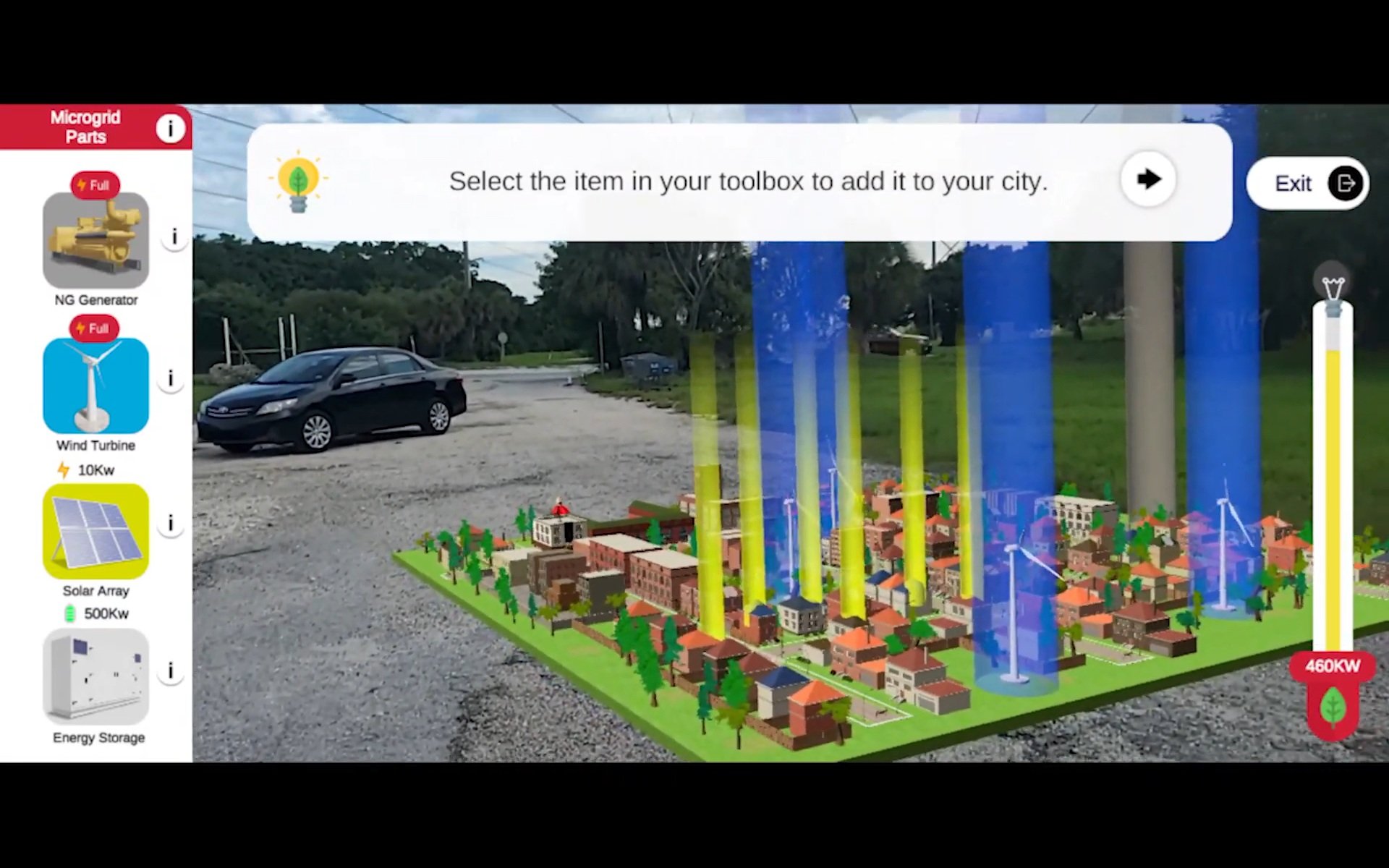
Microgrid City Simulator: Ground-plane AR city where guests placed solar panels, wind turbines, and storage to balance power.
Renewable Gameplay: Drag-and-drop mechanics tied kilowatt output and environmental impact to player choices.
Educational Missions: Power homes, balance energy, and learn resilience through play.
Community Context: Anchored to Gwendolyn Brooks’ words, blending cultural heritage with innovation.
My Role
Designed and implemented ground-plane detection + raycast interactivity for drag-and-drop city mechanics.
Directed gameplay design to ensure renewable energy concepts translated into fun missions.
Integrated historical video content into mural AR triggers, connecting storytelling with tech.
Produced Unity XR pipelines to merge the mural and simulator into one seamless experience.
Impact
Engaged thousands of residents and students, making abstract concepts like “microgrids” tangible and playful.
Brought renewable energy education into the heart of a cultural landmark.
Expanded ComEd’s Community of the Future initiative, showing how AR + art can drive awareness.
Future Vision
The AR City framework can be replicated in other communities, using murals, landmarks, and public spaces as anchors for interactive education. Beyond renewable energy, it offers a model for how XR can teach, inspire, and empower communities on a global scale.
Video:
Bronzeville Mural Virtual Press Conference and Red Ribbon Cutting
Screen Capture: ComEd Mural AR App
AR - Bronzeville Renaissance Interactive Neighborhood
"Bronzeville Renaissance”
Augmented Reality Mural, September 2020
3805 S Michigan Ave, Chicago IL
“We are each other’s harvest; we are each other’s business; we are each other’s magnitude and bond.” -Gwendolyn Brooks, Poet, Author of “A Street in Bronzeville”, First African American Pulitzer Prize Winner
Located in Bronzeville, a center of African-American life and culture in Chicago, this mural celebrates the community's rich history and modern-day renaissance. The mural also looks to the future which brings the threat of climate change, and it envisions rising above this challenge using innovation and renewable technologies to build a "Community of the Future".
This mural was sponsored by ComEd, an electric utility serving Greater Chicago. Partnering with community leaders, ComEd is leading an initiative to develop a connected, resilient and sustainable community in Bronzeville called the "Community of the Future".
An Interactive AR Microgrid City
Users can place and equip renewable energy systems, solar arrays, wind turbines, natural gas generators, and storage units, while interacting with buildings and seeing real-time energy output and environmental impact.
Place Windmills for Power Generation
Each windmill that you place in the map is worth 100 Kilowatts of energy.
Place Natural Gas Generators
Certain parts of the city can use natural gas generators. Find the ideal locations to better serve the city.
Place Solar Panels
Many of the houses are equipped with solar panel locations. Fill each one with a solar panel to increase your renewable energy supply.
Winner of Miami Maker Faire 2017 – From Concept to Commission
thecuban.org
Overview
In 2017, I won the Miami Maker Faire competition with a concept for augmenting the Cuban Diaspora Museum in Miami. The idea was to transform the museum’s entrance awards wall into a living storytelling surface: using image recognition, plaques and awards would trigger holograms, transparent overlays, and digital narratives layered directly onto the physical space. This vision showed how augmented reality could extend the museum’s mission of cultural preservation into the digital realm.
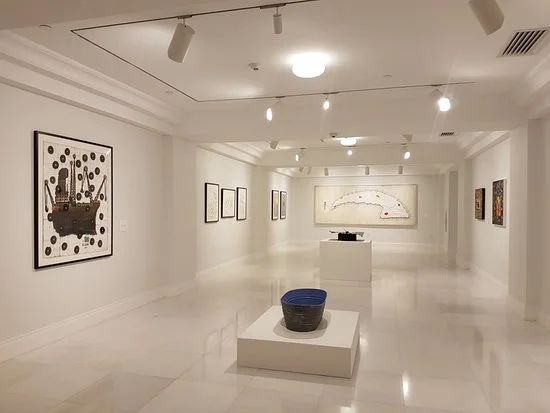
The Maker Faire recognition led to a commission from the Cuban Diaspora Museum to create a virtual reality version of their live exhibit. I developed a Unity-built virtual gallery that mirrored the museum’s physical show, reimagined as a surreal XR environment. Visitors could explore floating platforms, cross bridges between exhibits, and unlock interactive signs that revealed historical and cultural context as they approached each piece.
Core Experiences
AR Awards Wall Concept: Image recognition overlays transformed the museum’s entrance into an interactive storytelling display.
Virtual Gallery in Unity: A VR re-creation of the museum’s physical exhibit, designed as a surreal floating environment.
Interactive Exhibits: Approach paintings and artifacts to trigger contextual information and narrative overlays.
Cultural Preservation in XR: Extended the museum’s mission by creating digital spaces that safeguard and reinterpret diaspora heritage.
My Role
As Concept Creator & XR Developer, I:
Conceived and pitched the Maker Faire, winning AR concept.
Developed the commissioned Unity VR gallery, mirroring the museum’s physical exhibit.
Designed the UX/UI interaction models for exploring the virtual museum and unlocking cultural stories.
Collaborated with museum partners to align the digital experience with their curatorial vision.
Impact
Recognized as the winning project at Miami Maker Faire 2017.
Secured a commission from the Cuban Diaspora Museum, moving from concept to real-world application.
Delivered one of my first XR museum experiences, setting the foundation for later cultural projects like the Moksha VR Gallery and Dear Human AR tours.
Future Vision
The Cuban Diaspora Museum project illustrates how XR can mirror and expand live cultural exhibitions. It serves as a model for how augmented and virtual reality can preserve heritage, amplify identity, and transform museums into living, interactive archives.
Works information appears when you approach paintings.
Image from the museum.
“Moksha VR 2020-2025”
Burning Man 2021:
https://brcvr.org/world/moksha-vr-2021/
Overview
In 2020, when Burning Man went fully digital for the first time, the Moksha Arts Collective brought its visionary art and community spirit into the virtual realm. I collaborated with Moksha to design and manage their presence within the Burning Man Multiverse, creating a multi-level VR gallery that became a home for artists, performers, and participants from around the globe.
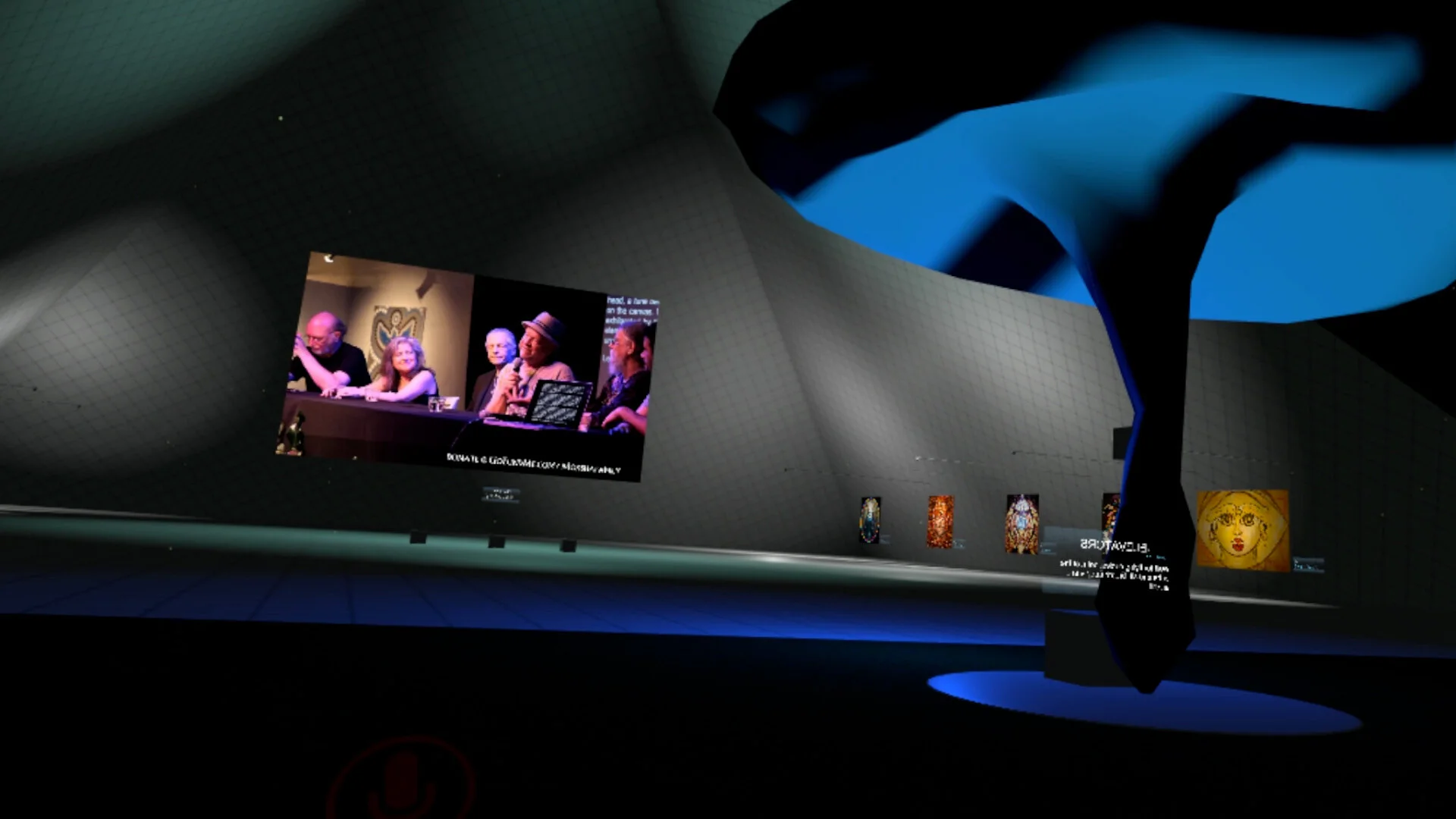
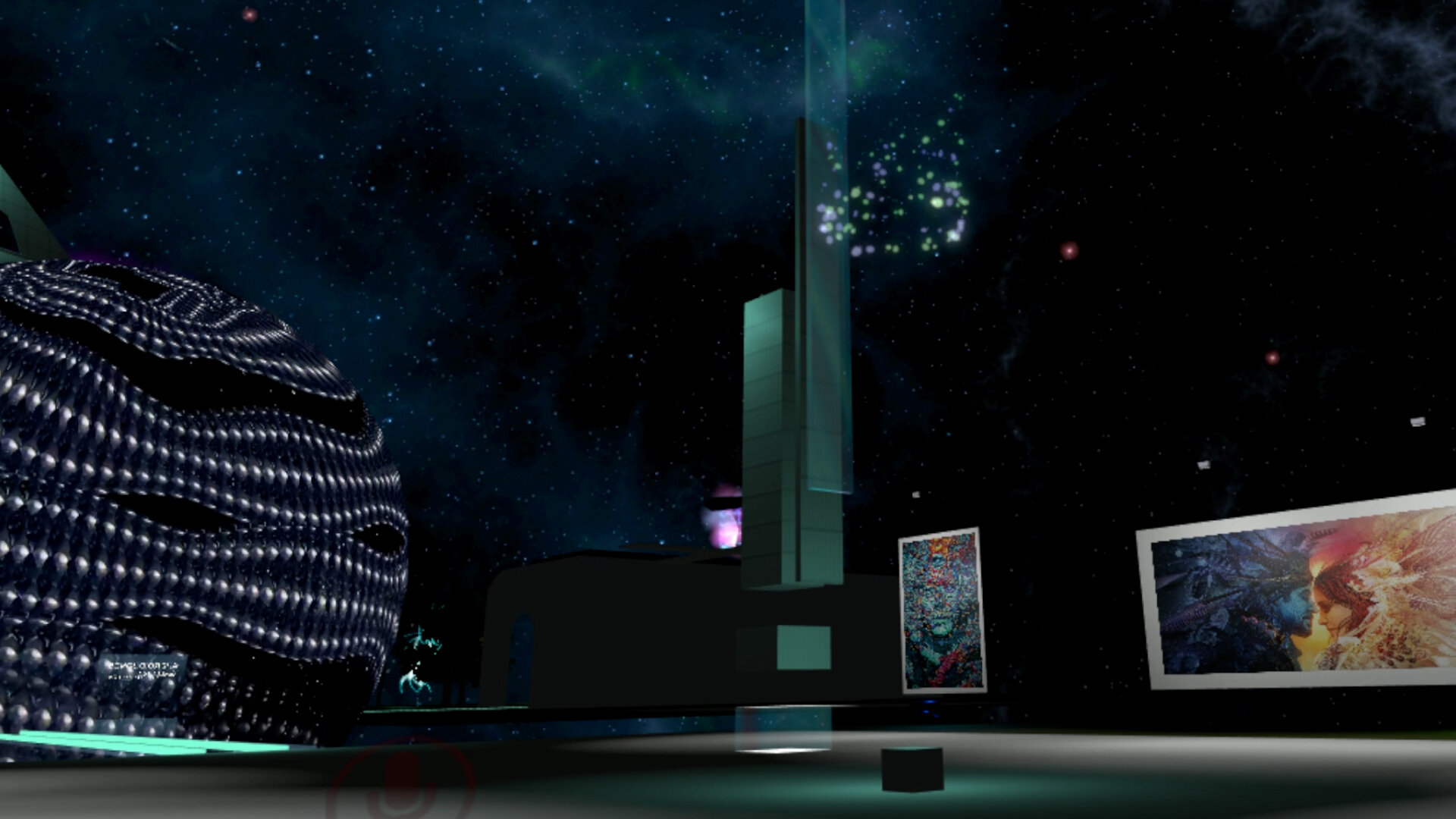
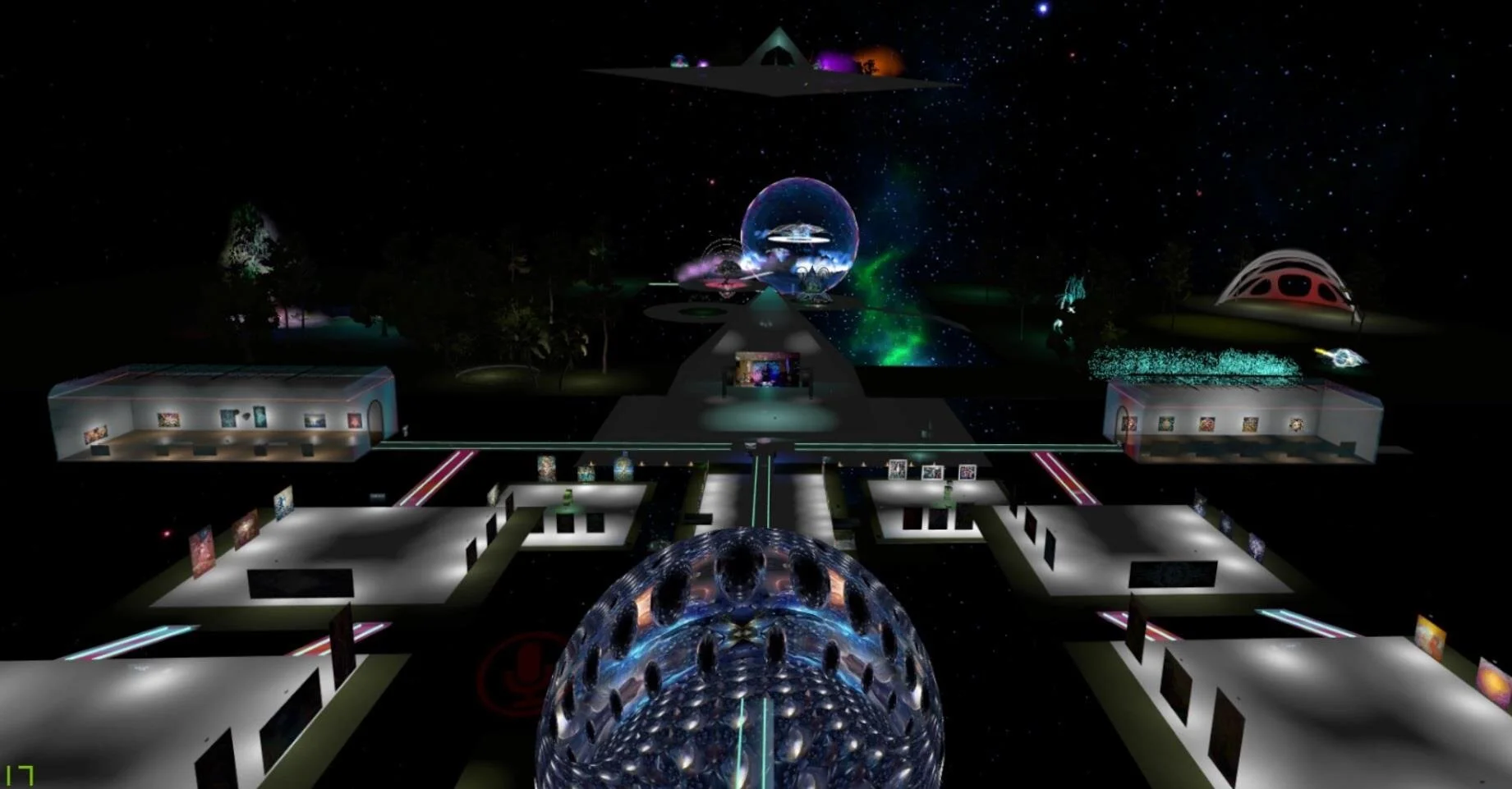
Built in Unity and published to VRChat, the Moksha VR Gallery is one of the largest virtual galleries of its kind, with surreal architecture suspended in a cosmic void and Earth shimmering far below. Over seven levels, visitors could explore domes, gardens, pyramids, and event spaces, each curated with transformative art, live performances, and interactive installations.
Core Experiences
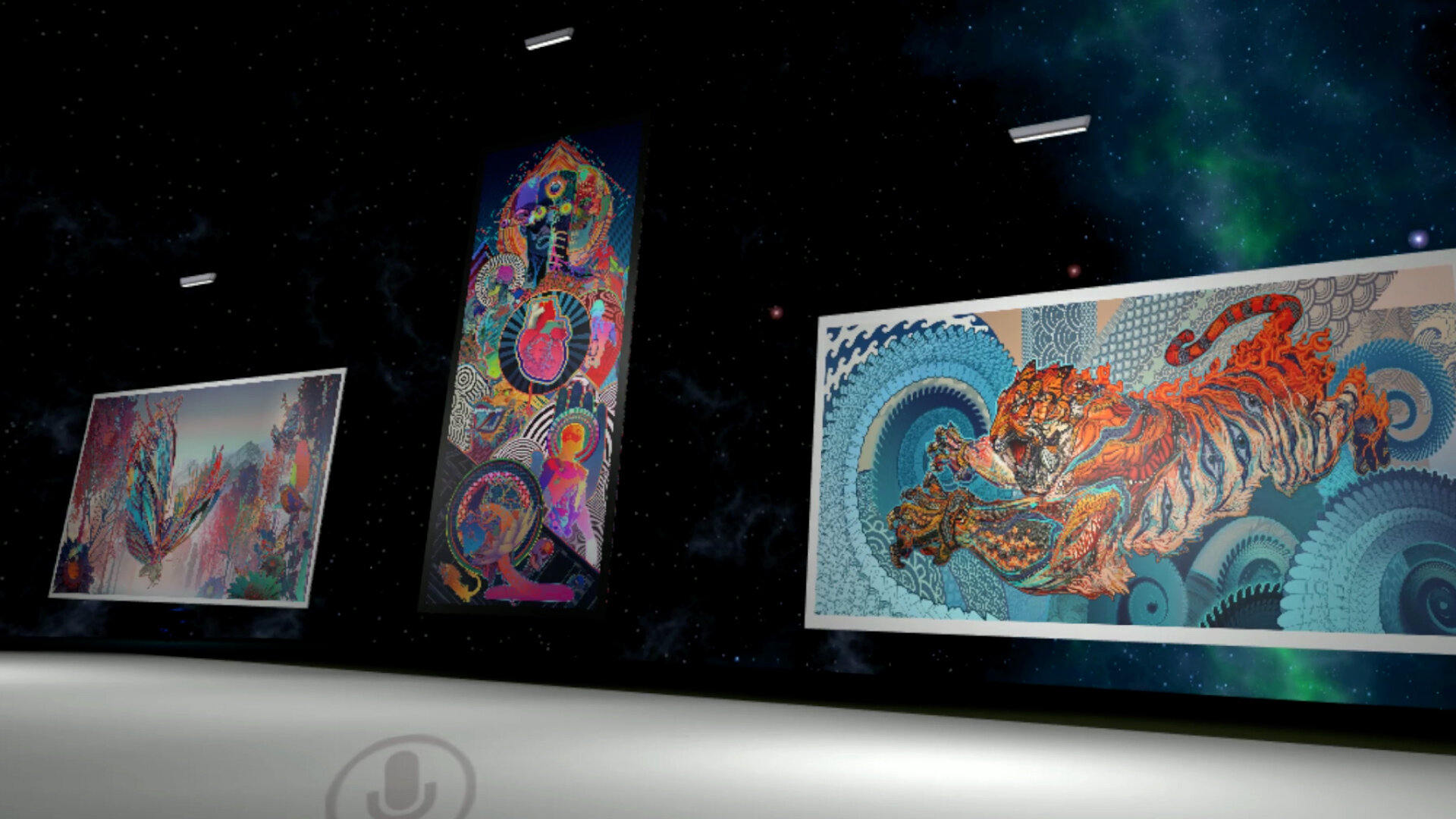
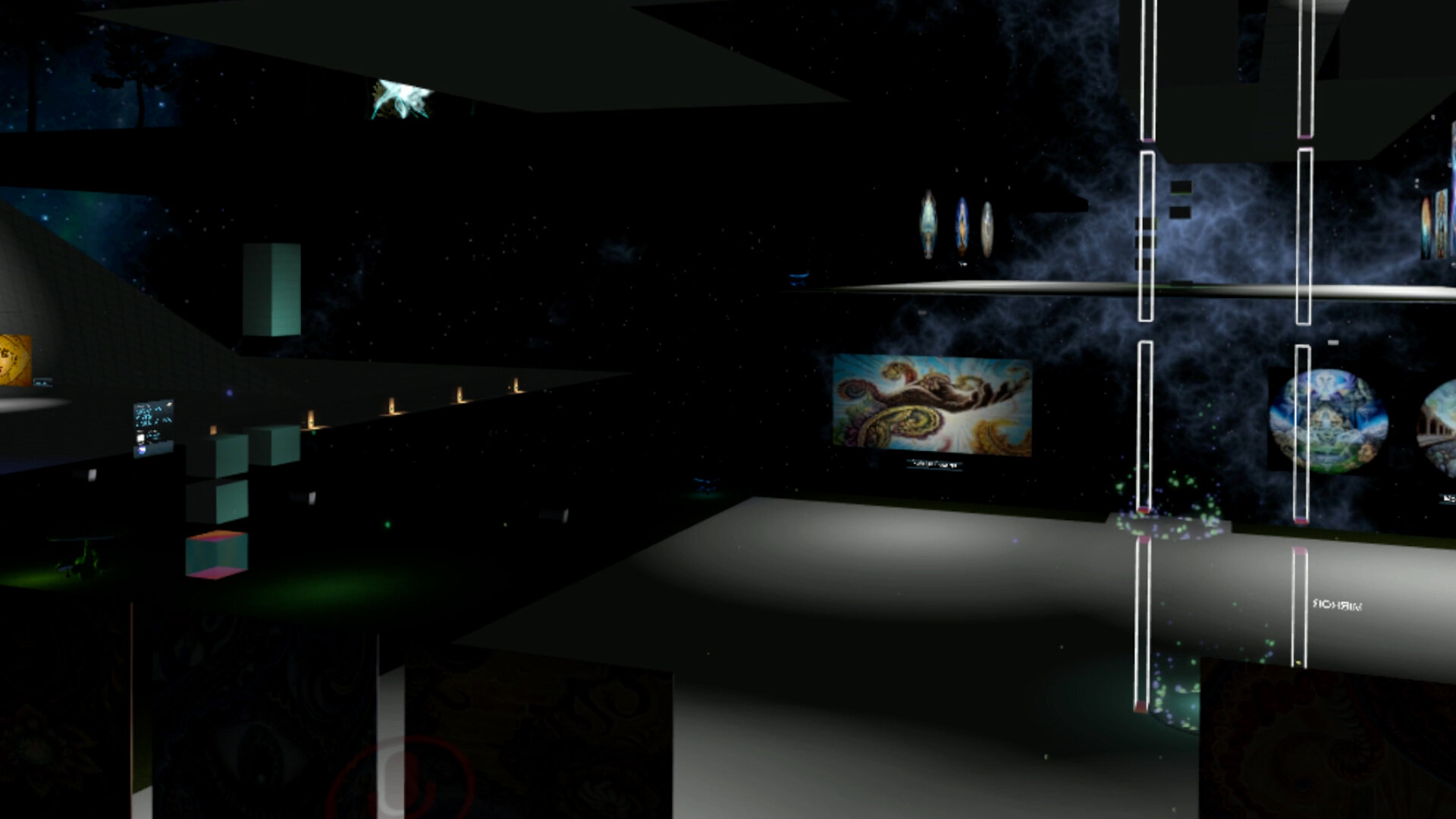
Multi-Level VR Gallery: Seven levels of art spaces, from 360 domes with surround animations to floating abstract 3D works.
Celestial Atrium: A vast chamber evoking infinite space, where glowing glass elevators lifted visitors slowly into higher realms, while teleportation portals offered instant travel across the gallery.
Digital 3D Garden: A surreal landscape of luminous flora, glowing fungi, drifting smoke, and ambient soundscapes, an organic dreamworld inspired by the Burning Man playa.
The Main Pyramid: The central event hub, designed as a gathering place for live streams, performances, and talks.
Live Stream Screen: A towering virtual main stage where DJs, painters, and performers broadcast in real time, with audio-reactive environments that pulsed to sound and movement.
My Role
As XR Worldbuilder & Systems Designer, I:
Designed and developed the Unity/VRChat gallery architecture, curating multi-level surreal environments.
Created interactive spaces blending art, sound, and particle effects for immersive presence.
Integrated live stream pipelines into VR, enabling real-time broadcasts to global audiences.
Worked closely with the Moksha Arts Collective founder and dozens of artists to translate their visionary works into VR formats.
Impact
Hosted dozens of artists during Burning Man 2020, with live performances, digital exhibitions, and interactive installations.
Reached hundreds of global participants who explored the VR spaces, even during a time of global isolation.
Extended Burning Man’s ethos of community, creativity, and participation into digital frontiers.
Established the Moksha VR Gallery as an ongoing platform (2020–2025) for visionary art in the metaverse.
Future Vision
The Moksha VR Gallery demonstrates the power of XR to sustain culture and community across physical boundaries. As hybrid festivals continue to grow, the gallery serves as a model for how cultural organizations can bridge VR, AR, and live events, creating shared worlds where art, spirit, and technology converge.
In 2020, when Burning Man went fully digital for the first time, the Moksha Arts Collective brought its visionary art and community spirit into the virtual realm, reaching a global audience like never before. I collaborated with Moksha to design and manage their presence within the Burning Man Multiverse, building immersive virtual spaces where artists and participants could gather despite the global shutdown.
We hosted dozens of artists who shared live performances, digital exhibitions, and interactive installations inside the VR world. These events were not only experienced by participants in virtual reality but also broadcast as livestreams, allowing audiences around the world to tune in and be part of the moment.
Over the course of the festival, hundreds of visitors joined the Moksha VR space, exploring 3D environments, interacting with holographic art, and taking part in conversations and cultural exchanges that extended the Burning Man ethos into new frontiers.
This project demonstrated the power of XR to sustain community, creativity, and collaboration even in times of isolation. By bridging VR, livestream, and global participation, Moksha’s presence at Burning Man 2020 set a precedent for how cultural organizations can thrive in hybrid digital-physical festivals of the future.
There are over 7 levels of ART to explore. From 360 domes featuring 3D surround animations, to 3D abstract pieces.
Step into the Celestial Atrium, a vast open chamber designed to evoke a sense of infinite space and contemplative stillness. Suspended in a surreal void with glimpses of Earth far below, this area features panoramic platforms where visionary art floats in luminous frames. Visitors can travel seamlessly between levels via glowing glass elevators, offering a slow, cinematic rise into new realms of creativity. For those who prefer instant travel, teleportation hubs are located throughout the gallery, allowing you to leap across the map in a flash, making exploration intuitive, fluid, and otherworldly. Every detail is crafted to immerse you in a dreamlike experience that celebrates the convergence of spirit, technology, and artistic vision.
Wander into the Digital 3D Garden, a surreal landscape inspired by the Burning Man playa, where art, nature, and code converge. The garden is divided into open sections, each presenting luminous 3D flora, glowing fungi, and otherworldly natural structures that pulse with light and motion. Smoke simulations drift lazily through the air, while ambient soundscapes and particle effects create the feeling of walking through a living dream. As you explore, it feels less like a virtual room and more like a mystical ecosystem, interactive, immersive, and alive. The Digital 3D Garden invites you to slow down, explore freely, and lose yourself in an ever-evolving vision of nature reimagined through the lens of digital art.
This is the main event space, where everyone gathers to view the live stream.
At the heart of the Moksha Arts VR Gallery is the Live Stream Screen, a towering virtual main stage designed for real-time connection. This is where featured artists and performers broadcast their live streams, creating a shared space where guests from around the world can gather, watch, and interact. Whether it's a live painting session, DJ set, panel talk, or performance art, the screen acts as a digital portal, bringing the pulse of real-world creativity into the immersive gallery. The audio-reactive environment enhances the experience, responding to sound and movement, so the energy of the performance reverberates through the entire space.
George Merrick AI Avatar: Testing in Augmented Reality
This test looks at how AI-driven avatars can function inside augmented reality. The idea is simple: combine generative models with AR so that characters can carry on conversations while appearing in physical space. Their behavior can be adjusted along a few axes , for example, they can be set to speak more or less, to respond with humor or formality, or to take on a curious or reserved demeanor.
Visual design is also flexible. The appearance of the avatar can be defined in detail, clothing, facial features and style, so that it fits a specific time, place, or narrative. Adding a backstory helps guide how the character responds. A guide from the 1920s will interact differently than a traveler from the future or a fictional figure placed in a themed environment.
Context plays an important role. Characters can be given knowledge boundaries, a setting to inhabit, and instructions on how to handle certain topics. This helps them remain consistent across longer interactions, rather than drifting out of character.
Taken together, these elements make it possible to place avatars in AR who feel anchored in both the story world and the real environment around them.
Transforming Streets & Shops into Interactive Experiences
Overview
This project explored how augmented reality can bridge culture and commerce, turning ordinary streets and storefronts into immersive destinations. Beginning with Española Cigar Bar & Lounge in Miami Beach, I developed both WebAR and app-based holograms that brought cigars to life and introduced a holographic hostess who appeared at tables to guide customers. These activations turned routine retail interactions into memorable, branded encounters.
The work expanded into full AR walking tours of neighborhoods like Española Way and Coral Gables’ Miracle Mile. Visitors scanned AR-enabled signs to reveal holographic guides, unlock historical storytelling, or access special offers, layering digital history and commerce directly onto the streetscape.
Core Experiences
Holographic Retail Hosts: 3D holograms that appeared on tables, welcoming guests and guiding them through product experiences.
Product Visualizations: Cigars and branded items that came alive in AR, turning merchandise into interactive storytelling tools.
AR Walking Tours : Historical holograms recounting figures like Al Capone and Miami Vice, anchored to landmarks along Española Way.
Cultural Storytelling in Coral Gables: AR street signs and holographic guides that transformed Miracle Mile into an interactive cultural corridor.
My Role
As XR Developer & Project Lead, I:
Designed and produced WebAR + app-based holographic activations for retail spaces.
Created historical holograms and AR signage for neighborhood walking tours.
Integrated content pipelines into the AR Miami platform, unifying cultural storytelling with commercial engagement.
Coordinated with local businesses and cultural organizations to align AR content with their identity and audience.
Impact
Brought AR experiences to dozens of businesses across Miami’s historic neighborhoods.
Engaged visitors with interactive history + retail storytelling, blending culture and commerce in one seamless layer.
Demonstrated how AR can activate entire streets, reaching thousands of tourists and locals.
Future Vision
These projects highlight how retail and culture storytelling can converge in AR, offering a scalable framework for neighborhoods, business districts, and cultural landmarks. From cigar bars to city tours, the same approach can power immersive shopping, dining, and cultural tourism, transforming streets into living storyboards.
Shopping Meets Storytelling in AR
Bring your brand to life and connect with customers through interactive holograms that transform retail spaces into immersive cultural experiences.
Interactive AR holograms
Our AR holograms activate retail environments with rich, interactive content, artist stories, brand histories, and exclusive digital offers. Each scan unlocks a new layer of Miami’s culture, making every visit memorable.
Building community.
AR Miami’s interactive holograms connect locals and tourists alike to the unique stories and personalities behind every shop, artist, and venue, bridging the gap between commerce and culture.
Merging Heritage, Music, and Immersive Technology
www.Spinteractive.net
Overview
Commissioned by a Caribbean cultural museum, the Virtual Steel Drum Simulator reimagined one of the region’s most iconic instruments as an interactive VR experience. Visitors could grab virtual sticks, strike the steel drum, and hear authentic notes respond in real time. More than a game, the project was designed as a cultural performance in VR, blending heritage preservation with cutting-edge simulation.
Core Experiences
Physics-Based Force Feedback: Realistic strike detection with accurate pitch and volume response, making the instrument feel authentic to play.
Interactive Sticks & Notes: Designed interaction systems for grabbing and striking notes, complete with responsive animations and glowing feedback.
Choice of Environments: Visitors could perform in a tropical island setting or a traditional “Pan Yard,” immersing themselves in different cultural contexts.
Dynamic Visuals: Each note triggered glowing letters and light effects that appeared and faded with the rhythm, creating a poetic visual layer alongside the music.
My Role
As Interaction Designer & XR Developer, I:
Designed and implemented the stick + note interactions, ensuring accurate timing and feedback.
Built the physics simulations for strike dynamics and force response.
Directed animations and visual feedback loops that made music into a multisensory experience.
Collaborated with the team on the look, feel, and cultural authenticity of the simulation.
Impact
Delivered a high-quality VR installation that merged cultural heritage with immersive technology.
Provided museum visitors with a playful, memorable, and embodied connection to Caribbean identity.
Demonstrated how VR can serve as a tool for education, heritage preservation, and interactive art.
Future Vision
The Virtual Steel Drum Simulator is a template for cultural music education in XR. Its physics-driven approach can be extended to other traditional instruments, creating immersive ways to preserve and share cultural heritage with global audiences.
Realistic physics provides accurate playing feedback.
Choose virtual environemt: Island or Pan Yard.
Play the steel drum in a typical pan yard.
Notes burst from drum as the user plays.
A beautiful Island setting to play your steel drum.
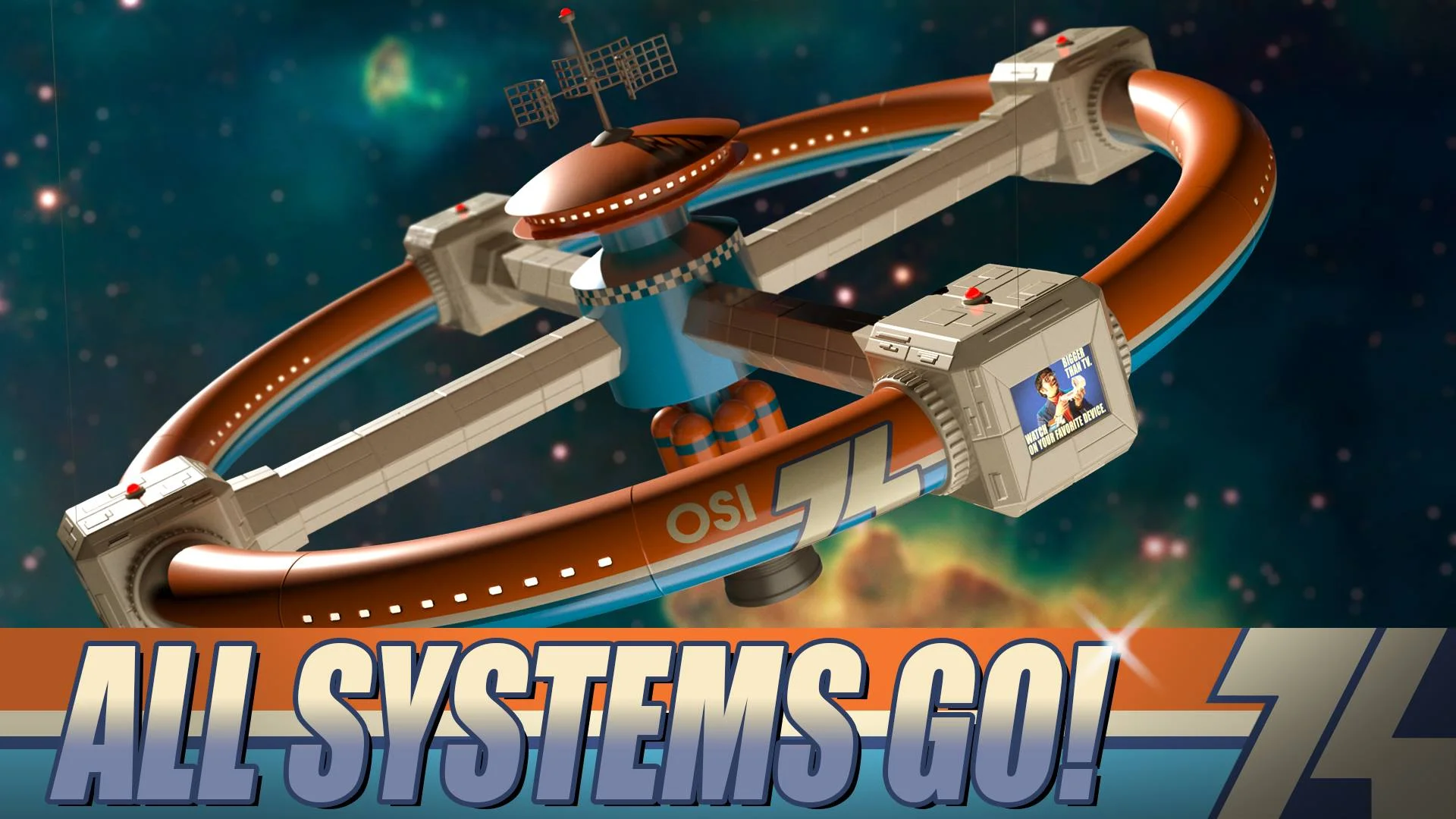
The Mold is a sci-fi movie with comedic undertones, produced for OSI 74’s Bizarre Transmissions from the Bermuda Triangle. Blending real performers with AI-driven characters, the project pushes the boundaries of experimental filmmaking through tools like Midjourney, Runway, Stable Diffusion, Veo 3, and ChatGPT. The result is a strange, playful, and forward-looking glimpse at how artificial intelligence is reshaping cinema.
Dear Human Website
Overview
As part of the citywide Dear Human Project, I led the creative design and technical implementation of an AR experience that blends poetry, public art, and immersive storytelling. We filmed beloved teacher and poet Mia Leonin, transforming her into a lifelike hologram that could appear beside art installations across Coral Gables. This project brought together human and AI-driven holograms, deployed through both the AR Miami app (Unity) and WebAR solutions using QR codes.
Core Experiences
Holographic Poetry: Visitors encounter holographic performances of Mia Leonin, seamlessly integrated into city spaces through geolocation triggers. These holograms bring literature into public life in a way that feels alive and immediate.
Hybrid AR Platforms: By combining Unity AR Foundation with WebAR access via QR codes, the project ensured accessibility for a wide audience — whether through the AR Miami app or a browser-based experience.
Cultural Storytelling: Beyond poetry, the experience included interactive holograms and AI-assisted avatars, weaving together historical, cultural, and commercial layers already present in AR Miami.
My Role
Directed the creative design and technical implementation.
Filmed and processed Mia Leonin’s performance into a holographic asset.
Integrated holograms and avatars into AR Miami alongside historical and commercial content.
Collaborated with the Coral Gables Art Department and GIS Innovation Office to align with citywide cultural initiatives.
Impact
Demonstrated how XR and AI can amplify public art, turning ordinary city walks into dynamic cultural tours.
Expanded AR Miami with literary and cultural content, strengthening civic engagement.
Created a scalable framework that can be adapted to other environments, parks, events, and future citywide art projects.
Future Vision
Dear Human lays the groundwork for citywide AR art installations, where poetry, history, and civic stories can coexist in shared immersive layers. The framework can be scaled across Coral Gables and beyond, establishing a new model for cultural storytelling through AR.
Coral Forest Holograms - Poem and Description
One of the holograms placed near a work of art using GPS positioning. The user could trigger the holograms by touching the golden sphere that floats next to the poem.
Augmented Reality - Dear Human
Collaboration with the City of Coral Gables - Dear Human project in AR
Exuberant Pink Hologram – Interactive Story and Poem
A vibrant AR hologram brings “Exuberant Pink” to life at its exact GPS location. Visitors can unlock an original poem and discover the story behind the artwork by tapping the glowing pink orb floating beside the piece.
Motion Graphics / 3D / JavaScript - Interactivity / UX / UI Design
Interactive map of Miracle Mile in Coral Gables, navigate 8 city blocks of coral gables using this interactive map that moves using your mouse. Locations can be highlighted using the mouse and information appears in a window. Pressing the location will zoom in and open that location revealing the contents for that store.
Entrance to the site, here you get to choose where to first enter. Coral Gables allows you to enter directly into Miracle mile. Florida allows you to view all the locations available in South Florida. Solar System allows you to choose which planet to see first.
Choose South Florida location to navigate. Miracle Mile in Coral Gables is currently available, South Beach is underconstruction.
Explore 8 city blocks of Miracle Mile in Coral Gables. Using the top menus highlights locations on map.
Producer / Video / Editing / Motion Graphics
www.osi74.com
Bizarre Transmissions from The Bermuda Triangle”. Hosted by Funk Overlord Buddha Gonzalez, the show features wild and one-of-a-kind Music Videos from all genres mashed up with Classic Horror & Sci-Fi themes, an Artist Spotlight, Special Guests.
OUTER SPACE INTERNATIONAL is an “off world” production colony and distribution network bringing you unusual, experimental, and entertaining programs from many different creative worlds. We’re thinking beyond standard television and learning from the great pioneers of UHF, Home Video, and Early Cable that we grew up with. We’re also taking a bit of inspiration from Drive-In theaters, Backyard movies, Community media, Film festivals, Comic books, “Mom-N-Pop” video stores, and The Space Race.
After Effects animation, compositing.
Danny Trejo, George Romero, Tom Savini
Julie Dawn Cole - Veruca Salt (Willy Wonka and the Chocolate Factory).
Burt Reynolds
Video / Editing / Post Production
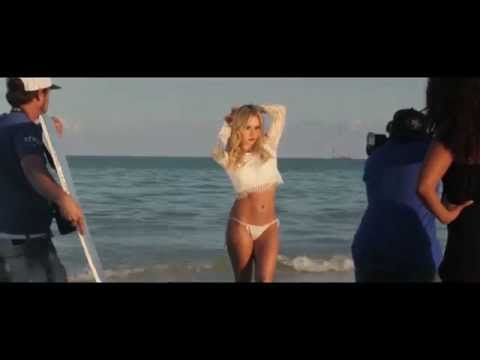
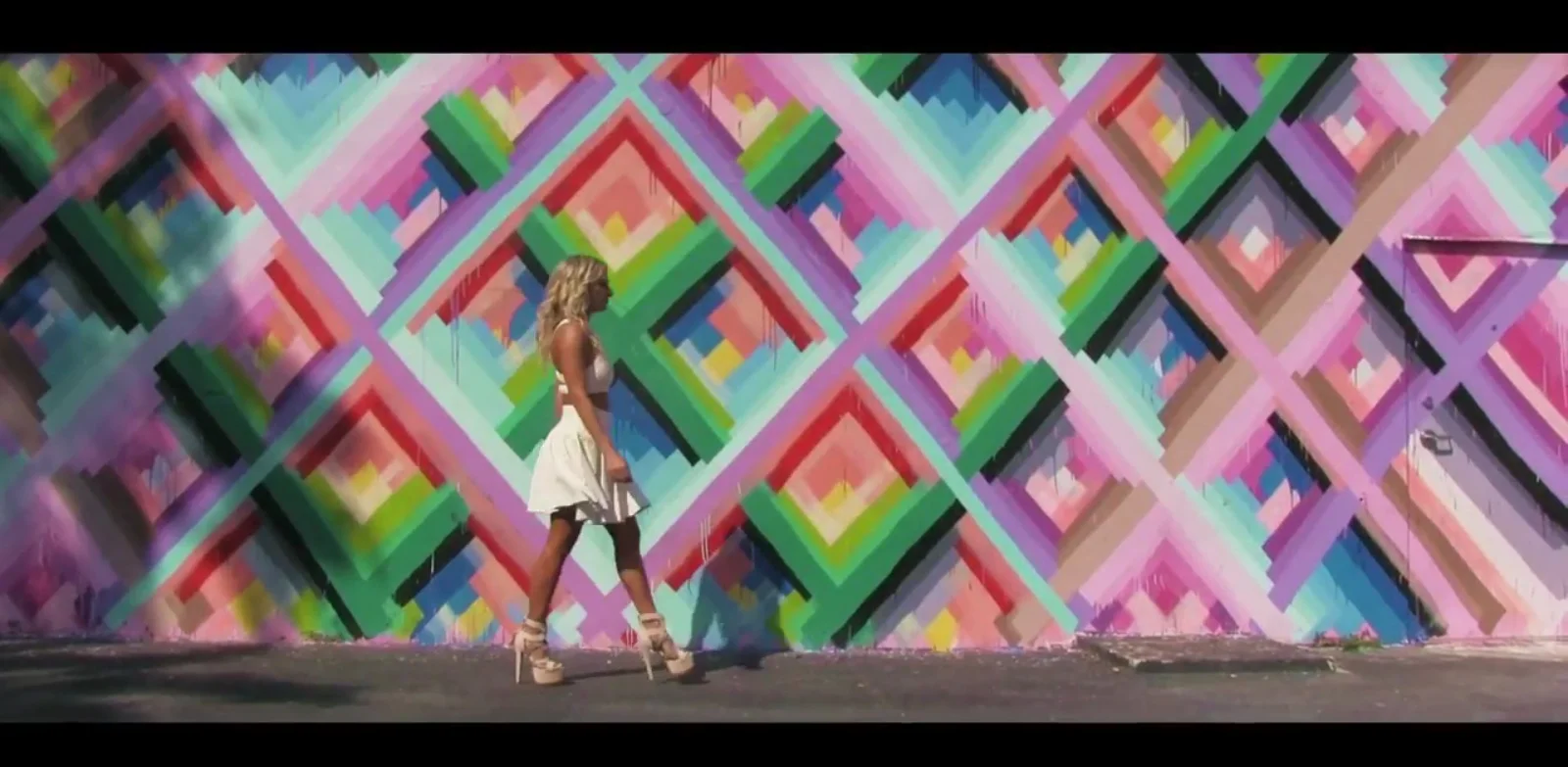
Bibba Pacheco Photo Shoot
The beautiful Bibba Pacheco, DJ and author, in various locations throughout the city.
Mermaid on South Beach
A photo shoot in collaboration with Jake Cambell studios.